In brief
When renters water damage in Alabama starts, close the nearest valve, report the leak to the landlord in writing and photograph everything. The owner usually repairs the building; a renters policy covers your belongings, liability and extra living costs, but not floods. Alabama insurers must acknowledge a claim within fifteen days under Ala. Admin. Code r. 482-1-125.
What are a tenant's first moves when an apartment starts leaking?
Slow the water, tell the landlord in writing and take pictures before anything gets moved. With renters water damage in Alabama, the owner usually repairs the building itself, so your early jobs are limiting the spread, creating a record with a time stamp and getting your own things out of harm's way.
- Close the nearest shutoff if you can reach it. Sinks, toilets and washers have small stop valves on their supply lines. Water coming through a ceiling or shared wall is a job for the after-hours maintenance contact in your lease.
- Send a written report. A text, email or portal ticket shows the time. Say where the water is, what it has touched and when you noticed it.
- Photograph and film the source, the floor, the walls, the ceiling and each wet item.
- Move your belongings to a dry spot, starting with electronics, papers and clothes. Keep damaged pieces instead of tossing them.
- Keep clear of wet outlets, lamps and power strips, and ask management to shut off power to that area.
Time matters for every unit in the building. The EPA sets 24 to 48 hours as the period to get wet materials dry before mold sets in, and a dated report fixes the starting point. The emergency water damage page covers those first hours.
Is the landlord or the tenant responsible for water damage repairs?
It depends on where the water came from and what got wet. As a rule, the property owner fixes the structure, the built-in fixtures and the building systems, while each tenant's own policy handles that tenant's belongings. Condo buildings divide the work between the association and unit owners according to the governing documents.
| Where the water started | Tenant usually handles | Landlord usually handles | Condo owner or association |
|---|---|---|---|
| Pipe burst inside a wall | Your furniture and clothing, through your renters policy | The pipe, drywall, flooring and cabinets | Shared pipes usually fall to the association; check the bylaws |
| Roof leak after a storm | Your own damaged things | Roof, ceiling and insulation | The roof is usually a common element |
| Overflow from a tub or appliance you used | Possibly the building damage too, through your liability coverage | Repairs first, then may seek repayment | Owner of the unit where it began |
| Water from the unit above | Your belongings | Repairs in your unit | The upstairs owner or the master policy, by the documents |
| Creek or surface flooding | Only with a separate flood policy | Only with a flood policy on the building | The master flood policy, if one exists |
Use the table as a starting point. Your lease, your declarations page and Alabama landlord and tenant law decide the actual answer, and a legal aid office can help if you disagree with the owner.
What does a renters policy pay for after a leak?
A renters policy protects what you own, not the building. The Insurance Information Institute describes three parts: coverage for personal possessions, liability for harm you cause others, and additional living expenses. Water is among the listed causes of loss for belongings, while floods are left out.
That last point surprises people. The same III page notes that a landlord may insure the building, but that policy does not replace a tenant's possessions or cover where the tenant stays during repairs.
How a claim is valued depends on the form you bought. III explains that actual cash value pays what the items were worth after depreciation, while replacement cost pays to buy new ones, and that replacement cost runs about 10 percent more in premium. A home inventory with photos speeds up any claim.

Will renters insurance cover a hotel if the apartment is unlivable?
It often does, when the cause is a covered loss. III describes additional living expenses as part of a standard renters policy, covering the extra cost of living away from home above your normal monthly bills. That can include a hotel, a short-term rental and restaurant meals while the unit is repaired.
Keep every receipt and write down your usual monthly costs so the difference is easy to show. Triple-I recommends saving receipts for what you spend and turning them in for reimbursement.
Talk to the landlord in writing about rent during repairs. Do not stop paying on your own; the lease controls that question, and your insurer cannot settle it for you.
Who pays when water from your unit reaches the neighbors?
If your actions caused the leak, the liability part of your renters policy may pay for damage to other people's property. The III renters guide says liability coverage applies to property damage you or your family cause others, and pays legal defense costs up to the policy limit.
Think of a bathtub left running or a washing machine hose that burst while you were out. The landlord may repair first and then seek repayment, and the downstairs tenant may file with their own insurer.
Report it quickly to everyone affected and to your insurer. A slow drip that went unreported for weeks is harder to defend than a sudden break you reported right away. The appliance leak page explains common failure points.
Does renters insurance cover flooding or a sewer backup in Alabama?
Usually not. Triple-I states that standard homeowners and renters policies exclude flood damage, which needs a separate policy through the NFIP or a private insurer. Sewer backups are also left out unless an endorsement is added, and flood policies do not cover them either.
Tenants can buy flood coverage for their contents. Buy early: under the FEMA flood insurance manual, most new federal policies only start after 30 days, with limited exceptions.
Ask about a sewer backup endorsement on the same call. If wastewater has already come up through a drain, the sewer backup cleanup page explains why it is treated as contaminated, and the flood cleanup page covers creek and surface water.
Are basement and garden-level apartments at higher risk?
They sit lowest in the building, so they are first to take water from a sewer backup, groundwater seepage or a failed sump pump. If you rent a below-grade unit, flood coverage and a sewer backup endorsement deserve a quote. Keep valuables up off the floor and away from exterior walls.
Units cut into a hillside can also collect runoff along the uphill wall after heavy rain. Ask the landlord where the floor drain and sump pit are and whether the pump has a backup.
The basement apartment water damage page covers this in more depth, including what to ask before you sign a lease.
How is water damage split between a condo owner and the HOA?
The association's declaration and bylaws draw the line. Many master policies cover common elements such as the roof, exterior walls and shared pipes, while the unit owner's own policy covers interior finishes, upgrades and belongings. Some documents give the association more of the interior, so read them before a leak happens.
- Request the master policy summary and the deductible from the board or manager.
- Check that your unit policy covers the association deductible if it can be passed to you.
- Know where the shared shutoffs are, since one leak can reach several units.
- Keep copies of upgrades such as new floors or cabinets, which the master policy may not include.
When the board hires a restoration company for common areas, ask for the drying records that apply to your walls and floors.
What should you do when water drips through the ceiling from the unit above?
Tell the upstairs neighbor and management right away so the source can be shut off. Move furniture and electronics out from under the wet area, put a bucket down and keep away from any light fixture near the water. A sagging ceiling holding water can come down without warning.
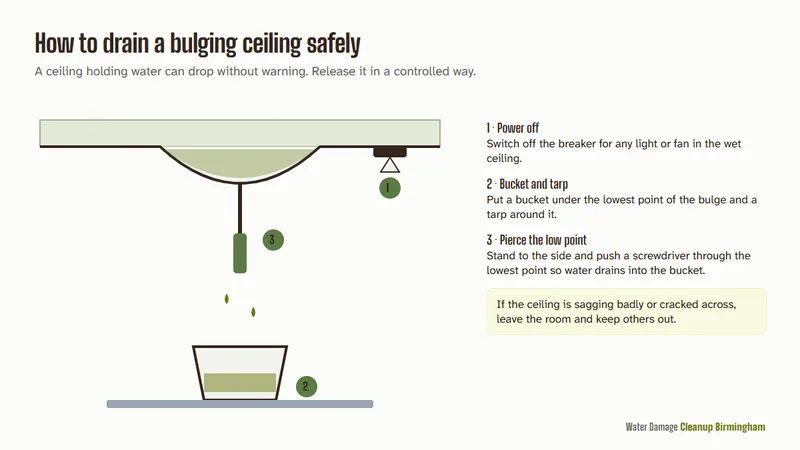
Take photos of the stain and the bulge before anyone touches it. The ceiling water damage page explains when a ceiling can be dried in place and when it must come out.
Who deals with mold in an apartment after a leak?
Usually the owner, because mold grows in the walls, floors and ceilings that belong to the building. Report any musty smell or spots in writing as soon as you see them. The longer materials stay wet, the more likely mold becomes, and late reporting can make the cause harder to prove.
Mold can hit some people much harder than others, and the CDC points to asthma and mold allergies as reasons for severe reactions. Tell the landlord if anyone in the household is at higher risk. Keep the unit ventilated and run a dehumidifier if you have one.
Avoid painting over spots or scrubbing large areas yourself. The mold after water damage guide covers when cleanup needs a professional.
How long does an Alabama insurer have to respond to a renters claim?
Alabama sets deadlines in its claim rule: under Ala. Admin. Code r. 482-1-125, an insurer must acknowledge a first party claim within fifteen days of notice unless it pays in that time, and must supply needed forms and instructions within fifteen days as well.
After you send properly executed proofs of loss, the next section of the rule says you must be told whether the claim is accepted or denied within thirty days, or the period your policy sets.
If the insurer needs more time, it must explain why, then update you every forty-five days while the investigation stays open. If you feel stuck, the Alabama Department of Insurance takes complaints. The insurance claims guide has more.
What should landlords and condo boards do once a leak is reported?
Stop the source, get the water out and start drying quickly, then document everything. Owners who move fast protect the building and lower the chance of mold and a dispute with tenants. Let residents know in writing what will happen next, who will enter the unit and when.
- Shut off the supply at the fixture, the unit valve or the building main.
- Notify the insurer and record the claim number.
- Photograph every affected unit before work begins.
- Arrange drying with moisture readings taken in each affected room.
- Keep tenants informed about access, timing and any need to move out temporarily.
Drying an occupied building is easier when walls and floors are checked with meters. The structural drying page and the commercial water damage page explain how larger buildings are usually handled.
Can a tenant or condo owner hire a restoration company?
A tenant normally should not hire one for the building, since repairs belong to the owner. A tenant can arrange cleaning or pack-out for personal belongings, and a condo owner can often hire help for the parts of the unit the association does not cover. Get that division in writing before anyone starts.
You can call to reach a local water damage restoration team in the Birmingham area. Restoration teams differ, so confirm the scope, price and schedule with them directly and share the plan with your landlord or board.
For belongings that need to be moved, cleaned or stored, see the contents pack-out page.
Sources: Insurance Information Institute, renters insurance (possessions, liability, additional living expenses, flood exclusion, actual cash value and replacement cost, about 10 percent price difference); Triple-I, which disasters are covered (flood and sewer backup exclusions); Triple-I, settling claims after a disaster (receipts); FEMA NFIP Flood Insurance Manual (30-day waiting period, limited exceptions); Ala. Admin. Code r. 482-1-125-.06 (15 day acknowledgment and forms); Ala. Admin. Code r. 482-1-125-.07 (30 day status, 45 day updates); Alabama Department of Insurance (complaints); EPA mold and moisture guide (drying window); CDC, mold and your health (higher risk groups).