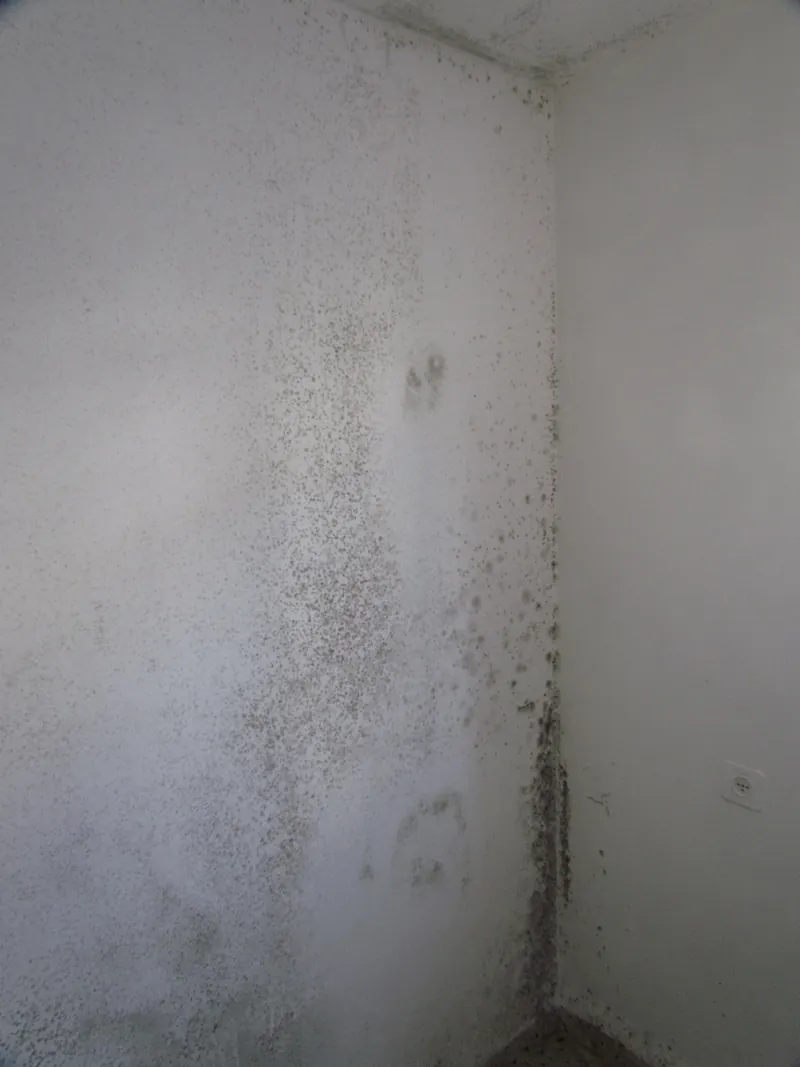
In brief
When a room gives off a water damage smell, drywall, carpet pad, framing or subfloor is still damp. Birmingham summers are humid, so basements and crawl spaces stay wet longer. A sewer odor at a floor drain after rain points to a backup, while one smelly drain usually has a dry trap. EPA guidance gives you 24 to 48 hours to get soaked items dry.
What does a musty smell in the house usually mean?
Most of the time, a musty odor means some porous part of the house never dried out. Mold and bacteria feed on damp drywall paper, carpet pad, framing lumber and stored boxes, and the gases they release are what your nose picks up. The odor almost always sits near the wettest material, even when that material is hidden.
Pay attention to the character of the smell before you start pulling things apart. A cellar-like smell, a sour carpet smell and a rotten sewer smell usually lead to three different problems in three different parts of the house.
If you can already see stains, bubbling paint or swollen trim, the guide to signs of water damage explains what each clue tends to mean.
Why do Birmingham basements and crawl spaces smell musty?
Central Alabama summers load the air with moisture, and the lowest level of a house is its coolest spot. Humid air condenses on cool block walls, ductwork and floor framing, and a little rain seepage adds to it. The result can be a musty basement or crawl space with no puddle anywhere in sight.
Wikipedia's Birmingham, Alabama article describes a humid subtropical climate with abundant rainfall and hot, very humid summers, when most rain arrives in afternoon and evening thunderstorms. That pattern keeps lower levels damp for months at a time.
- A basement cut into a hillside: the uphill wall sits against wet soil after every storm and can sweat or seep along its base.
- A crawl space with bare dirt: moisture rises from the ground and settles into joists and insulation above it.
- Boxes, rugs and furniture stored on the slab: they soak up moisture from the concrete and start to smell first.
- Gutters that dump next to the foundation: roof water collects where the wall meets the footing.
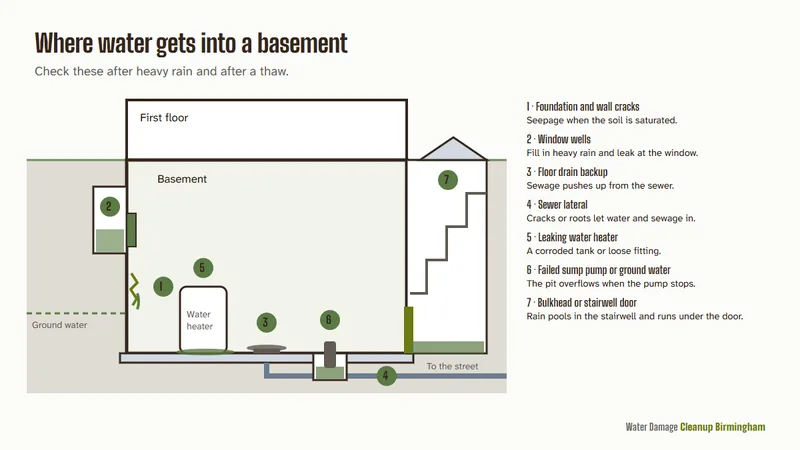
If water is pooled on the floor, deal with it before you chase the odor. The basement flooding page covers that first step.
Which odor points to which leak?
Different leaks tend to leave different smells, so the type of odor narrows the search. Use this table as a first guess, then confirm by looking, touching surfaces for softness and using a moisture meter if you have one. Treat it as a guide rather than a rule, since two sources can overlap in one room.
| Odor you notice | Likely cause | First place to look |
|---|---|---|
| Damp, earthy air on the lowest level | Groundwater or runoff pushing through block walls after storms | The base of the uphill wall and anything stored on the floor |
| Rotten sewer smell near a floor drain | Wastewater that rose from the drain during heavy rain | Stay out of it and read sewer backup cleanup |
| Sour, mildewed carpet | Carpet pad that got wet and never fully dried | Pull back a corner; see wet carpet help |
| Stale odor in a top floor room | Rain entering at shingles, flashing or a vent boot | The attic above that room, near pipes and valleys |
| Musty closet next to a water heater or washer | A slow drip from a tank, valve or supply hose | The pan and fittings; see water heater leaks |
| Mildew under the kitchen or bath sink | A supply line or drain joint weeping into the cabinet | The cabinet floor; see bathroom and kitchen leaks |
A sulfur or rotten egg smell spread through the whole house is not a water problem. It can be a gas leak, so leave without flipping switches and call the gas company from outside.
Is a musty smell after a leak a health risk?
The smell itself is a warning, but the mold producing it can affect people. According to the CDC, exposure can bring on wheezing, a cough, a blocked nose, a scratchy throat, stinging eyes or a rash, and reactions can turn severe for anyone with asthma or a mold allergy. A lingering odor deserves action, not air freshener.
Lung infections are a risk for anyone living with a weakened immune system or a long-term lung condition, the agency adds. Keep those relatives in other rooms until the source is fixed.
Speed is the strongest protection. The EPA advises that anything soaked should be dry in the first 24 to 48 hours, the window before growth starts. Its guidance treats growth smaller than about 10 square feet, a square near 3 feet on a side, as something most owners can clean on their own.
Anything larger is covered in the mold after water damage guide.
Why does the house smell like sewage after heavy rain?
A sewage odor after a downpour usually means the public sewer filled up and wastewater pushed back up your service line. It comes out at the lowest opening, which is most often a basement floor drain or a ground floor shower. Treat even a thin film on the floor as contaminated, and keep kids and pets away.
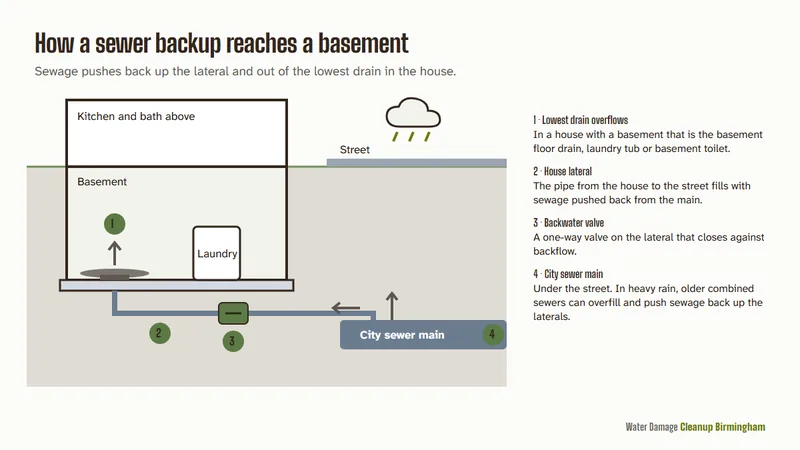
Jefferson County Environmental Services provides sanitary sewer service across the metro, and the Birmingham article on Wikipedia notes a federal consent decree to repair an aging sewer system there. Older lines and storm surges are a common pairing in any city.
The IICRC S500 standard places sewage in Category 3, the most contaminated class. The EPA recommends bringing in a professional with experience in buildings hit by contaminated water.
What if only one drain or bathroom smells bad?
When the odor stays in one room, the cause is usually a dry trap. The curved pipe under each drain holds a small pool of water that blocks sewer gas. A spare bathroom, basement shower or utility sink that goes unused for weeks can lose that water, and the gas escapes straight into the room.
Run water into the drain for a minute and check the room again the next morning. That costs nothing and solves most single drain odors.
If the smell returns quickly, look further: a cracked drain pipe, a missing cleanout cap, a loose toilet seal or a blocked roof vent can all let gas or water through. A plumber can test each one. Water stains around the toilet base belong on the bathroom and kitchen leak page.
Can a storm-damaged roof cause a smell before a stain?
Yes. Rain that gets under a torn shingle, lifted flashing or a split vent boot usually lands in attic insulation first. Loose fill and fiberglass batts hold that water out of sight, so the first warning is often a stale smell in an upstairs bedroom, days or weeks before a brown ring shows on the ceiling.
Storms are frequent here. The Birmingham article says cold fronts in spring and fall often bring strong to severe thunderstorms and occasional tornadoes, with November and early December forming a secondary severe weather season.
After a hard storm, climb into the attic on the next dry day with a flashlight. Look for flattened insulation, dark rings on the roof deck and rusty nail points. The storm roof leak page explains the roof side, and ceiling water damage covers a sagging or stained ceiling.
How do you find the source of a musty odor?
Search from the strongest spot outward and keep the air still while you do it. Shut off the HVAC fan so the smell is not spread through the ducts. Then check the lowest level, each room with plumbing, the upper floor and the attic, and write down where the odor is worst and when it last rained.
- Turn off the furnace or AC fan and wait a few hours; still air lets the smell gather close to its origin.
- Set an inexpensive humidity gauge in each room you suspect and note the readings morning and evening.
- Run a flashlight along the foundation looking for dark bands, white mineral crust and new cracks.
- Open every cabinet that holds pipes and feel valves, hoses and drain joints for damp spots.
- Check under the water heater, behind the washer and inside the sump pit for water or rust rings.
- Press on baseboards and low drywall. Soft or swollen material means water has reached it.
- Look in the crawl space or attic for wet insulation, torn plastic or drips from pipes.
Timing gives clues too. An odor that spikes after storms points to seepage, a roof leak or the sewer. One that never changes points to a steady plumbing drip somewhere inside the house.
Will a dehumidifier get rid of a water damage smell?
A dehumidifier helps, but it treats the air and not the cause. It cannot pull water out of a wall cavity, the middle of a subfloor or the pad beneath carpet. Until the leak is repaired and the soaked material is dried or removed, any water damage smell will drift back each time the unit stops running.
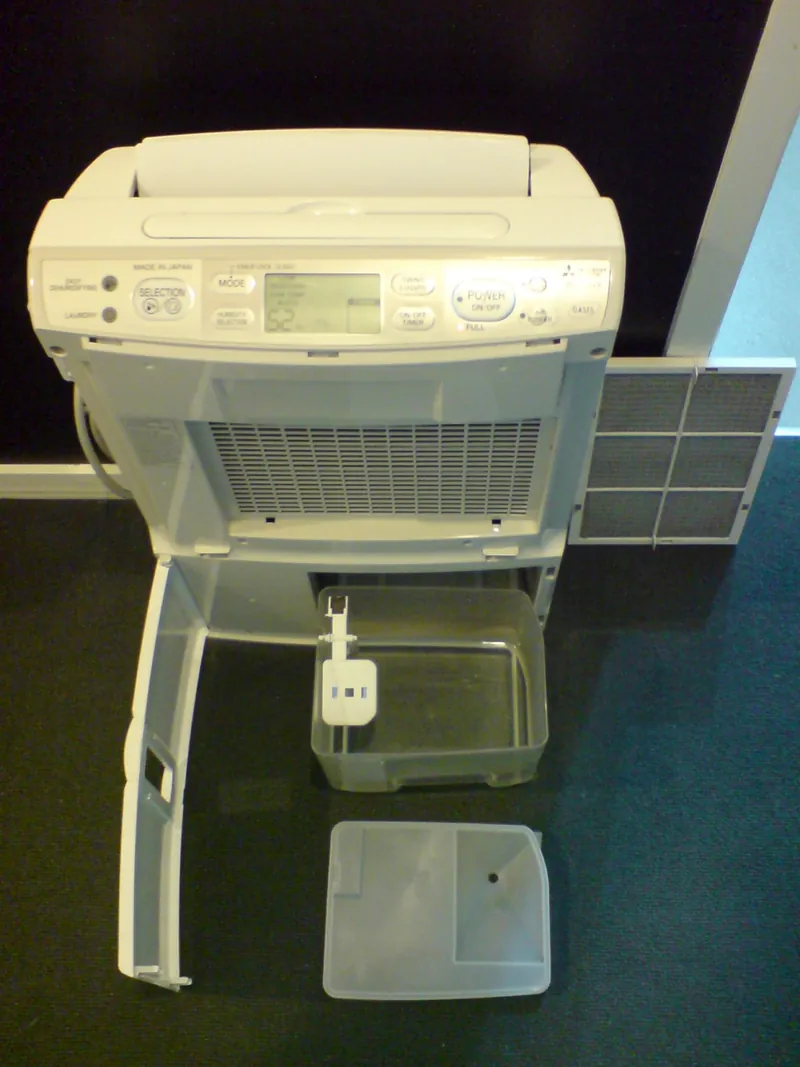

Once repairs are finished, run one through the muggy months. Keep the indoor reading under 60 percent, the EPA ceiling, and aim for the 30 to 50 percent band it prefers. A model that drains through a hose to a floor drain keeps working while you are away.
Masking the problem makes it worse, and the EPA says not to paint or caulk over moldy surfaces. If framing or subfloor is still wet, the restoration team you reach can set drying equipment and log readings, as the structural drying page describes.
Does homeowners insurance cover odor from water damage?
Usually only when it comes from a covered leak. The NAIC explains the usual split: a leaking roof or burst household pipe generally falls under the policy, but water rising from the ground or running off the yard does not, and mold costs are frequently left out. The smell alone is rarely a claim; the leak behind it may be.
Delay hurts. Triple-I notes that policies do not pay for damage from poor maintenance or mold, and that sewer backup is excluded from both standard homeowners and flood policies unless you add an endorsement.
Claims like this are common: the Insurance Information Institute counts roughly one claim for water or freeze damage per 60 insured homes in a typical year.
Alabama rules in Ala. Admin. Code r. 482-1-125 require an insurer to acknowledge a claim within fifteen days of notice unless it pays in that time. The insurance claims guide walks through the rest.
When is it time to call a restoration team about a smell?
Bring in help if the hunt comes up empty, if the odor began after a flood, a backup or a storm, or if you think water is sitting inside a wall, floor or ceiling. A smell that has lasted several days has already passed the EPA window of 24 to 48 hours, so hidden moisture is likely.
Restoration teams work differently, so ask before any work begins. Find out whether they record moisture readings and photograph each area, and ask for copies. Pricing, scheduling and the scope of work are agreed directly with the company; this site does not set any of it.
Keep your own dated photos and notes, because they help with any claim. If the trail ends at a sump pump that stopped running, the sump pump failure page explains what comes next.
Sources: Wikipedia, Birmingham, Alabama (humid subtropical climate, summer thunderstorms, spring and fall severe storms, secondary severe season, Jefferson County sewer consent decree); EPA mold and moisture guide for homeowners (drying window, indoor humidity targets, small-area cleanup size); EPA, mold cleanup in your home (contaminated water, do not paint or caulk); CDC, about mold and your health (symptoms, higher risk groups); IICRC S500 (sewage as Category 3); NAIC homeowners insurance (plumbing and roof leaks, ground water, mold); Triple-I, which disasters are covered (maintenance, mold, sewer backup endorsement); III facts and statistics (one in 60 insured homes); Alabama Department of Insurance claim standards, Ala. Admin. Code r. 482-1-125 (15 day acknowledgment).