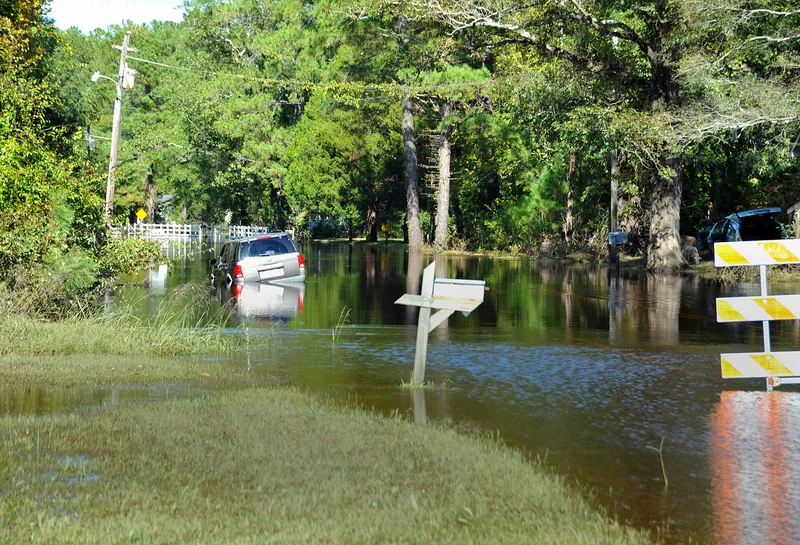
For Homewood and Mountain Brook
For water damage restoration in Homewood, AL or Mountain Brook, close the water off, stay away from wet wiring and photograph everything. The EPA says to dry within 24 to 48 hours. Creek water needs flood insurance. ZIPs: 35209, 35213, 35219, 35223, 35229.
Which Homewood and Mountain Brook addresses do you take requests from?
Five ZIP codes feed this page on water damage restoration in Homewood, AL and its neighbor Mountain Brook: 35209 Homewood, 35213 Mountain Brook, 35219 Birmingham, 35223 Mountain Brook and 35229 Homewood. The 35219 code is a PO box ZIP, so please give the street address of the wet house rather than a mailing box.
Homewood lies in southeastern Jefferson County on the far side of Red Mountain from Birmingham, due south of the city center, and counted 26,414 people in the 2020 census, per the Homewood article on Wikipedia. Mountain Brook, to its east, had 22,461, the Mountain Brook article says. Growth over the ridge picked up after the Red Mountain Expressway cut opened in 1970, linking the city with its southern suburbs, notes the Red Mountain article.
Farther along Shades Mountain, the Vestavia Hills page and the Hoover page pick up the next suburbs south. Back over Red Mountain, the Avondale and East Lake page covers the east side of the city. Every covered code is on the ZIP code list.
Does Homewood flood when Shades Creek rises?
Yes, along its low banks. Shades Creek runs straight through Homewood on its way to the Cahaba River, and the National Weather Service gauge near Homewood marks minor flooding at 14 feet. At that stage the NWS says the creek tops its banks and floods nearby property, including the nature walk.
| Shades Creek near Homewood | What the NWS lists at that stage |
|---|---|
| 14 ft (minor flood) | Creek rises above bankfull and covers some surrounding property, including the nature walk |
| 17.5 ft | Water approaches the upstream apartment complex and covers much of its yard |
| 19.5 ft | Water reaches the edge of the downstream apartment complex |
The SCHA1 gauge topped out at 19.88 feet on September 16, 2004. Two of its five highest readings came in one year: 18.79 feet on May 4, 2021 and 17.09 feet on October 7, 2021. It also hit 16.97 feet on February 6, 2020 and 16.08 feet on September 22, 2002.
The creek starts at Sadler Gap in Red Mountain and runs 55.8 miles to the Cahaba, draining about 139 square miles, says the Shades Creek article. A 2021 watershed plan blamed rerouted channels and bigger runoff volumes from development for faster, more erosive flows.
Several of the NWS impact notes mention apartment complexes, and Homewood had a 16.1% rental vacancy rate in 2020, so many people here rent. Tenants should read the renters and condos guide before cleanup starts.
Was there ever a lake on Shades Creek in Homewood?
There was. In 1917 the creek was dammed near Green Springs Highway to make Edgewood Lake, and the lake was drained in 1946 over mosquito worries, Wikipedia records. Samford University's predecessor took over the old lakebed the next year.
Ground that was once a lake bottom tends to sit low and stay damp. If your yard backs onto the creek or that old lakebed, watch the crawl space or basement after every long rain, and read the Birmingham flooding page for how these rises build across the metro.
How high does the Cahaba River get near Mountain Brook?
High enough to trap people on their own streets. The NWS gauge on the Cahaba near Mountain Brook sets action stage at 9 feet, minor flooding at 20, moderate at 23.5 and major at 24. Its flood of record, 25.1 feet, was set on May 8, 2003.
| Cahaba near Mountain Brook | NWS category | What the NWS says happens |
|---|---|---|
| 9 ft | Action | Water spills over the right bank at Cahaba River Walk Park |
| 20 ft | Minor flood | Cahaba River Walk Park is under water |
| 23.5 ft | Moderate flood | Overton Road at North River Road begins to flood |
| 24 ft | Major flood | Old Overton at River Terrace Dr floods; residents could become trapped |
The MTBA1 gauge page carries these notes but no crest list. If the river is over Overton Road, stay put. Per Ready.gov, a foot of fast water is enough to float a vehicle off the road.
Once the Cahaba gets inside, the IICRC S500 standard puts that water in Category 3, its dirtiest class. Wet carpet pad and the bottom of the drywall usually go; the flood cleanup page explains why.
What leaks show up in Homewood's 1920s Hollywood houses?
Age is the main factor. Hollywood was laid out from 1926 by Clyde Nelson, who sold lots to Birmingham families with the slogan "Out of the Smoke Zone, Into the Ozone." Architect George P. Turner drew many of the homes in Spanish Colonial Revival style, with some English Tudor touches.
The town incorporated on January 14, 1927 and joined Homewood on October 14, 1929, according to Wikipedia. Its historic district, listed on the National Register in 2002, takes in 412 contributing buildings, so a lot of near-century-old roofs, walls and pipes remain in use.
On any house of that age, check where stucco meets windows and roof edges, where flat roof sections drain past a parapet, and where old plaster ceilings sit under bathrooms. Plaster can hold water and bulge well before it falls, so read the ceiling water damage page first if one sags.
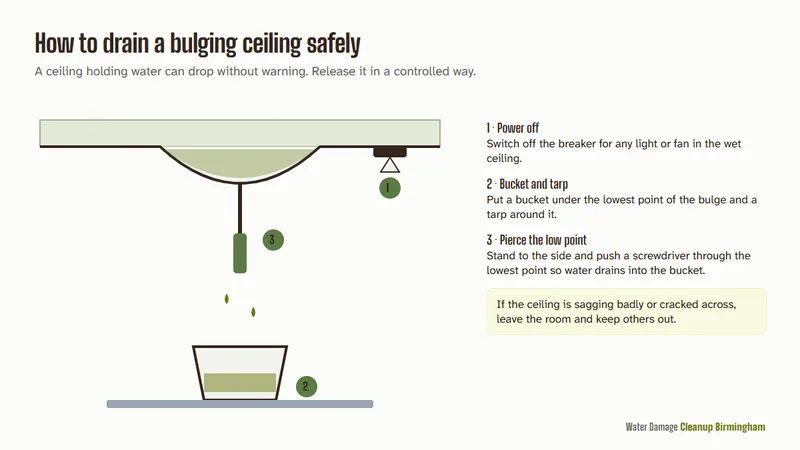
Rain driven in by a storm is the other common source in older houses. The storm roof leak page covers tarping and what to photograph.
Why do wooded Mountain Brook lots keep water close to the house?
Shade, leaves and slope all play a part. Mountain Brook was planned from 1929 by Robert Jemison Jr. along the ridges of Red Mountain and Shades Mountain, with estate lots on winding roads, and Wikipedia puts its tree cover at 92.03%. Heavy canopy fills gutters fast and slows drying.
Warren H. Manning's plan grouped shops into English Village, Mountain Brook Village and Crestline Village and left the rest in forest. Neighborhoods such as Cherokee Bend, Brookwood Forest and Overton have houses set among the trees.
On a hillside lot, water from uphill yards and clogged downspouts heads for the lowest wall of the house. If you have a basement cut into the slope, check the floor-wall joint and window wells after storms, and keep gutters clear in fall.
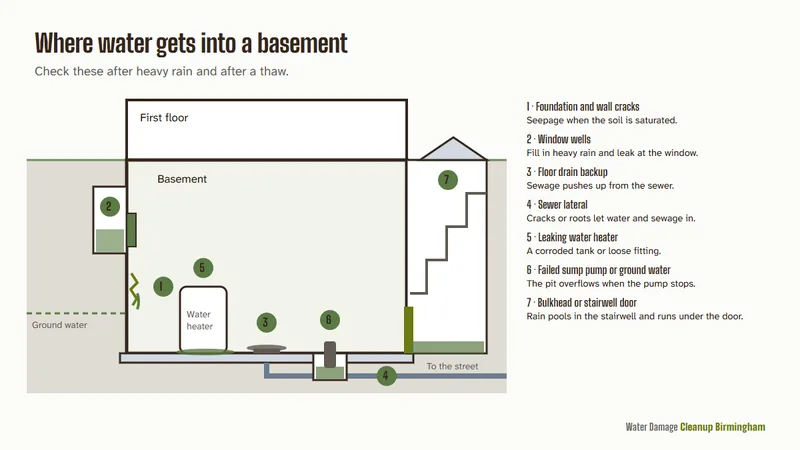
Damp shade also feeds mold. Get soaked materials dry in 24 to 48 hours, the EPA advises, and hold the house under 60 percent humidity, with 30 to 50 as its target range. The basement flooding page and the mold guide go further.
Will home insurance cover creek water in a Homewood basement?
Usually not, unless you also carry flood insurance. The NAIC says homeowners policies typically pay for water from household plumbing or a leaking roof, but not ground water or rain runoff. Water that rises out of Shades Creek or the Cahaba falls under a separate flood policy instead.
A floor drain backing up is a third case. Triple-I treats sewage pushed up through house drains as outside both the usual home form and flood cover, so it has to be added by endorsement. Buying flood cover after the forecast turns bad rarely helps, since new NFIP policies carry a 30-day wait, with limited exceptions, under the FEMA manual.
Alabama's claim standards, Ala. Admin. Code r. 482-1-125, require an insurer to acknowledge a first party claim within 15 days (rule .06). It must tell you whether the claim is accepted or denied within 30 days after proofs of loss, or the policy's period, and send updates every 45 days if it needs longer (rule .07).
If an insurer misses those marks, the Alabama Department of Insurance takes complaints. Step-by-step claim records are in the insurance claims guide, and the sewer backup page covers a floor drain that overflows.
What should you do first after water gets into a Homewood or Mountain Brook home?
Cut off the source, keep away from soaked cords and outlets, and get pictures of each room while it still looks as the water left it. Drying comes next, because the EPA window for preventing mold is 24 to 48 hours. Treat creek water as contaminated and keep kids and pets out of it.
- Close the main shutoff valve, or the valve on the leaking fixture or appliance.
- Kill power to wet rooms at the breaker box, as long as you can reach the box on dry footing.
- If creek water is over the road, wait for it to drop before driving out.
- Take photos and video of each room and item, and note how high the water rose.
- Call your insurer, then save receipts for fans, tarps and pumps.
- Move rugs, papers and furniture out of the wet area and open interior doors.
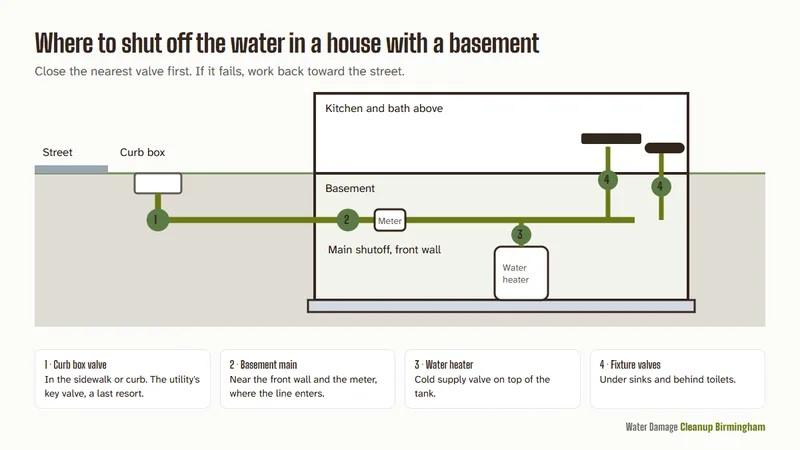
Each restoration team sets its own service area and scope, so ask the one you reach to confirm it works your street before you sign anything. The water mitigation page explains the first stage of a drying job.
Sources: Wikipedia on Homewood, Alabama (location, 2020 census, Hollywood history, Shades Creek), Mountain Brook, Alabama (history, plan, tree cover, 2020 census), Shades Creek (length, watershed, Edgewood Lake, 2021 plan) and Red Mountain (ridge between Jones Valley and Shades Valley); NWS gauge SCHA1, Shades Creek near Homewood (flood stage, impacts, crests); NWS gauge MTBA1, Cahaba River near Mountain Brook (categories, impacts, flood of record); Ready.gov on floods; IICRC S500 categories; EPA mold and moisture guide; NAIC consumer page on home policies (plumbing, roof, ground water); Triple-I disaster coverage article (flood exclusion, sewer endorsement); FEMA NFIP Flood Insurance Manual, April 2024 (30-day wait); Alabama Department of Insurance claim standards, Ala. Admin. Code r. 482-1-125 (.06, .07); Alabama Department of Insurance.