The short version
Water damage repair in Birmingham, AL is the second half of a water loss. After the cause is fixed and moisture readings come back dry, a crew replaces the wet framing, wallboard, ceilings and floors that were removed. Let the adjuster see the open walls first. Old plaster costs more to match than drywall, so compare itemized written bids before you choose.
What work is part of water damage repair in Birmingham, AL?
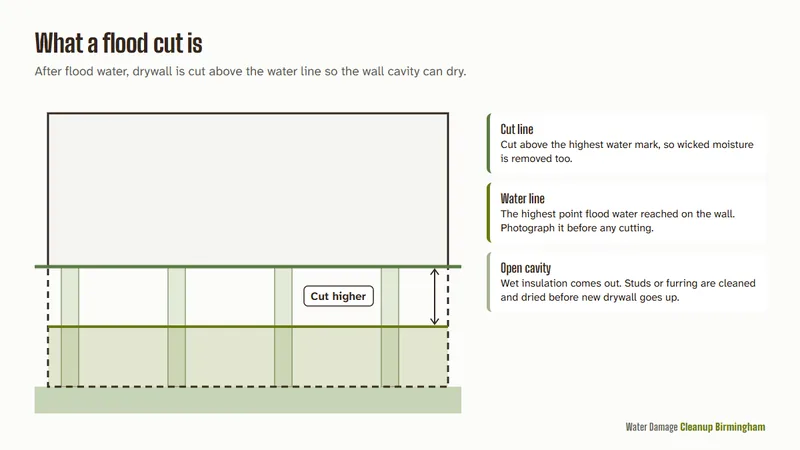
Water damage repair in Birmingham, AL is the rebuild that follows drying. Whatever the water spoiled or the drying crew cut away gets put back, from subfloor and insulation to wallboard, ceilings, trim, paint and flooring. The work waits for three things: a fixed leak, dry readings and an adjuster visit.
A typical rebuild might close a two-foot strip of open wall in a basement den, rehang a kitchen ceiling under a leaking upstairs bathroom, or put new flooring through a hallway after a water heater failed in a closet.
We do not do construction. Water Damage Cleanup Birmingham refers callers to local water damage restoration teams. Some of them carry a job all the way to finished rooms, and others stop when the drying is done. Ask that question on the first call so you know whether a second contractor will be needed.
How do you know a room is dry enough to rebuild?
The moisture log tells you. Repairs should start once readings in the wet framing, subfloor and wall bottoms match readings from the same materials in a room the water never reached. Closing walls over damp wood traps that water inside, which is how hidden mold and soft subfloors begin.
Ask the drying team for its final readings in writing, with dates and locations. Hand a copy to whoever does the rebuild, and keep one with your claim papers.
If the final log shows readings still above the dry reference in any spot, ask why before work starts. A wall cavity behind a tub or a corner of the subfloor under a cabinet are common places for a last pocket of moisture. The structural drying page explains how those readings are taken.
What should be settled before the repair crew starts?
Four things: the source is permanently fixed, the readings show dry, the adjuster has inspected, and you have a written scope you understand. Starting before any one of those is in place can mean paying for work twice or arguing with the insurer about work it never saw.
- Confirm the repair at the source. A plumber, roofer or appliance technician should have fixed the cause, not just stopped it for the night.
- Get the final dry readings from the drying team, dated and marked by location.
- Let the adjuster see the open walls. Triple-I tells policyholders that big, lasting fixes should wait for that inspection.
- Collect written bids that list each material and its price on its own line.
- Pick finishes early, such as paint colors, flooring and trim, so the work does not stall halfway.
If a burst line or failed fitting started it, the plumbing side is covered on the burst pipe page and the water heater leak page.
In what order do the trades usually come back in?
Structure first, finishes last. Rotted subfloor or framing gets replaced, then any plumbing or electrical inside the open walls is checked, then insulation and drywall or plaster go in. Paint, trim, cabinets and flooring follow, with flooring usually last so it is not damaged by ladders and drywall dust.
Inspections may fall in between. Work that touches wiring, plumbing or structure can need a permit, and the rules depend on the city or county where you live, so ask your contractor who pulls it.
Expect some back and forth between steps. Drywall mud has to dry between coats, and primer needs to cure before paint. In humid summer weather, keeping the air conditioner running helps finishes set properly.
Can older plaster walls be repaired after a leak?
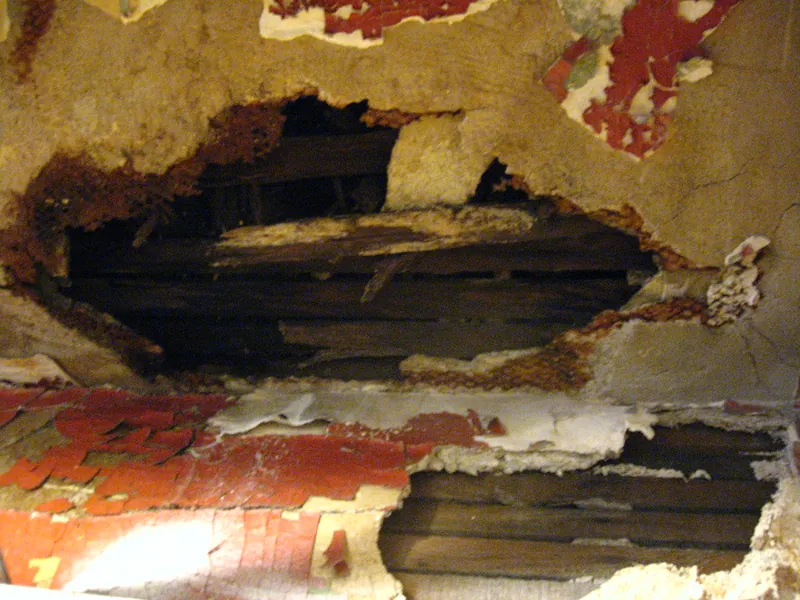
Often, if the plaster is still attached and the lath behind it has dried. Small stained or cracked areas can be patched by someone who works with plaster. Plaster that has let go of the lath, crumbles, or sags usually comes out, and the opening is closed with plaster or drywall built up to match.
Birmingham grew fast in the early 1900s. Wikipedia says the early 20th century brought the growth behind the nickname "The Magic City," and Homewood's Hollywood Historic District, listed in 2002, includes 412 contributing buildings. Houses from those eras may still have original plaster walls.
Matching old plaster texture takes more time than hanging new drywall, and that shows up in the estimate. Ask the restoration team whether it handles plaster itself or brings in a plasterer. Ceiling plaster that has already fallen is covered in the next section and on the ceiling water damage page.
How is a sagging or stained ceiling fixed?
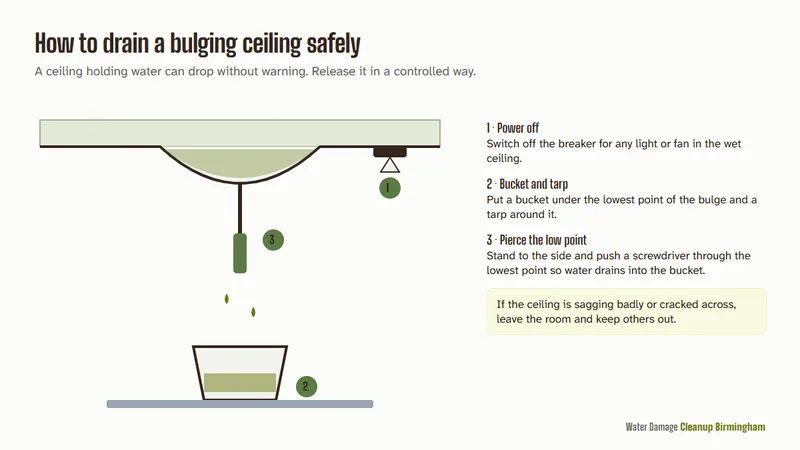
First the water above it has to be dealt with safely, then the ceiling is dried or replaced. A ceiling that is bulging with trapped water can fall without warning. Cut the breaker for any fixture in that ceiling, set a pail beneath the lowest bulge, and clear the room of kids and pets.
A ceiling that only stained and still reads dry may need a stain-blocking primer and paint. One that sagged, cracked or soaked through is usually cut out to the nearest joists and replaced, with the insulation above checked as well.
Under a leaking bathroom, the floor above has to be fixed first. The bathroom and kitchen leak page covers tub, shower and sink sources.
Can soaked floors be saved, or do they need replacing?
It depends on the material and how long it stayed wet. Tile on a sound subfloor often survives. Vinyl and laminate trap water underneath and are frequently replaced. Solid hardwood can sometimes be dried and sanded flat, while engineered wood with swollen layers usually cannot be saved.
Carpet pad is nearly always replaced. Carpet itself may be kept if it was wet only with clean water and dried quickly, but not after flood or sewage water.
Before new flooring goes down, the subfloor should read dry and feel solid underfoot. Ask the installer to check for soft spots near the toilet, tub and dishwasher, where slow leaks often go unnoticed. The water damaged floors page and the wet carpet page go deeper.
What changes when a creek flood or tornado caused the damage?
The rebuild gets bigger and the claim gets more complicated. The IICRC S500 standard puts creek and street water in its most contaminated group, Category 3, which means soaked drywall, insulation, carpet and porous furniture usually come out. Storm damage adds roof, window and siding repairs that must be finished before interior work can last.
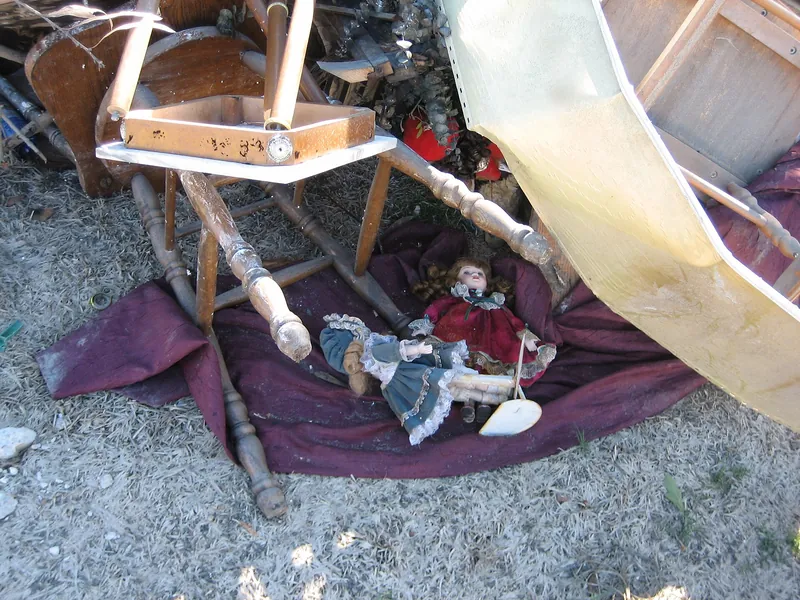

Central Alabama has seen both. NWS records show Village Creek at Avenue W in Ensley cresting at 14.8 feet on December 3, 1983, above its 13 foot moderate flood stage. Wikipedia describes the EF4 tornado that hit Tuscaloosa and Birmingham on April 27, 2011, and an EF3 that struck Fultondale and Center Point on January 25, 2021.
Flood repairs also depend on a separate flood policy, since FEMA notes most homeowners insurance does not cover flooding. The flood cleanup page, the storm roof leak page and the tornado history page cover each side.
What happens if mold turns up behind an opened wall?
It gets cleaned up and its moisture source fixed before anything new goes over it. Opening a wet wall sometimes shows growth on the back of the drywall or on the studs. EPA cleanup guidance warns against covering mold with paint or caulk; it keeps spreading under the new coat.
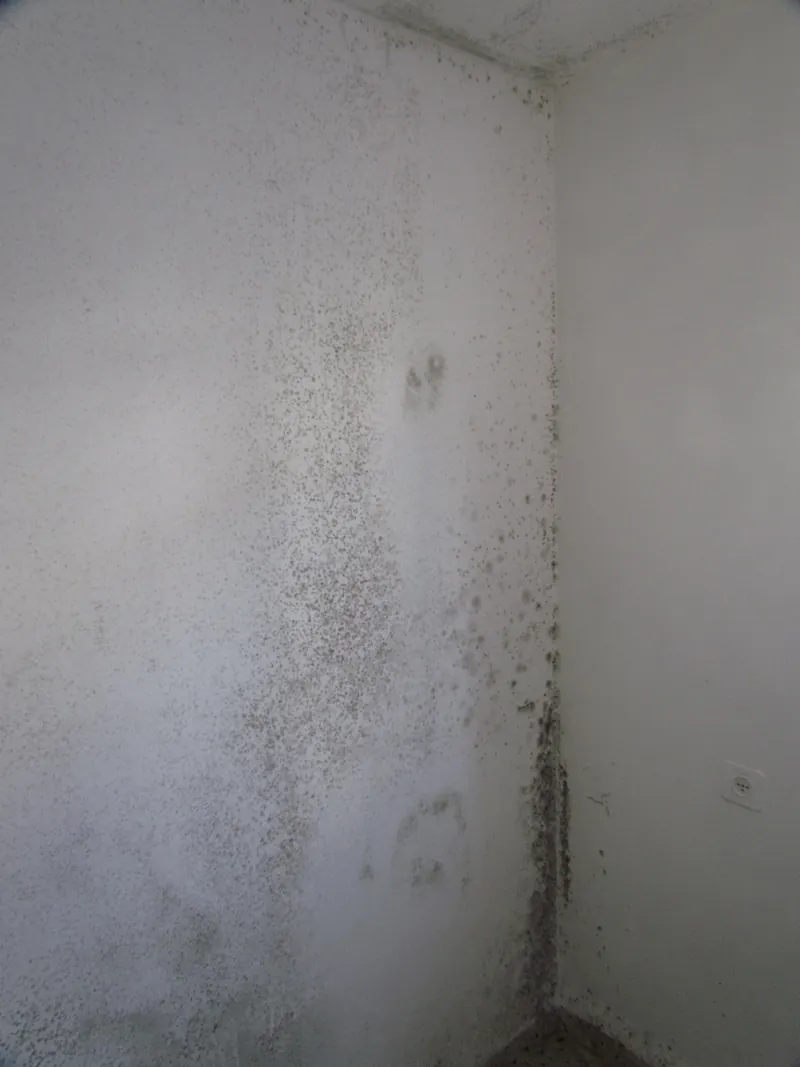

For small areas, the EPA says a homeowner can usually handle a moldy patch smaller than about 10 square feet. Larger growth, or mold caused by sewage or other dirty water, belongs with someone experienced in that kind of cleanup.
Keep in mind that many policies limit or exclude mold, per the NAIC. Report it to the adjuster when it is found. The mold after water damage guide explains more.
How much does water damage repair cost in Birmingham, AL?
We have no Birmingham-specific price data, so national cost guides are the reference. Bob Vila, citing Angi and HomeAdvisor in a May 30, 2023 update, puts overall water damage restoration at $1,305 to $5,707 with a $3,455 national average. Your total depends on how much was removed and what goes back.
| What gets fixed | Who published it | National figure |
|---|---|---|
| A ceiling | Bob Vila, 2023 | $350 to $1,250 per repair |
| Wallboard | Fixr 2025 and Bob Vila 2023 | $1.50 to $3 a sq. ft. |
| Plaster walls | Fixr, 2025 | $6.25 to $18.75 a sq. ft. |
| Hardwood floors | Fixr, 2025 | $10 to $15 a sq. ft. |
These are background figures only, not prices a restoration team near you will charge. A second national guide, Fixr (updated January 31, 2025), lands lower, at $1,200 to $5,000 and about $3,000 on average. More breakdowns are in the restoration cost guide for Birmingham.
Who pays for the rebuild under an Alabama policy?
It usually pays when the cause is covered and the adjuster agrees with the scope. In NAIC terms, water from your own pipes or through the roof usually qualifies, and water rising from the ground or running off the yard usually does not. Triple-I lists flood and sewer backup as separate purchases and leaves upkeep failures out.
Alabama's claim standards, Ala. Admin. Code r. 482-1-125, call for the insurer to acknowledge your claim in 15 days and, after proofs of loss, to tell you in 30 days, or the policy's period, whether it accepts or denies it. A denial has to cite the policy provision it relies on.
When you and the insurer cannot agree on the number, Triple-I notes that many policies offer appraisal: each side hires its own appraiser, the pair agree on a neutral umpire, and a decision signed by two of the three is final. Hiring a public adjuster can cost up to 15 percent of what you recover, Triple-I adds. The Alabama Department of Insurance takes complaints. See the insurance claims guide and what to do after a denied claim.
What belongs on an itemized repair bid?
A line for every material and task, with quantities and prices, plus what is excluded. Triple-I recommends bids that list materials and prices line by line. That lets you compare contractors fairly and line the estimate up against the adjuster's version, item by item, when the two disagree.
- Square footage of drywall, plaster, flooring and ceiling being replaced.
- Who handles permits and inspections, if any are needed.
- Whether paint covers only the repaired wall or the whole room.
- How matching is handled for flooring, trim and texture.
- Payment schedule, and what happens if the insurer pays less.
Read the contract before signing, especially any assignment of benefits. Our page on choosing a restoration company lists more questions, and the water mitigation page explains the drying stage that comes before all of this.
Sources: Wikipedia, Birmingham, Alabama (early 20th century growth); Wikipedia, Homewood (Hollywood Historic District); Wikipedia, 2011 Tuscaloosa and Birmingham tornado; Wikipedia, 2021 Fultondale tornado; NWS gauge ENSA1, Village Creek at Avenue W; IICRC S500 water categories; EPA mold cleanup guidance (do not paint over mold); EPA mold and moisture guide (10 square feet); FEMA on flood and homeowners coverage; Bob Vila (ceiling, drywall and overall ranges; Angi and HomeAdvisor data); Fixr (plaster, hardwood and overall ranges); NAIC on what homeowners policies cover; Triple-I on covered and excluded water; Triple-I on adjusters, bids, appraisal and public adjusters; Ala. Admin. Code r. 482-1-125-.06 and 482-1-125-.07; Alabama Department of Insurance, where consumers file complaints.