The short version
After a sump pump failure in Birmingham, keep your feet out of the water until the power is confirmed off, then check the breaker and the float from the stairs, raise belongings and photograph the water. Fixing the pump is plumbing work; pumping out and drying the space is the restoration side. EPA advice is to get soaked materials dry in 24 to 48 hours, before mold can settle in.
The sump pump quit during a Birmingham storm: what do I do first?
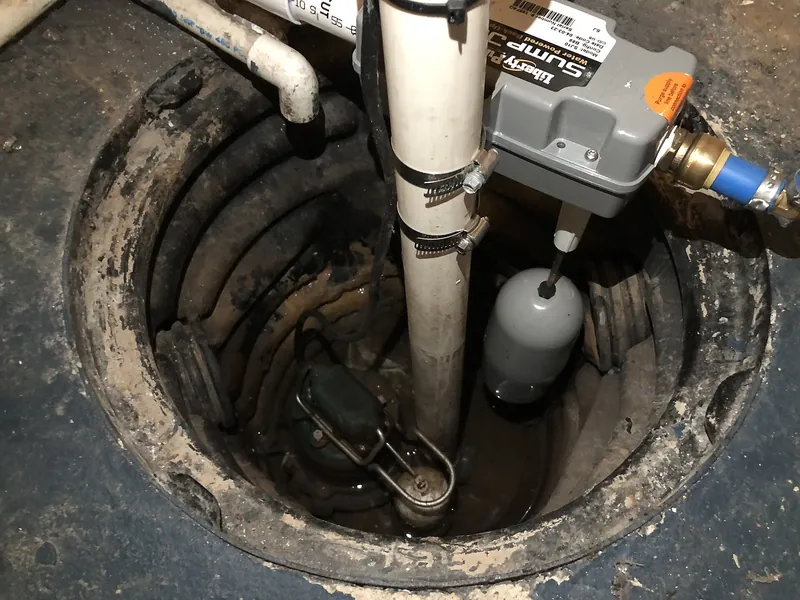
Treat the power as the first hazard. After a sump pump failure in Birmingham, the pit, the pump cord and any low outlets may be energized, so stay on the stairs until you know that circuit is dead. Then look for the simple causes, lift what you can off the floor and start taking pictures.
- Do not step into the water with the power on. If it touches outlets, cords or the furnace, switch the breaker off only from dry footing, or have an electrician or the electric utility do it.
- Check the breaker and any GFCI outlet. A tripped circuit is the easiest fix there is.
- Look at the float from a safe spot. A float jammed against the pit liner or caught on its own cord never tells the motor to start.
- Get stored things off the floor. Paper, area rugs and anything that plugs in should go up a shelf or up the stairs.
- Take pictures of the full pit, a tape measure standing in the water and each soaked belonging.
- Have a plumber swap or fix the pump, and let your insurance agent know about the loss.
Removing water that has already spread is covered on the water removal page. If the water rose from the floor drain and smells like sewage, the sewer backup cleanup page deals with that separate problem.
What makes a sump pump fail in a Birmingham storm?
Usually lost power, a switch that sticks or a pump too small for the inflow. Wikipedia notes that cold fronts bring strong to severe thunderstorms and occasional tornadoes to the Birmingham area in spring and fall, and that tropical storms sometimes reach the city in late summer and fall. A storm that fills the pit can also cut the electricity.
- The power goes out. A plug-in pump stops with it, often at the peak of the rain.
- The float switch sticks. The motor never starts, or never shuts off until it overheats.
- Silt and gravel clog the intake. A dirty pit starves the pump of water it should be moving.
- The check valve fails. Each discharge cycle drains straight back into the pit.
- The pump is undersized or worn. It runs nonstop on a wet night and still falls behind.
- The outdoor discharge line is blocked, crushed or buried, so the water has nowhere to go.
The same Wikipedia article calls November and early December a secondary severe weather season. Test the pump before spring storms and again before that late-year stretch.
Where does the water in a sump pit come from?
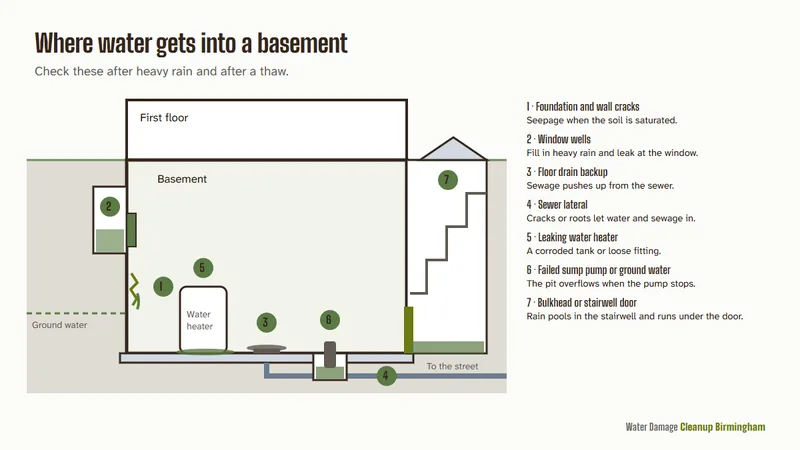
Groundwater supplies most of it. Drain tile laid along the footing collects water and carries it to the pit, and seepage under the slab adds more. On a hillside lot, water moving downhill through the soil can keep the pit busy for days after a storm, so even a short pump outage lets it overflow.
Local creeks show how wet the ground gets. The NWS gauge on Shades Creek near Homewood recorded 19.88 feet on September 16, 2004 and 18.79 feet on May 4, 2021, well past its 14-foot minor flood stage, according to the gauge page.
Farther east, the Cahaba River at Trussville crested at 19 feet on May 7, 2003, its highest listed crest on the NWS gauge. Homes along the Homewood and Mountain Brook and Trussville and Pinson pages sit near those streams.
If water keeps getting in with a working pump, the basement flooding page covers the other entry points.
What backup keeps a sump pump running when the power goes out?
Anything that does not depend on house current. The usual choices are a battery backup pump, a pump driven by city water pressure or a generator, often with a high-water alarm. Which one suits your house depends on the pit size, how the discharge line runs and whether you are on city water, so get a plumber's opinion.
- Battery backup pump. Mounted beside the main unit on its own float, it kicks in once the primary pump goes quiet. Replace the battery on the maker's schedule.
- Water-powered backup. It runs on household water pressure, so it needs a public water connection and will not work on a private well.
- Generator. Set it up outside only; Ready.gov puts the minimum distance from any window at 20 feet.
- High-water alarm. An inexpensive float alarm sounds before the pit spills over.
Ready.gov also recommends carbon monoxide detectors with battery backup in central spots on every level of the home. Never run a generator in a garage, crawl space or lower level, even with the door open.
Whatever you choose, test the backup whenever you test the main pump, so you know both will start when the storm arrives. A battery backup runs only as long as its charge holds, so ask the plumber how many cycles yours can handle in a long, slow storm.
How do I test a sump pump before storm season?
Pour water into the pit slowly from a bucket until the float lifts, and watch one full cycle. A healthy pump starts, empties the pit quickly and shuts off cleanly. If it hums without pumping, starts and stops in rapid bursts, or does nothing, call a plumber before the next big rain.
- Unplug the pump first, then scoop silt, gravel and debris out of the pit and off the intake screen.
- Check that the float rises and falls freely and the cord cannot catch on it.
- Walk the discharge pipe outside and make sure it is clear and drains away from the house.
- Listen for the check valve to close when the pump stops, with no rush of water back down.
- Run the backup pump and the alarm through the same test.
Write the test date on a piece of tape on the pit lid. A pump that cycles every few seconds on a dry day may have a failed check valve or a float set too low. The water damage prevention guide has a seasonal list of other lower-level checks.
Is water from an overflowing sump pit contaminated?
It can be, depending on its source and what it crossed. Of the three water categories in the IICRC S500 standard, the worst one, Category 3, covers flood water rising out of creeks and rivers and any surface water that ran in from outside. Groundwater left standing on a dirty floor for days can also degrade.
A restoration team should judge the water before deciding what to keep. Creek water or yard runoff that poured in through a door or window well will likely be handled with the same precautions the IICRC standard sets for sewage.
Put on boots and rubber gloves before going down the stairs, and keep kids and animals on the main floor. The CDC also lists goggles and open windows for flood cleanup, and warns never to mix bleach with ammonia or other cleaners.
Bare concrete soaks up water and gives it back slowly, so a slab can stay damp long after the surface looks dry. That is one reason drying equipment stays until the meter readings say otherwise.
What can be saved in a flooded finished basement?
Framing and concrete can usually be dried in place; soft, porous materials that cannot dry quickly usually come out. EPA guidance gives 24 to 48 hours to dry wet materials and belongings before mold becomes a risk, and soaked pad, insulation and drywall rarely make that window without being removed.
| Wet material | How water affects it | Usual result | Your part |
|---|---|---|---|
| Carpet and pad | The pad holds water flat against the slab | Pad replaced; carpet sometimes saved if the water was clean | Take photos before anything leaves the house |
| Drywall and wall insulation | Water wicks up the board and fills the batts | Bottom of the wall cut away | Mark the high water line in pencil |
| Studs and bottom plates | Absorb water but dry once the wall is open | Dried in place and checked with a meter | Ask for the written moisture log |
| Vinyl plank or laminate | Traps water underneath and swells at the seams | Often pulled up so the slab can dry | Keep a spare plank or the product label |
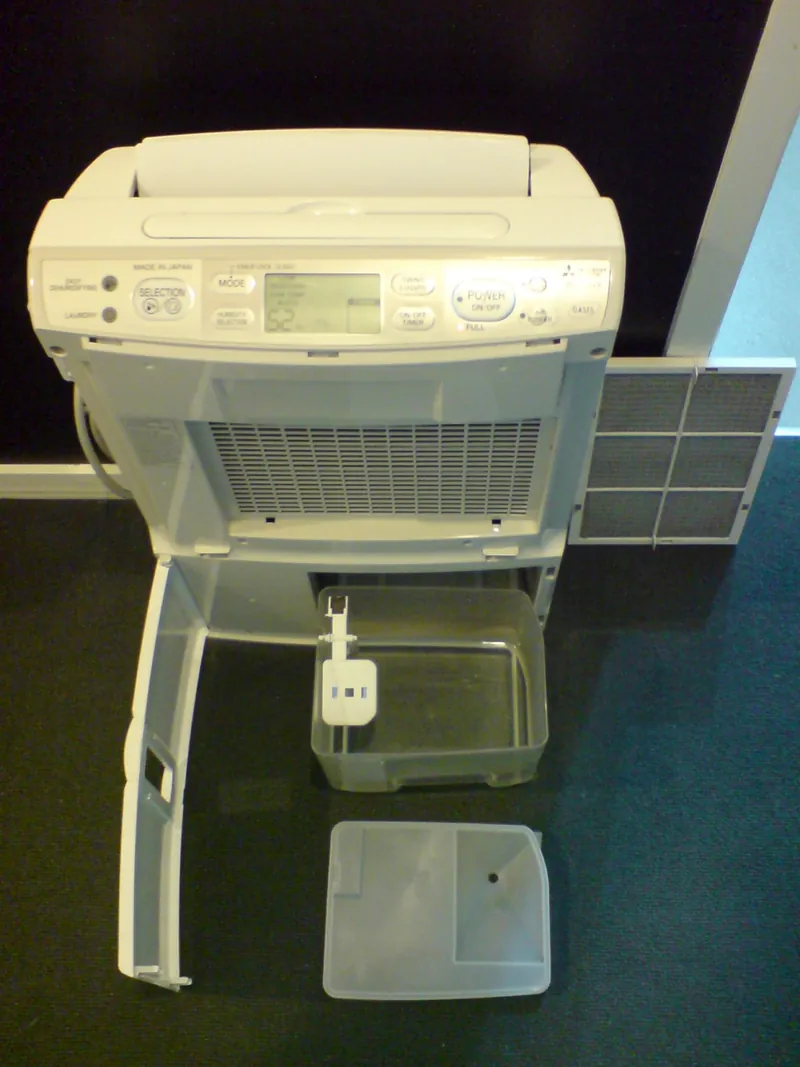

After the main drying, keep the room below 60 percent relative humidity, ideally 30 to 50 percent, as the EPA advises. The structural drying page explains how progress is measured, and the wet carpet page covers carpet decisions. Ask the restoration team you reach to list in writing which of these steps their visit covers.
Does homeowners insurance cover sump pump failure in Alabama?
Often only if you added an endorsement, so check before you need it. The NAIC says a standard homeowners policy typically does not cover damage from ground water, rain runoff or snow-melt. Many insurers sell a water backup endorsement, and its exact wording decides whether a sump overflow is included, so ask your agent.
Flooding is excluded from standard policies, and so is damage from poor upkeep, according to Triple-I. Keep receipts for pump service and parts as proof the system was maintained.
Before storm season, ask your agent three things in writing: whether sump overflow is covered, whether that cover carries its own limit, and when a newly added endorsement takes effect.
When you file, Triple-I advises photographing the damage, keeping receipts for emergency costs and holding damaged items for the adjuster. The NAIC guide explains the main policy terms. Under Alabama Department of Insurance claim standards, Ala. Admin. Code r. 482-1-125-.07 calls for written status updates every 45 days while an investigation stays open, and the Alabama Department of Insurance takes complaints. The insurance claims guide covers the rest.
Can a frozen discharge line make a sump pump fail?
Yes. If the outdoor end of the discharge pipe freezes, the pump pushes against ice and the pit fills anyway. Wikipedia says Birmingham averages 47 days a year with a low at or below freezing, so a cold rain followed by a hard freeze can catch a line that holds water outdoors.
- Slope the outdoor section so it drains completely between cycles.
- Ask a plumber about an overflow outlet near the house, so water has a way out when the far end is iced over.
- After a winter storm, knock ice and packed leaves away from the pipe mouth.
- Keep the outlet above grade, never sunk in a dip where meltwater pools and refreezes.
If the pump runs but the pit keeps rising on a frozen morning, unplug it to protect the motor and call a plumber to thaw or reroute the line. Cold snaps split supply pipes too, and the burst pipe page covers that problem. Creek flooding across the area is explained on the Birmingham flooding page.
Sources: Wikipedia, Birmingham, Alabama (climate); NWS gauge, Shades Creek near Homewood; NWS gauge, Cahaba River at Trussville; Ready.gov: outages, generators and CO alarms; IICRC S500 category definitions; EPA moisture and humidity guidance; CDC mold and cleanup safety advice; NAIC homeowners insurance consumer guide; Triple-I: which disasters a homeowners policy covers; Triple-I guide to settling disaster claims; Ala. Admin. Code r. 482-1-125-.07.