In brief
For a water heater leak, Birmingham homeowners should close the cold inlet valve above the tank, then turn a gas unit's knob to off or kill power to an electric one at the panel. Stay clear of scalding water and photograph everything. A plumber judges the heater; a restoration team handles the wet slab, walls and stored items.
How do I stop a leaking water heater?
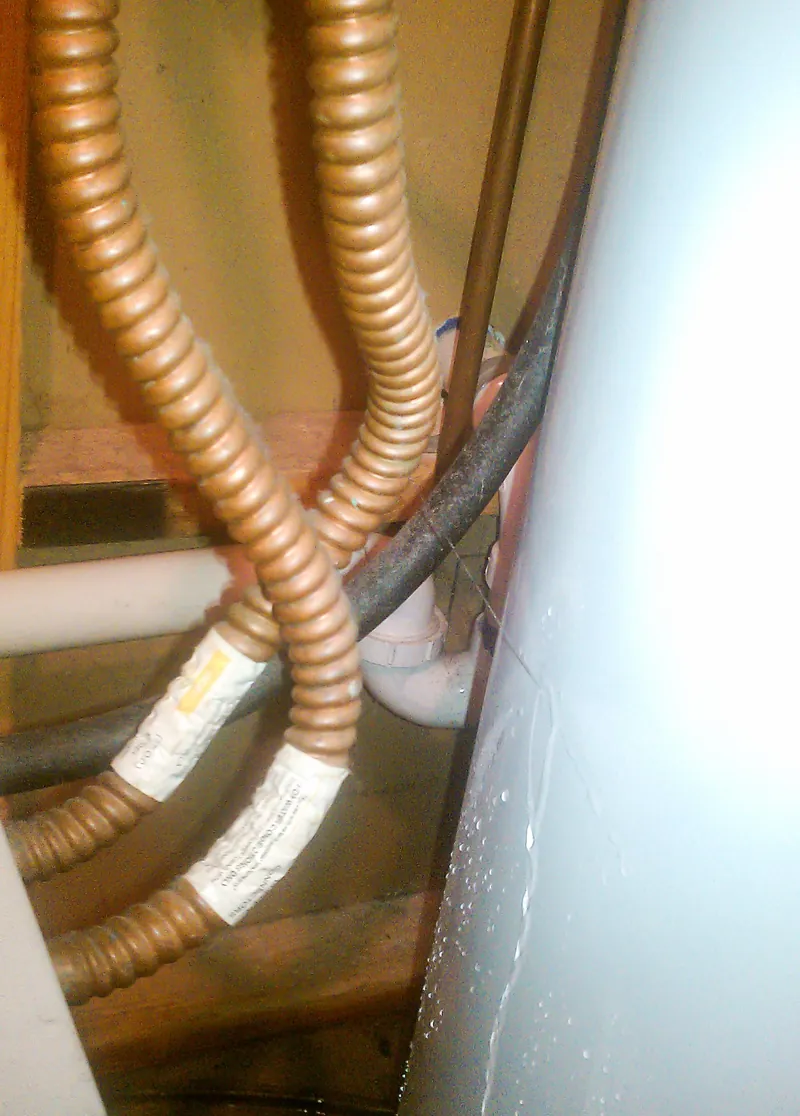
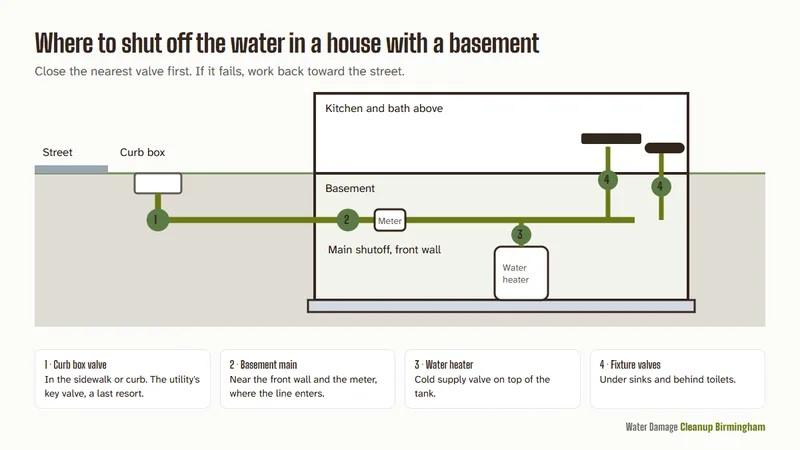
With a water heater leak, Birmingham homeowners need to stop both the incoming supply that keeps topping the tank up and the burner or elements that keep heating it. Turn the cold inlet valve above the heater to closed. Then set the gas control knob to off, or switch off the heater's breaker if it is electric.
- Close the cold supply on the pipe entering the top of the tank. A round handle turns clockwise; a lever handle turns until it sits across the pipe.
- Shut off the heat source. Turn a gas unit's control to off. For an electric unit, flip its breaker while standing on a dry floor.
- Close the house main if the inlet valve will not turn or drips when you move it.
- Keep your distance from the relief pipe and any spray, since tank water can scald.
- Move stored items such as boxes, tools and paint cans away from the puddle.
- Take photos of the heater, its data plate and the wet area before cleanup starts.
A plumber deals with the heater. Removing water and drying the room is a separate job, covered on the emergency water damage page.
Where on the heater is the water coming from?
Dry the outside of the tank and the floor around it, then watch where fresh water appears. Water at the pipe connections on top is often a loose fitting or a failing valve. Water seeping from the bottom seam or through rust on the tank wall usually means the tank itself has corroded through.
| Leak spot | What it looks like | Common cause | Usual outcome |
|---|---|---|---|
| Pipes on top of the tank | Drips down the jacket, green or white crust on fittings | Corroded connector, loose union, worn inlet valve | Often repairable by a plumber |
| Relief valve or its discharge pipe | Water running out of the pipe near the floor | Too much pressure or heat, or a valve that no longer seats | Needs a plumber to find the cause |
| Drain valve near the base | A slow drip from the spigot | Valve not fully closed or a worn washer | Often a small fix |
| Bottom seam or tank wall | Rust streaks, water pooling under the base | Tank lining corroded through | Tank usually has to be replaced |
Water from a tank or its supply lines generally starts out clean, which the IICRC S500 standard classes as Category 1, the same as a burst supply pipe. The burst pipe page covers leaks in the lines that feed the heater.
Is water from the relief valve pipe a warning sign?
Yes. That pipe is the outlet for the temperature and pressure relief valve, a safety part built to dump water if heat or pressure inside the tank runs past safe limits. Repeated discharge means either the valve has worn out or the heater is overheating or over-pressurizing, and both need a plumber.
- Never cap, plug or remove the discharge pipe to stop the dripping. The valve is a safety device.
- Do not lift the test lever on an old valve if you are unsure it will close again.
- Leave the tank off and ask a plumber to check the thermostat, the incoming water pressure and the valve itself.
A relief valve drip can look minor while it slowly wets a garage slab, a closet floor or the drywall at the base of a wall. Check the wall next to the heater for swelling and stains. The wet drywall page explains how to tell whether a wall cavity needs to be opened, and the water damage smell guide covers lingering odors from a slow leak.
Can a leaking gas water heater create a carbon monoxide risk?
It can. Water around a gas heater can rust the burner area, put out the flame or soak the venting, and a heater that is not venting properly is a carbon monoxide hazard. Turn the gas control off, get fresh air into the space, and have the unit checked before relighting it.
Carbon monoxide can enter living space when exhaust from a gas water heater back-drafts, or when a flue is blocked, leaking or disconnected, according to the EPA. It describes the gas as odorless, colorless and toxic.
At higher levels, the agency says, carbon monoxide can bring headaches, dizziness, confusion and nausea, sometimes as flu-like symptoms that fade when you leave the house. The same page cites CPSC advice to put CO alarms on every level of the home, outside each sleeping area.
- If an alarm sounds or people feel ill, get everyone outside and call for emergency help.
- The EPA page also relays CPSC advice for a yearly professional inspection of fuel-burning appliances, water heaters included.
Keep paint, gasoline and cleaning products away from any gas appliance, especially in a garage.
How far can a failed tank spread water in a basement or garage?
Further than most people expect. A heater that splits open releases its stored water and then keeps refilling from the supply line until someone closes a valve. In a basement or garage, that water runs to the lowest point, slips under walls and soaks into stored boxes, carpet and the bottom of drywall.
If your house is built into a hillside, the heater may sit in a lower level that is partly below ground. Water that leaves the tank there has few ways out except a floor drain or a sump pit.
- Pick up cardboard boxes first; they wick water and collapse.
- Move rugs and furniture off a wet slab so the floor can breathe.
- Check that a floor drain near the heater is open and not covered by storage.
- If the space has a sump pump, make sure it is running and discharging outside.
The basement flooding page covers drying a lower level, and the sump pump failure page covers pumps that quit when they are needed most.
Is a leaking water heater worth repairing?
That decision belongs to a plumber who has seen the unit, but the leak location says a lot. Leaks at fittings, valves and connectors can often be repaired. A tank that leaks through its own wall or bottom seam usually cannot be patched in any lasting way and is normally replaced.
Before agreeing to anything, ask the plumber to explain what failed and show you the part. A few questions keep the decision clear:
- Is the leak from a replaceable part, or from the tank itself?
- How old is the heater, according to its data plate or serial number?
- Is there rust inside the tank, or sediment that suggests other problems?
- Does the new unit need a drain pan, a different vent or an expansion tank where you live?
- Who handles any permit or inspection the work requires?
Get the plumbing quote and the drying quote in writing, separately. Your insurer may treat the heater and the water damage it caused in different ways. The water damage repair page covers rebuilding walls and floors once the space is dry.
Can freezing weather damage a water heater in a Birmingham garage?
It can. Birmingham winters are mild on most days, but cold snaps still reach heaters in unheated garages, crawl spaces and attics. Exposed inlet lines, the relief pipe and nearby supply pipes are the parts most likely to freeze and split, and the leak often appears only after the thaw.
The Wikipedia article on Birmingham reports an average of 47 days a year with lows at or below freezing. Its record low is -10 F, set on February 13, 1899.
The American Red Cross names garages, crawl spaces and attics among the unheated spaces where supply lines are most at risk. For trips away in winter, it says to keep the heat set at 55 F or above and to leave a cold drip running where pipes are exposed.
- Wrap exposed lines near the heater with pipe insulation.
- Use gentle heat, like a heating pad or hair dryer, on an iced-up line, and never a torch or flame.
The prevention guide covers other cold-weather steps.
Will insurance cover a burst water heater in Alabama?
The water damage often is, while the heater itself may not be. Plumbing water damage is typically covered, per the NAIC, and Triple-I counts an accidental overflow from a heating or plumbing system among the named perils. Both point out limits, and Triple-I says neglected maintenance is not covered.
That last point matters with heaters, because a slow leak that was ignored can be read as a maintenance problem. Report the leak promptly, and follow Triple-I's claim advice: protect the home from more damage, save receipts, and keep the failed tank or parts until the adjuster has seen them.
Under Alabama's claim rule, Ala. Admin. Code r. 482-1-125-.06, the insurer has 15 days to confirm it received your claim unless it pays first. Rule 482-1-125-.07 says you should learn whether the claim is accepted or denied within 30 days after the insurer gets your proofs of loss, or the period your policy sets. Longer investigations bring status letters every 45 days.
The Alabama Department of Insurance takes complaints. The insurance claims guide explains each step.
What does water heater leak cleanup cost?
It depends on how much water escaped, how long it sat and what it reached. A drip caught on a garage slab may need little more than a fan, while a tank that emptied into a finished lower level, through carpet and drywall, is a much bigger job. National guides give rough ranges, not Birmingham quotes.
An inch of clean water across a basement floor is a $500 to $1,500 job in Bob Vila's estimate. Fixr shows restoration jobs ranging from $1,200 to $5,000 nationally, averaging $3,000, and prices clean-water removal from $3.75 to $4.25 per square foot.
- Square footage of wet flooring and how many walls wicked water.
- Carpet and pad, which may be dried or replaced.
- Drywall and baseboards cut out and rebuilt.
- The plumber's separate bill for the heater repair or replacement.
Ask for a written estimate that separates extraction, drying and rebuild. The restoration cost guide covers more of what shapes the price.
How is a room dried after a water heater floods it?
A restoration team removes standing water, takes out materials that cannot be saved, then runs air movers and dehumidifiers while checking moisture readings each day. Basements and utility rooms tend to dry slower than upstairs rooms because concrete holds water and air moves less. The job ends when readings return to normal.
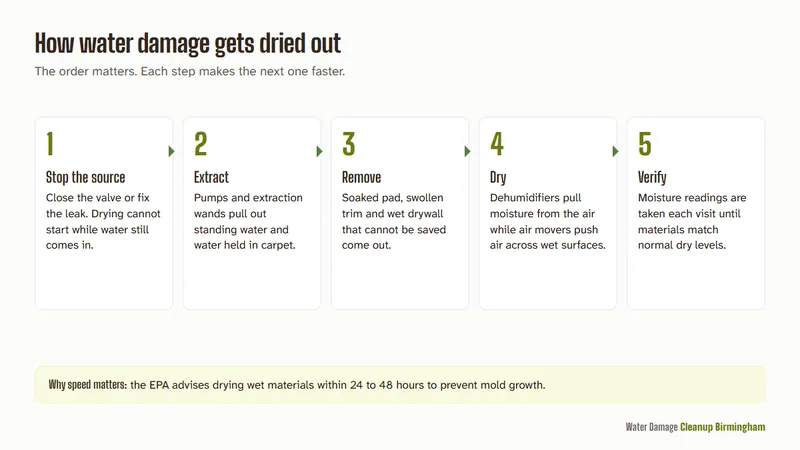
Drying soaked materials in the first 24 to 48 hours is the way to keep mold from starting, the EPA says, and it puts the ideal indoor humidity at 30 to 50 percent, never over 60. Birmingham's summers make that harder: the city's Wikipedia article describes hot, humid summers with 65 days a year at 90 F or above.
- Confirm the heater is shut down and the leak has stopped.
- Extract water from the slab, carpet and pad.
- Cut drywall above the wet line and pull wet insulation.
- Dry with air movers and dehumidifiers, logging readings.
- Rebuild after the slab, framing and walls read dry.
The structural drying page goes through the equipment in more detail.
What are the signs a water heater is close to failing?
Heaters usually give hints before they let go. Rust-colored hot water, rust on the tank or fittings, a damp floor around the base, popping or rumbling sounds while it heats, and a relief pipe that drips are all reasons to have a plumber take a look before the tank gives out.
- Look at the base of the heater and the floor around it once a month.
- Check the fittings on top for crust or drips.
- Leave a clear ring of floor around the heater, without boxes, so a puddle shows up early.
- Ask a plumber whether a pan with a drain line, or a floor sensor that sounds an alarm, suits your setup.
- Learn where the inlet valve and main valve are before you need them.
The signs of water damage guide covers clues elsewhere in the house, and the appliance leak page covers washers, dishwashers and fridge lines.
What each restoration team handles varies, so confirm the scope directly. The contact page is the place to Reach a local water damage restoration team near you.
Sources: EPA, carbon monoxide and indoor air (gas water heater back-drafting, symptoms, CPSC alarm and inspection advice); IICRC S500 (Category 1 water); Wikipedia, Birmingham, Alabama (freezing days, record low, summer heat); American Red Cross frozen pipe guidance; NAIC on plumbing water damage; Triple-I named perils and maintenance exclusion; Triple-I claim steps; Ala. Admin. Code r. 482-1-125-.06; Ala. Admin. Code r. 482-1-125-.07; Alabama Department of Insurance; Bob Vila basement cleanup range; Fixr restoration average and extraction pricing; EPA mold and moisture brief.