In brief
For appliance leak water damage, Birmingham homeowners should close the valve feeding the machine, or the house main if it sticks, and unplug it from a dry spot. Take pictures, have the machine itself repaired, and start drying floors and cabinets early, since the EPA wants wet materials dried in a day or two.
Where is the shutoff valve for a leaking washer, dishwasher or fridge?
Appliance leak water damage in Birmingham homes grows every minute the supply stays open, so the valve comes first. Close the shutoff that feeds the machine, cut its power from a dry spot, and keep the water away from wood floors, carpet and anything downstairs. Drying and repairs can wait a few minutes; the water cannot.
- Close the appliance valve. A washer has a hot and a cold tap on the wall behind it. Dishwashers are normally fed from a valve inside the sink cabinet. Ice maker tubing tends to end at a tiny saddle or quarter-turn valve behind the fridge or below the floor.
- Shut the main if that small valve is stuck, leaks itself or does not exist.
- Unplug or switch off the breaker, but only with dry hands while standing on a dry floor.
- Stop the spread with towels, and lift laundry baskets, rugs and boxes off the floor.
- Check the floor below. Water from a main-floor kitchen often shows up on a basement ceiling before you notice it upstairs.
- Take photos of the machine, its rating label, the failed hose or part, and every wet surface.
Fixing the machine and drying the house are separate trades. An appliance technician or plumber repairs the leak, while a restoration team handles the floors, walls and cabinets. See the water mitigation page for how a drying plan is set up and the water removal page for extraction.
How can I tell which appliance is leaking, and is the water clean?
Follow the wet floor back to its wettest edge and think about timing. A puddle that appears mid-cycle points to the washer. Water at the base of the fridge every morning hints at the ice maker line or the defrost drain. A swollen floor next to the sink often means a dishwasher has been seeping for weeks.
| Appliance | Where water collects | Usual failure | Water type (IICRC) |
|---|---|---|---|
| Washing machine | Behind or under the machine, or flowing toward a floor drain | Split fill hose, drain hose popped out of the standpipe, failed tub seal | Category 2 (grey) when it is wash or rinse water |
| Dishwasher | Under the toe kick, or as a stain on the room below | Worn door seal, loose inlet line, cracked drain hose | Category 2 (grey) |
| Refrigerator | Under the front grille or behind the unit | Brittle ice maker tubing, clogged defrost drain, full drip pan | Category 1 (clean) from a broken supply line |
| AC air handler | On the ceiling under an attic unit or around a hall closet | Blocked condensate line or a rusted, overflowing pan | Usually treated as clean, but check for growth |
| Water softener or filter | Around the tank in a garage or utility room | Cracked housing, loose fitting or a stuck valve | Category 1 (clean) |
The categories come from the IICRC S500 standard, and grey water usually means more material comes out. Sinks, tubs and toilets are on the bathroom and kitchen leak page.
How do I find a slow appliance leak before it ruins the floor?
Slow leaks hide under cabinets and behind machines, so look for indirect signs: a floor that feels soft, a baseboard that has swollen, a musty cabinet, or a water bill that climbs without explanation. Your water meter is the simplest test, and it takes no tools beyond patience.
Pick a two-hour window when nobody will run a tap, note the meter at the start and again at the end, and any change probably points to a leak, says EPA WaterSense. Winter bills help too: over 12,000 gallons in a January or February month for four people can signal a serious leak.
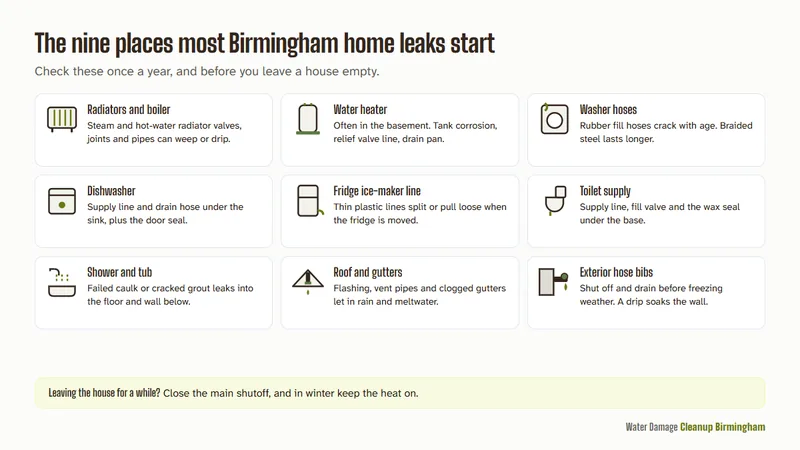
Leaks add up. By the agency's count, leaks in an average home waste more than 9,300 gallons a year, and about nine percent of homes have leaks losing 50 gallons or more each day. The signs of water damage guide lists other clues, and the utility leak adjustment page covers what to ask your water utility about a high bill.
Can an AC drain line in a Birmingham attic cause water damage?
Yes, and summer is when it happens. An air conditioner pulls moisture out of the air and sends it down a condensate line. When algae or debris blocks that line, the pan fills and spills, and an attic unit can soak the ceiling below before anyone notices the stain.
Birmingham air conditioners do a lot of that work. The Wikipedia article on Birmingham describes hot summers with high humidity and says highs reach 90 F or more on 65 days a year.
- Look at the drain pan under the air handler a few times each cooling season.
- Ask the HVAC technician about a float switch that shuts the system down when the pan fills.
- Watch for drips where the condensate line ends outside. A dry outlet on a hot day can mean a clog.
Once water reaches drywall overhead, the ceiling water damage page covers draining and drying it.
What happens to hardwood, laminate and cabinets after an appliance leak?
Wood and pressed-wood products soak up water quickly. Hardwood strips cup or crown as they swell, laminate seams lift, and particleboard cabinet bases and toe kicks puff up and crumble. How much can be saved depends on the material, how long it stayed wet and how soon drying began.
- Solid hardwood can often be dried in place with mats or panels and dehumidifiers, then sanded flat if it cupped.
- Laminate and engineered planks rarely recover once the core swells; the usual fix is replacing the affected rows.
- Particleboard cabinet bottoms lose strength when soaked and are often cut out and rebuilt.
- Vinyl plank and sheet floors may look fine while water sits trapped underneath; a restoration team may lift a few pieces to check.
Moisture meters tell a restoration team when the subfloor has returned to normal, which is the point when repairs can start. The water-damaged floors page explains the options, and the hardwood drying guide goes deeper into cupping.
Carpet near a laundry room or kitchen doorway is covered on the wet carpet page.
Is washer or dishwasher water safe to clean up myself?
A small spill of rinse water on a hard floor is usually a mop-and-towel job. Larger grey-water leaks that soak carpet, drywall or a subfloor need more care, because soapy water carries food residue and germs that feed odor and mold. Wear gloves, keep children and pets away, and ventilate.
Plain soap and water or an everyday cleaner works on tile, sealed counters and other hard surfaces, per the CDC; if you use bleach, cap it at 1 cup per gallon of water. It warns never to mix bleach with ammonia or any other cleaner, and recommends rubber gloves, boots and goggles with the windows open.
- Bag and toss soaked cardboard, paper and anything that smells sour.
- Pull baseboards so trapped water behind them can dry.
- Do not seal a cabinet or floor back up while it still smells damp.
If anyone in the home has asthma, a weak immune system or lung disease, the CDC notes mold can affect them more. The kids and pets cleanup safety page has more on keeping a household safe during cleanup.
Will homeowners insurance pay for appliance leak damage in Alabama?
Often, when the leak was sudden. If a hose bursts or a machine overflows without warning, the standard policy forms Triple-I describes treat that as a named peril. Upkeep is the owner's job, though, so an insurer may push back on a seep that ran for months.
Leaks like these are common. Triple-I estimates that one home in every 60 with insurance reports water or freezing damage each year, at an average of $15,400 per claim between 2019 and 2023.
In Alabama, Ala. Admin. Code r. 482-1-125-.06 gives the insurer 15 days to acknowledge your claim unless it pays first. Rule 482-1-125-.07 says you should be told whether it is accepted or denied within 30 days after proofs of loss reach the insurer, or the period your policy names.
- Keep the failed hose, valve or fitting. An adjuster may want to see it.
- Note the appliance brand, model and age for the claim file.
The Alabama Department of Insurance takes complaints. The insurance claims guide walks through filing, and the denied claim page covers what to do if the answer is no.
How much does appliance leak cleanup cost?
It depends on how far the water traveled and what it soaked. A puddle caught early on tile costs far less than a leak that ran under cabinets and through a ceiling. National cost guides give a feel for the range, but a Birmingham restoration team prices the job only after seeing it.
Pulling up clean water runs $3.75 to $4.25 per square foot on Fixr, and grey water $4.10 to $6.50. By damage class, its flat ranges run from $150 to $400 for Class 1 up to $500 to $1,000 for Class 2. Bob Vila puts restoring floors at $200 to $500.
- Whether the water was clean or grey.
- How many rooms, cabinets and floor layers it reached.
- Removal and rebuild of cabinets, baseboards and flooring.
- The separate repair bill for the appliance or plumbing.
Ask for an itemized written estimate. The restoration cost guide explains what moves the total.
How long does it take to dry a kitchen or laundry room?
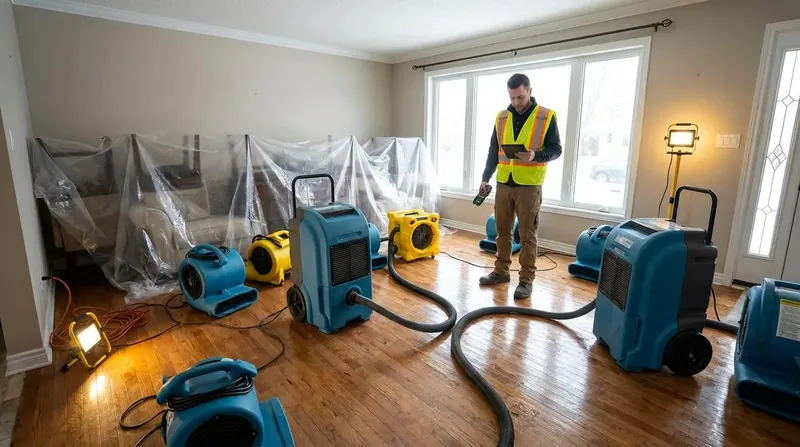
Small leaks of clean water caught early can dry in a few days with the right equipment. Leaks that reached under cabinets, into a subfloor or through a ceiling take longer. Birmingham's sticky summers slow evaporation, so a dehumidifier matters as much as fans. Drying is done when meter readings say so.
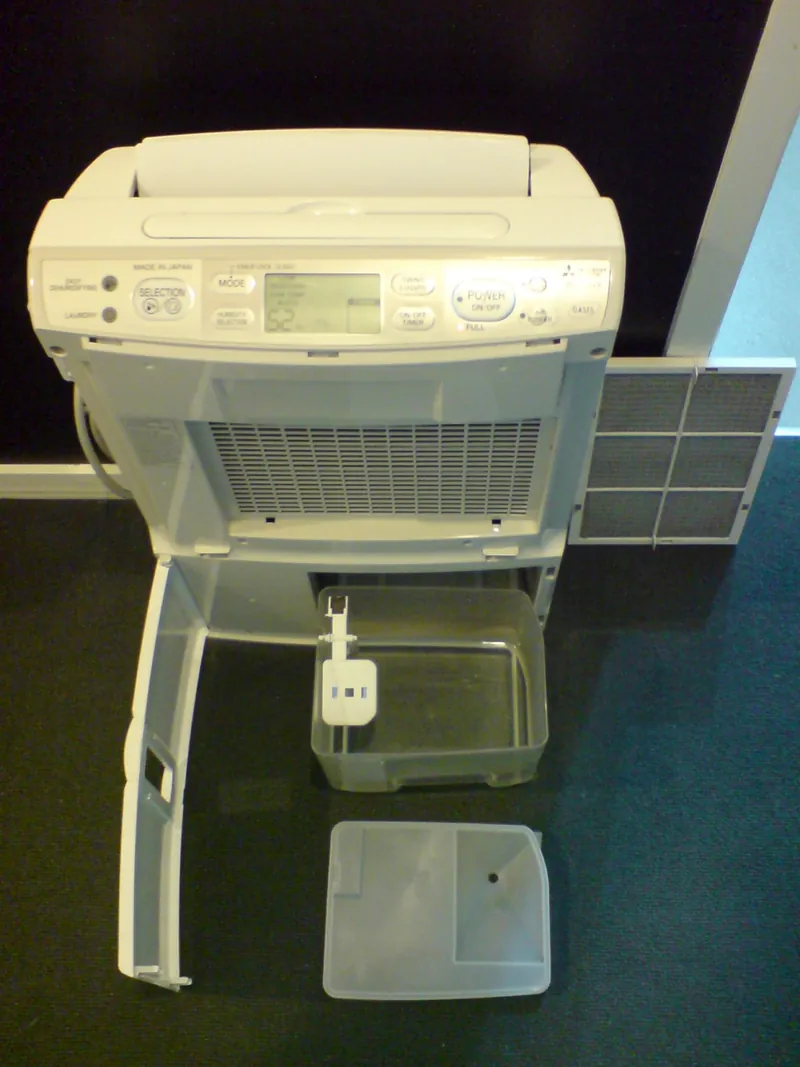

Mold is far less likely when materials dry out in the first 24 to 48 hours, according to the EPA. The agency aims for indoor relative humidity of 30 to 50 percent and no higher than 60.
- Make sure the appliance or line has been repaired and the valve is closed until then.
- Extract standing water and pull out soaked rugs and pads.
- Remove toe kicks or drill small holes so air can reach under cabinets.
- Run air movers and a dehumidifier, and log readings each day.
- Reinstall flooring and trim only after the readings return to normal.
What the air movers do, and how a restoration team reads a wall or subfloor, is on the structural drying page.
How can I keep appliances from leaking again?
Most appliance leaks start with a part that wore out quietly: a rubber hose, a plastic fridge line or a clogged drain. A few minutes of checking every few months catches most of them. Leak sensors and drain pans add a second line of defense for machines you cannot see behind.
- Swap rubber washer hoses for braided ones, and replace any hose that bulges, cracks or rusts at the fitting.
- Give the washer hoses room behind the machine; a sharp fold weakens them over time.
- Put a drain pan under a washer on an upper floor, and a battery leak sensor beside the dishwasher and fridge.
- Close the washer taps when you leave home for more than a few days.
- Keep a fridge or freezer in an unheated garage in mind during freezes.
The American Red Cross includes pipes in kitchen cabinets and garages among the supply lines most likely to freeze. In cold snaps it suggests letting cold water drip from faucets fed by exposed pipes.
The prevention guide covers other weak spots in a house. Restoration teams differ in the services they offer, so confirm details with each one. To reach a local water damage restoration team near your ZIP code, use the contact page.
Sources: EPA WaterSense Fix a Leak Week (meter test, winter usage, household leak totals); IICRC S500 water categories; Wikipedia, Birmingham, Alabama (summer heat and humidity); CDC on mold and cleanup (bleach ratio, protective gear, people at risk); EPA mold and moisture brief (drying time, humidity target); American Red Cross frozen pipe guidance; Triple-I named perils and maintenance exclusion; Triple-I claim frequency and average claim; Ala. Admin. Code r. 482-1-125-.06; Ala. Admin. Code r. 482-1-125-.07; Alabama Department of Insurance; Fixr extraction and damage class pricing; Bob Vila floor restoration range.