The short version
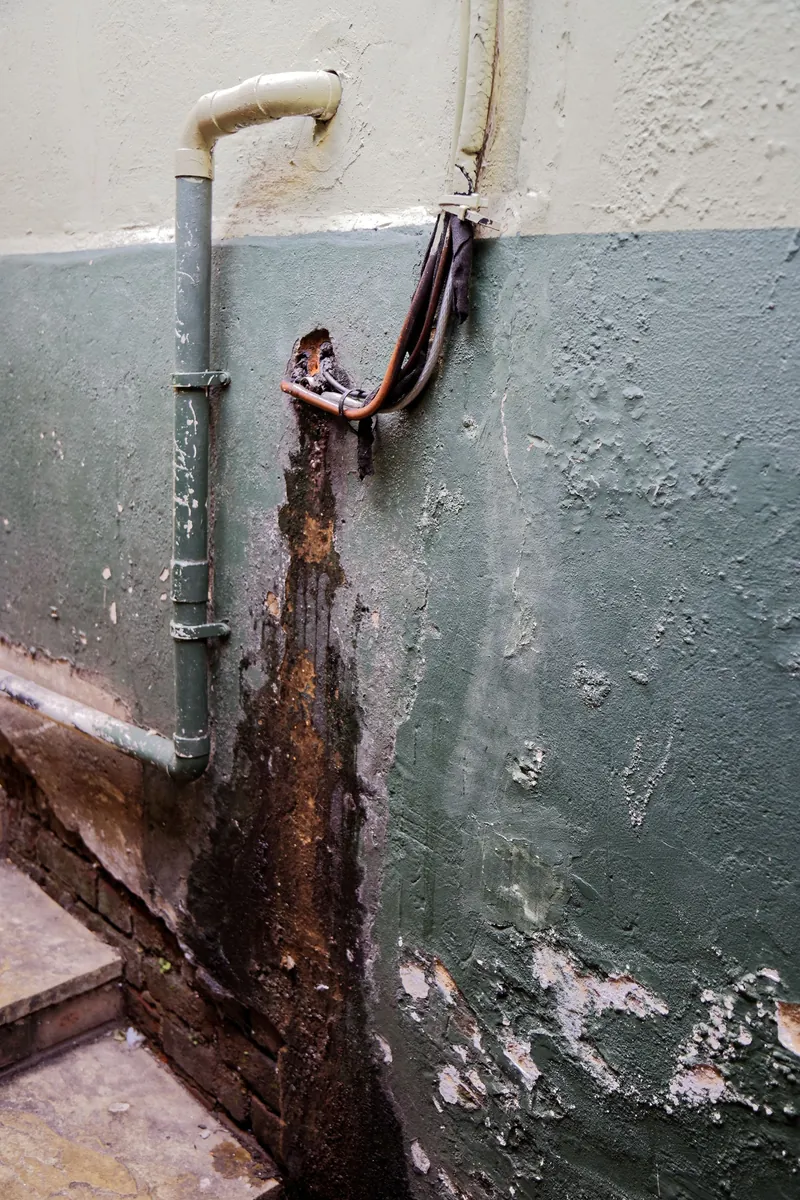
With wet drywall in Birmingham, three things decide the outcome: what was in the water, how many days the board stayed damp, and whether the gypsum still feels firm. Clean water caught early can often be dried in place. Sewage, creek water or a wall that sat wet for days usually means a flood cut. Humid summers slow drying, so keep the room closed with a dehumidifier running and wait for normal readings before any paint goes on.
Can wet drywall in a Birmingham home be dried, or does it have to go?
Wet drywall in Birmingham houses can often be dried right where it hangs when the water was clean, the leak was stopped early and the board still feels solid. Board that has turned soft, sags at the bottom edge, or took on sewage or creek water is usually cut out and replaced with new gypsum.
Inside every sheet is a layer of gypsum sandwiched between paper facings. Gypsum pulls water upward like a sponge, so moisture often sits higher than the stain you can see. The paper facing feeds mold once it stays damp, which is why a restoration team asks what kind of water it was and how long it sat before anyone reaches for a saw.
Getting a wall dry and putting it back together are two different jobs. Structural drying deals with air movers, dehumidifiers and opened wall cavities. Water damage repair picks up after that, with new board, tape, mud, texture and paint once the readings come back normal.
What are the first steps when water runs down inside a wall?
Stop the water, make the area electrically safe and take photos before anything gets moved. Every extra minute of flow pushes water deeper into the gypsum and along the bottom plate of the wall. Pictures taken early also give your insurer a plain record of where the leak began and how far it reached.
- Turn off the supply at the stop valve under the sink or toilet, or at the house's main shutoff. Typical valve spots are shown on the burst pipe page.
- Switch off the breaker for outlets on the wet wall, and do it while standing on a dry floor.
- Photograph wide, then close: the whole wall, the edge of the stain, the baseboard and the fixture that leaked.
- Slide furniture and boxes away from the wall so air can reach its lower edge.
- Pry off soaked baseboard gently and set it aside, since an adjuster may ask to see it.
- Close the room and run a dehumidifier. If the leak keeps going, call a plumber.
With the flow stopped, a restoration team can measure how far the moisture traveled. Not every company that dries walls will also rebuild them, so ask that question on the first call.
How do you know if drywall is still wet behind the paint?
Trust a moisture meter over your eyes, because paint hides a lot. A wall can look normal while the gypsum behind it stays wet for days. Spots worth checking include a patch near the floor that feels cool or gives a little under your thumb, a musty smell in a closet, and baseboard that has pulled loose at one end.
- Paint that blisters or wrinkles along a vertical seam.
- A yellow or brown outline that creeps a little farther each day.
- Orange dots over the drywall screws, a sign the fasteners are rusting.
- Swollen trim, or a door that starts sticking in a frame next to the leak.
- A damp strip below a window after a storm drove rain against the house.
A good moisture map starts at the leak and keeps going until the meter shows the same numbers it shows on an unaffected wall in another room. Any cut should follow that map, not a guess. For other clues on ceilings, trim and floors, see the signs of water damage guide.
How high should a flood cut go on wet drywall?
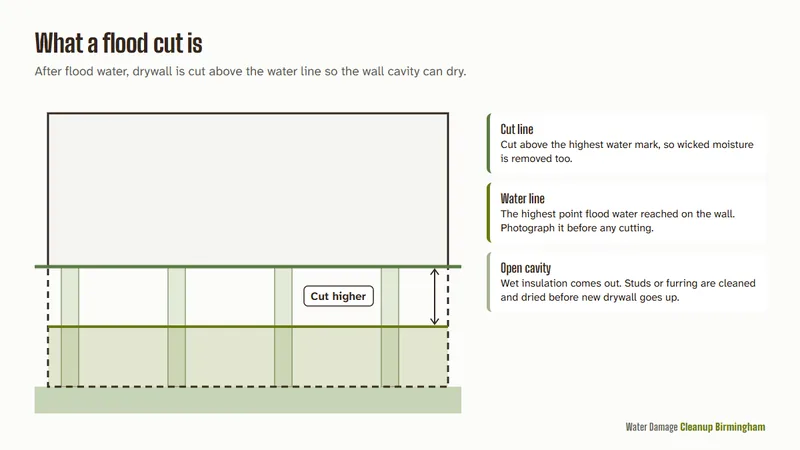
A flood cut removes a level band of drywall, with the line set somewhat above the highest wet meter reading. Taking that strip out lets the soaked insulation come out too, and it gives the studs open air. It is the usual choice when the water was dirty, the insulation is saturated, or the gypsum has crumbled.
The type of water drives most of this decision. Restoration work generally follows the IICRC S500 standard, which groups a broken supply line as Category 1, washer or dishwasher water as Category 2, and sewage or rising creek and river water as Category 3. Here is how walls in each group usually fare.
| Water category (IICRC S500) | Example in a Birmingham-area home | Likely drywall outcome | Insulation behind it |
|---|---|---|---|
| Category 1, clean | A cracked supply line in an outside wall, a leaking ice maker tube | Often dried where it hangs if caught early | Kept when readings recover |
| Category 2, grey | Washing machine drain water, a dishwasher overflow, a toilet overflow with no waste | Bottom band often removed if it stayed wet | Usually replaced |
| Category 3, grossly contaminated | A floor drain backup, creek water from a storm, runoff from the yard | Cut out above the wet line | Bagged and discarded |
Real walls can land between rows. When two bids disagree on how high to cut, the moisture readings settle it, so ask to see them before the work starts.
Why do humid Birmingham summers slow down wall drying?
Air that already holds a lot of moisture takes up very little more, so a soaked wall dries slowly in a Birmingham summer unless the room air is dried too. Opening windows on a muggy afternoon can add water instead of removing it. A closed room with a dehumidifier and fans aimed at the open cavity usually does far better.
Wikipedia's Birmingham article describes a humid subtropical climate with hot, humid summers and highs at or above 90 F on 65 days a year. It notes that most summer rain falls in thunderstorms during the afternoon and evening, the same downpours that overflow gutters and push water into walls.
Per the EPA's moisture guide, soaked materials need drying in 24 to 48 hours so mold never gets a start. That guide also caps indoor humidity at 60 percent and names 30 to 50 percent as the ideal band, and a cheap hygrometer tells you where the room stands. If spots show up anyway, the mold after water damage guide covers what comes next.

Why is basement drywall wet after a heavy rain?
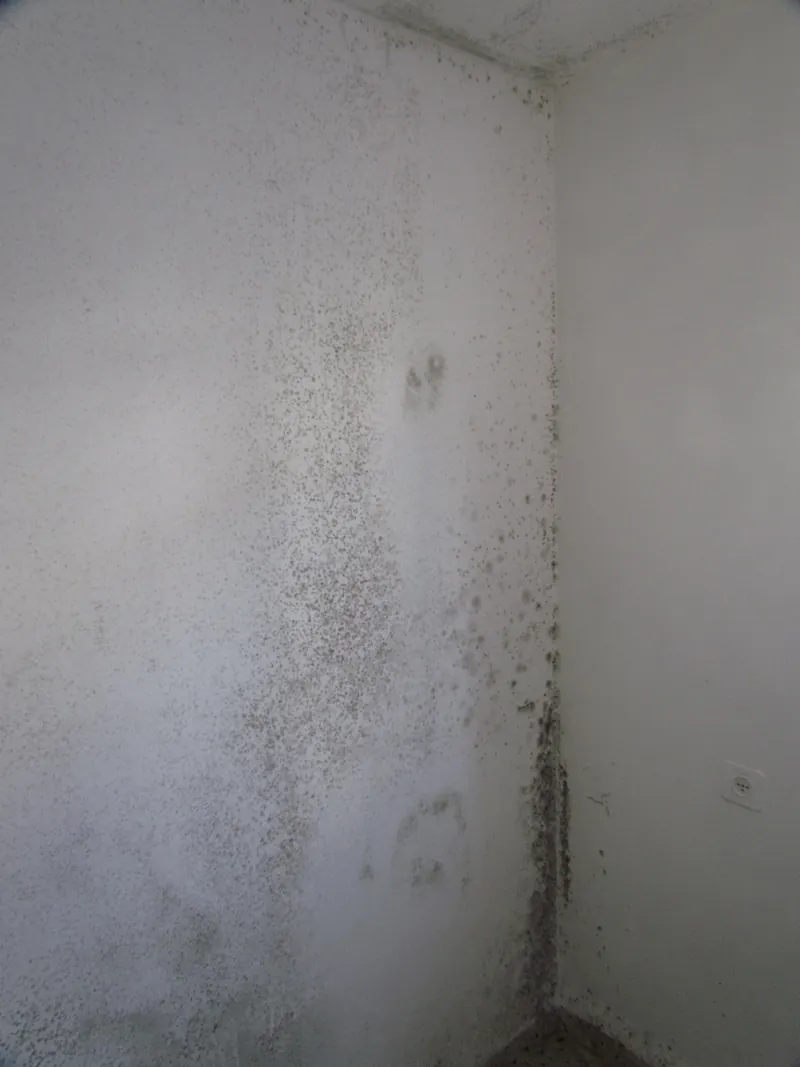
Finished basement walls sit against cool concrete with very little air moving past them. On a sloped lot, the uphill wall holds back soil that soaks up every downpour. Water then reaches the room at the floor-wall joint, through a crack, past a window well or up a floor drain, and the bottom of each sheet takes it first.
Birmingham's ground explains part of the pattern. Wikipedia places the city in Jones Valley between long parallel ridges, and its Red Mountain article describes that ridge dividing Jones Valley from Shades Valley. If your house steps down a slope, treat the uphill basement wall as the one to check after every big storm.
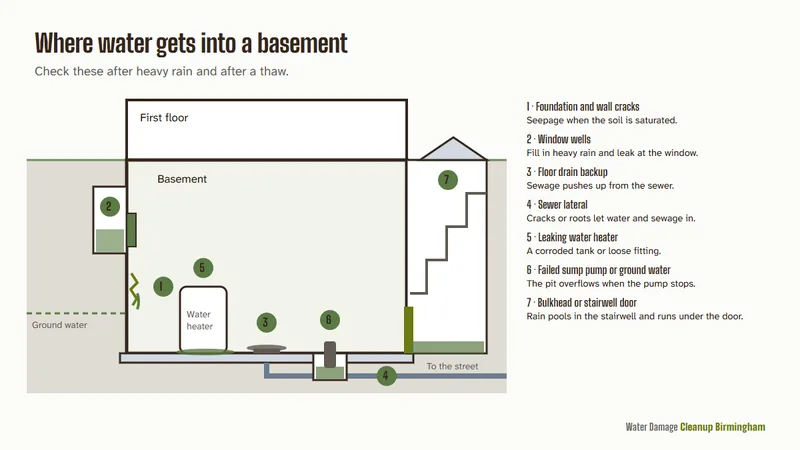
Water that came up through a floor drain should be treated as sewage. For damage from contaminated water, the EPA advises bringing in a professional experienced with that kind of building damage. Each cause has its own page: sewer backups, basement flooding and a sump pump that quits.
Can a frozen pipe soak a wall during an Alabama cold snap?
Yes, and the damage shows up late. A supply line running through an exterior wall, through a crawl space or across an unheated garage may freeze and crack overnight, yet water only flows once the ice melts. By the time paint bubbles, water has often drained down the cavity and soaked the insulation and the bottom plate.
Hard freezes are not rare here. Wikipedia counts an average of 47 days a year in Birmingham with a low at or below freezing, plus about 1.4 days when the high never climbs above it. The record low it lists is minus 10 F, set on February 13, 1899.
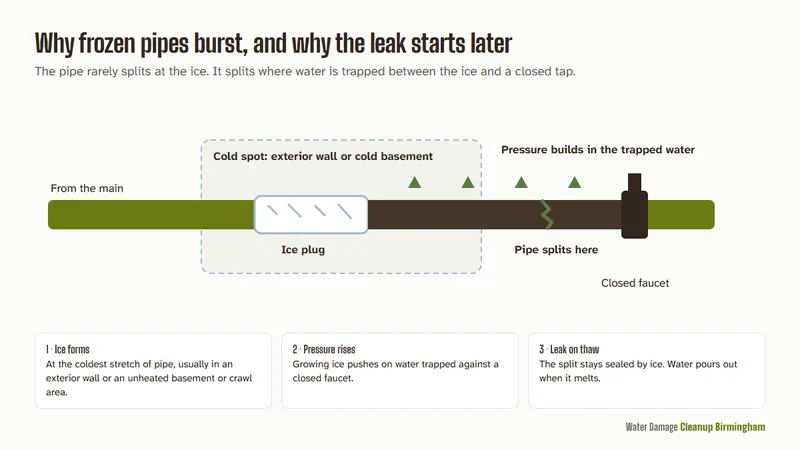
For an empty house in cold weather, the American Red Cross advice is a thermostat set at 55 F or higher, unchanged from day to night, plus a slow drip of cold water at any faucet on an exposed pipe. The Red Cross also rules out thawing with a torch or other open flame.
Is wet plaster in older Birmingham houses treated differently?
Plaster soaks up water slower than gypsum board and can come through a brief leak with nothing but a stain. The weak point is the wood lath behind it, which swells, dries unevenly and can snap the plaster keys holding the surface on. Hard plaster with hairline cracks is usually cosmetic; soft, bulging or loose plaster needs repair.
Some suburbs around the city go back to the 1920s. Wikipedia's Homewood article says the Hollywood subdivision there began in 1926, with many homes in Spanish Colonial Revival style, and the Mountain Brook article dates that city's first development to 1929. If your house is from that period, ask whether the walls are plaster before anyone plans a cut.
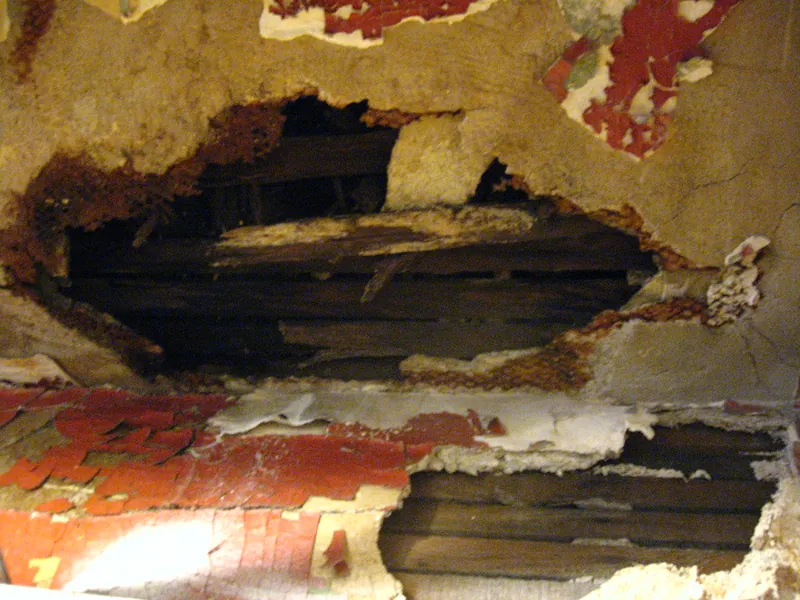
Old paint is another reason for care. The EPA notes that lead-based paint is more likely in a house built before 1978, and that repairs which disturb painted surfaces in older homes can create large amounts of lead dust. Before a wall is opened, ask how the work area will be contained, and see the ceiling water damage page if plaster overhead is stained or sagging.
How much does it cost to fix wet drywall or plaster?
No public survey tracks Birmingham drywall prices, so national lists are the honest benchmark. On Fixr's national list, drywall restoration runs $1.50 to $3 a square foot, while plaster is far pricier at $6.25 to $18.75 a foot. Bob Vila lists the same $1.50 to $3 range for drywall repair, drawn from a separate national survey.
For a damaged ceiling, Bob Vila gives $350 to $1,250. The per-foot rates on Fixr's list cover the wall material, so extraction, days of drying equipment, insulation, trim and paint often appear as their own lines on an estimate.
Each restoration team sets its own prices, and this site has no say in them. Get bids in writing, itemized, and set them side by side. The Birmingham restoration cost guide explains the other parts of a bill.
Will Alabama homeowners insurance pay to fix a wet wall?
Coverage turns on the source of the water. Per the NAIC, policies typically pay for damage caused by household plumbing or a roof leak, and typically leave out ground water and rain runoff. Policies also often exclude mold, so drying the wall promptly protects both the house and the claim.
Triple-I adds two gaps: creek and river flooding needs a separate flood policy, and a sewer backup needs its own endorsement.
Alabama sets claim-handling deadlines in the Alabama Department of Insurance claim standards, Ala. Admin. Code r. 482-1-125. An insurer must acknowledge a first party claim in 15 days, unless payment is made in that window, and must tell you whether the claim is accepted or denied in 30 days after it receives proofs of loss, or in the period your policy sets. The insurance claims guide covers filing step by step.
Sources: IICRC S500, water categories; Wikipedia, Birmingham, Alabama (climate, 90 F days, summer thunderstorms, freezing days, record low, Jones Valley); Wikipedia, Red Mountain; EPA, mold and moisture guide (24 to 48 hour drying, humidity targets); EPA, contaminated water and professional help; American Red Cross, frozen pipes; Wikipedia, Homewood (Hollywood subdivision, 1926); Wikipedia, Mountain Brook (developed 1929); EPA, lead paint in older homes; Fixr water damage cost guide, wall material rates (January 2025 update); Bob Vila, drywall and ceiling repair (May 2023 update); NAIC, homeowners insurance; Triple-I, flood and sewer backup gaps; Ala. Admin. Code r. 482-1-125-.06 and -.07, claim standards; CDC, mold and your health.