The short version
Water removal Birmingham AL homeowners need starts with the source stopped and lower-level power off from a dry spot. Deep basement water is lowered in stages, extractors pull water from carpet and pad, and moisture meters find what is left in floors and walls. A shop vac is fine for a small clean puddle and not much more.
What does water removal in Birmingham AL include?
Water removal is the step that gets liquid out before drying begins. It covers pumping standing water from a basement or crawl space, pulling it out of carpet and pad with an extractor, and finding wet spots under flooring and behind baseboards. Dehumidifiers and air movers deal with the moisture that remains afterward.
For water removal Birmingham AL homes need, the work usually starts at the lowest level. Water runs downhill inside a house just as it does outside, so a lower-level den, a crawl space or a basement collects whatever a split line, a washer hose, a failed sump pump or a storm sent its way.
The longer water stands, the higher it wicks into drywall and the deeper it soaks into wood. That is the reason extraction comes before drying. If the water came from outdoors or from a drain, read the flood cleanup page too, since dirty water changes what can be kept.
Can you remove the water yourself, or do you need an extractor?
A wet/dry vac works for a small, clean puddle on tile or concrete. When water spreads across a room, soaks wall-to-wall carpet, stands more than about an inch deep, or came up from a drain or in from the yard, household tools are not enough. Commercial extractors remove far more water from carpet and pad.
| What you are facing | Handle it yourself? | The reason |
|---|---|---|
| A clean puddle on a hard floor | Usually | If walls stayed dry, a wet/dry vac, a squeegee and a fan can finish it. |
| Clean water in carpet and pad | Often not | Pad and subfloor hold water a shop vac cannot reach, and odor follows. |
| Inches of water across a basement | Get help | It takes a submersible pump, safe power and moisture mapping. |
| Drain backup, creek or yard water | No | It is Category 3, and absorbent items it touched have to go. |
When the source is sewage or other dirty water, the EPA's mold cleanup page says to hand the job to someone experienced with contaminated-water damage. The water mitigation page explains how a loss is kept from spreading while removal goes on.
What should be checked before a flooded basement is pumped out?
Three questions get answered first: is the source stopped, is the lower-level electricity off, and is the water clean or did it come from a drain or the yard? After that, a restoration team sets the pump, plans where the discharge hose will drain and starts logging moisture readings.
- Shut off the source. Close the fixture valve or the house main. If the water came in from outside, wait for the yard and nearby creek to start dropping.
- Turn off basement power. Flip breakers only from dry footing. Never unplug a cord while your feet are in water.
- Check for gas. A gas smell near the furnace or water heater means everyone goes outdoors first, and the gas company gets the call from there.
- Photograph the water line. Take pictures of the depth on the walls and the items sitting in it before anything is moved.
- Lift what you can safely carry. Get boxes, papers and electronics above the water, but leave heavy furniture for the crew.
- Request a restoration team. Say how deep the water is, where it came from, and whether the sump pump is running.
Hold off on anything permanent until your insurer has seen the damage. Triple-I advises taking reasonable steps to protect the home while waiting on major repairs until the adjuster has looked.
Why is a deep basement flood pumped out in stages?
After a long soaking rain, the ground around a basement can be full of water that pushes on the walls from outside. The water inside pushes back. Pumping the basement dry all at once can leave the walls holding that outside pressure alone, so deep water is often lowered a few feet at a time.
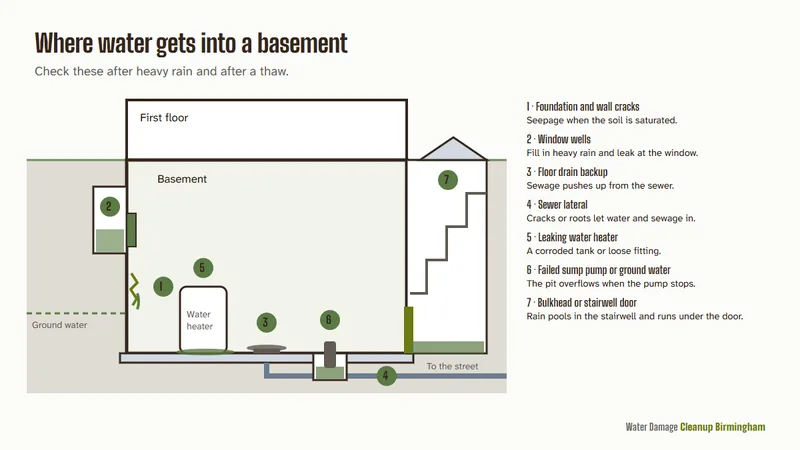
A house built into a slope is the classic case, because the uphill wall sits against soil that collects runoff from the yards above it. If your house has a lower level dug into a hillside, watch that wall for new cracks, bowing or seepage at the floor joint after a heavy storm.
The restoration team usually checks how fast the level drops and whether water returns overnight. Water that keeps coming back points to groundwater or a drainage problem outside, which a pump alone will not fix. The basement flooding page goes through those causes in more detail.
What should you do if the sump pump quits in a storm?
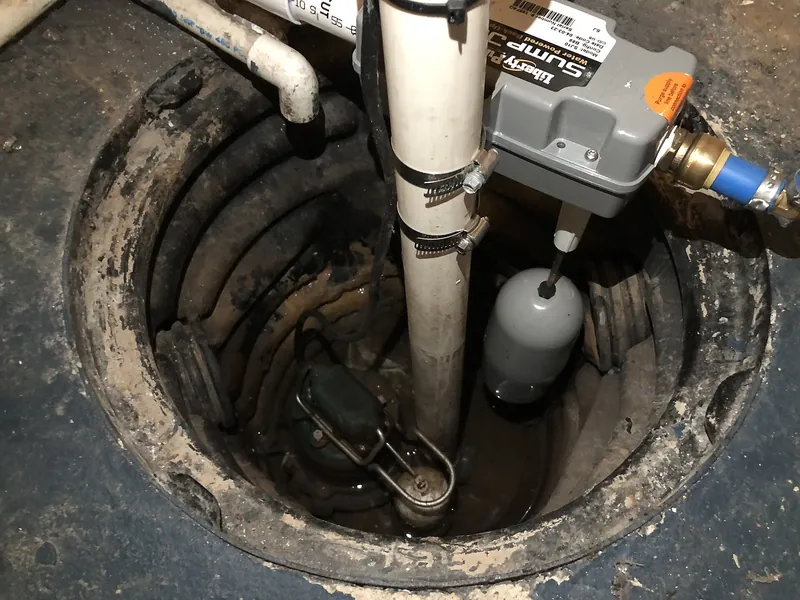
First check whether it has power. A tripped breaker, an unplugged cord or an outage stops the pump, and a float stuck against the side of the pit does the same. If it still will not run, keep the area clear, avoid standing water near the outlet, and ask for a restoration team with pumping equipment.
A pump works hardest during a thunderstorm downpour, which is exactly when a failure does the most harm. The Wikipedia article on Birmingham notes that most summer rain comes from thunderstorms in the afternoon and evening, and that cold fronts in spring and fall often bring strong to severe storms.
A battery backup pump and a simple water alarm are the usual safeguards, and a plumber can tell you whether the pump is sized for your pit. The sump pump failure page covers testing, alarms and what to check after a failure.
How is water removed from a crawl space under an older house?
A crawl space is pumped from its lowest point, often through a small sump or a temporary pit, and then the vapor barrier, insulation and any wet debris are checked. Wet fiberglass between the floor joists usually comes out. Drying then focuses on the wood: joists, beams and the subfloor above.
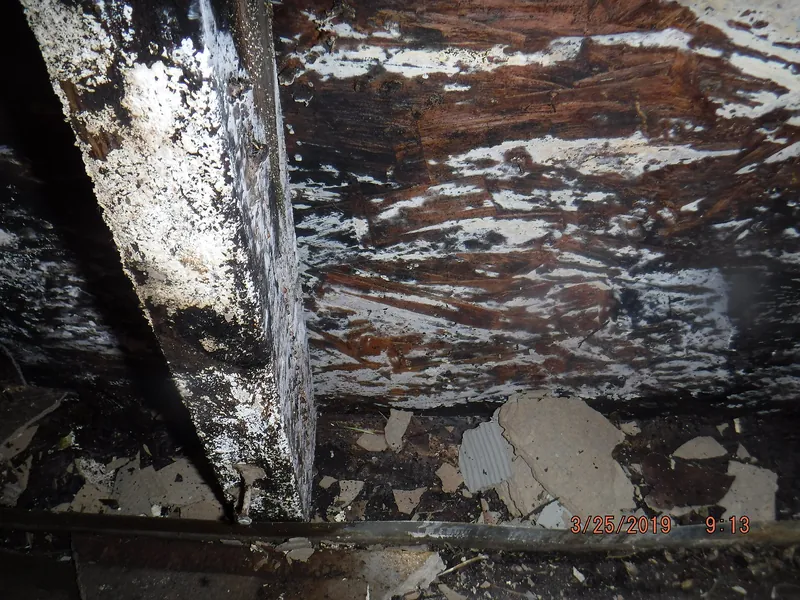

If your house sits on piers or short foundation walls with ductwork and supply pipes underneath, nobody sees that space for months at a time. A split line down there can run for days before anyone notices a soft floor, a musty smell or a higher water bill.
Ask the restoration team to show you readings on the joists and subfloor, not only the air. Wood that stays wet invites rot and mold, and the water damaged floors page explains what that can mean for the finished floor above. If the leak came from a frozen line, see the burst pipe page.
Can wet carpet and hardwood floors be saved after extraction?
Often yes, if the water was clean and extraction began early. Carpet soaked by a supply line can usually be dried in place, though the pad is often replaced. Hardwood can sometimes be saved with specialty drying mats, but carpet and pad touched by sewage or creek water are almost always thrown away.
The CDC tells flood victims to take out soaked carpet and upholstered pieces that cannot be dried quickly. Timing decides clean-water losses too.
- Carpet: clean water caught early can often be extracted and dried in place; delamination or odor means replacement.
- Pad: the foam soaks up and holds water, so it is the part most often cut out and replaced.
- Hardwood: boards that cup or crown may flatten again with controlled drying; buckled boards usually do not.
- Laminate and vinyl plank: water trapped underneath often means pulling the planks to dry the subfloor.
The wet carpet page and the guide to drying hardwood floors go deeper into each surface.
What does water extraction cost in Birmingham per square foot?
Cost guides quote extraction per square foot, with dirtier water costing more. Fixr's ranges run from $3.75 to $4.25 for clean water up to $7 to $7.50 for black water. Actual quotes in the Birmingham area depend on the restoration team, the depth and what has to be removed.
| Water type | Extraction per sq ft (Fixr) | Typical source |
|---|---|---|
| Clean | $3.75 to $4.25 | A supply line, water heater fitting or ice maker line |
| Gray | $4.10 to $6.50 | A washer, dishwasher or toilet overflow without waste |
| Black | $7 to $7.50 | Sewage, creek water or runoff from outside |
Looking at the whole restoration bill, Fixr gives $1,200 to $5,000 as the usual spread and $3,000 as the national average. For a basement holding roughly an inch of clean water, Bob Vila cites $500 to $1,500.
Treat those as national benchmarks only. Each restoration team prices its own work, and a line-by-line estimate on paper is the thing to compare. The Birmingham restoration cost guide breaks down the rest of the bill.
How do you know the water removal is finished?
The floor looking dry is not proof. Water hides in carpet pad, under vinyl and laminate, in the bottom of drywall and in the subfloor. A restoration team confirms the job with moisture meters and readings compared against an unaffected room, and drying equipment keeps running until those numbers match.
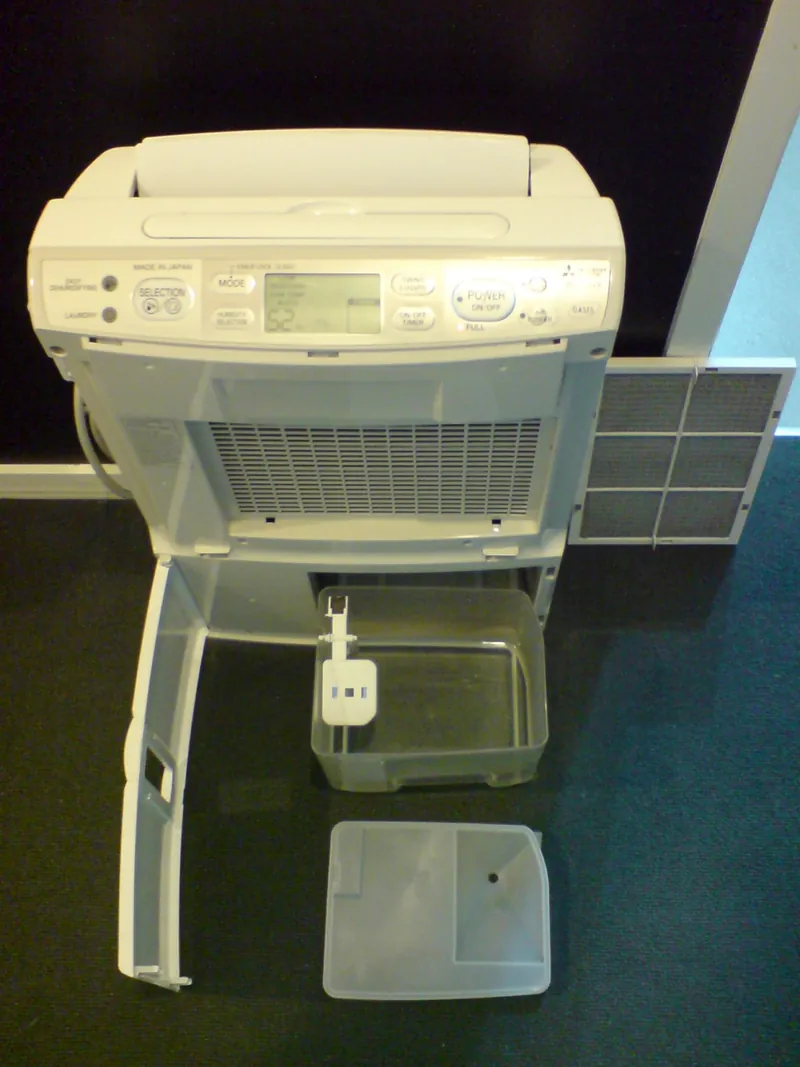

The EPA moisture guide wants soaked materials dry in the first 24 to 48 hours. Its humidity target for indoor air is under 60 percent, with 30 to 50 percent as the sweet spot. Birmingham summers are hot and humid, according to the Wikipedia climate summary, so dehumidifiers often run longer here.
Ask for the daily readings in writing. They show your insurer that the house was dried properly and give you a record if a smell or stain shows up later. The structural drying page explains how equipment is placed.
Does homeowners insurance pay for water extraction in Alabama?
When the water came from a covered event, such as a pipe that burst or an appliance that failed suddenly, extraction is usually part of the claim. Groundwater, flooding and sewer backup are treated differently. Read the water sections of your policy and call your agent before work begins so you know what will be paid.
The NAIC says a leaking roof or a plumbing failure is the kind of water damage policies usually cover, while ground water and rain runoff are typically excluded. Triple-I adds that damage from poor maintenance is not covered.
Alabama has claim timelines in Ala. Admin. Code r. 482-1-125: an insurer acknowledges a claim within 15 days unless it pays in that time. The insurance claims guide covers the rest.
What should you ask a restoration team before extraction starts?
Find out which machines are coming, how the crew treats your water category, and whether someone records moisture levels every day. Ask who talks to your insurer and whether they give a written estimate. Restoration teams differ in what they offer, so confirm the details on the call instead of assuming.
- Will you use a truck-mounted or portable extractor, and a submersible pump for standing water?
- How do you decide which carpet, pad and drywall stay and which go?
- Will I get daily moisture readings and photos in writing?
- Do you work with the adjuster, or do I send the paperwork myself?
- Does the estimate list the drying equipment and how many days it will run?
For a longer checklist, see the guide to choosing a restoration company.
Sources: Fixr extraction and restoration prices; EPA moisture and humidity guidance; EPA advice on contaminated water; CDC on soaked carpet after floods; IICRC S500 categories; Wikipedia, Birmingham, Alabama (climate); Bob Vila water damage restoration cost guide; NAIC homeowners insurance consumer page; Triple-I on disasters a homeowners policy pays for; Triple-I advice on settling a claim; Ala. Admin. Code r. 482-1-125-.06.