In brief
Most Birmingham owners can prevent water damage in Alabama weather if they learn to close the main valve, check the roof before spring storms, test the sump pump before summer, keep humidity under 60 percent, clean gutters in fall and protect exposed pipes before freezes. Birmingham averages 47 days a year at or below freezing. Ask about flood cover and a sewer backup endorsement.
Where should an Alabama homeowner start to prevent water damage?
To prevent water damage in Alabama, plan around the weather the state actually gets. Ready the roof and sump pit before spring storms and tornado season, keep summer downpours and humidity out of lower levels, clean gutters once leaves fall, and protect exposed pipes before a hard freeze. Knowing where the main shutoff is ties the whole plan together.
The stakes are real. The Insurance Information Institute puts the annual odds of a water or freeze claim near one per 60 insured homes, with a $15,400 average payout for those claims over 2019 to 2023.
Upkeep also protects the policy. Triple-I points out that keeping a home in repair is the owner's duty, and damage traced to neglect is not paid. The plan below is written for houses across Jefferson, Shelby and the counties around Birmingham.
Can you close your main water valve in under a minute?
You should be able to, and the time to practice is before anything breaks: many houses have the main valve where the service line comes through the foundation, in a crawl space hatch, a utility closet or the garage. Some only have the curb box near the street. Find yours and clear a path to it.
- Locate the valve and move boxes, shelves or yard tools that block it.
- Turn it off. Turn a round wheel clockwise; a lever is shut once it points across the pipe.
- Test it: an upstairs tap should slow to a trickle and stop.
- Reopen it a little at a time, then feel the stem and packing nut for moisture.
- Label it with a bright tag so a sitter, tenant or neighbor can spot it in the dark.
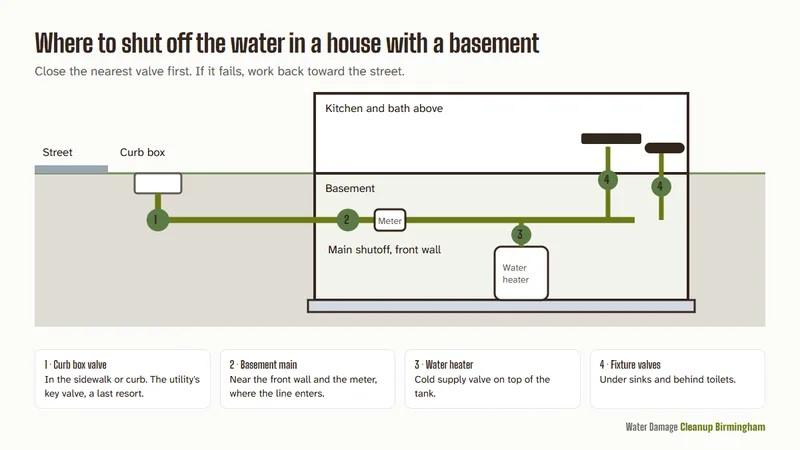
A valve that will not budge, or leaks once closed, should be replaced by a plumber on a calm day. That is far easier than fighting it with a pipe spraying behind you.
How do you get a house ready for spring storms and tornado season?
Do the roof and window checks in late winter, before the stormy months arrive. Replace cracked or missing shingles, reseal flashing at chimneys and vent pipes, trim limbs that hang over the roof and make sure windows close and latch tight. Wind-driven rain finds any gap, and a small opening can soak an attic in one storm.
Central Alabama has a long storm calendar. The Birmingham article on Wikipedia places the city in Dixie Alley and says cold fronts in spring and fall bring severe thunderstorms and occasional tornadoes, with November and early December acting as a second severe season.
The same article notes that the greater Birmingham area was struck by F5 tornadoes in 1977 and 1998 and by an EF4 tornado in April 2011. The tornado history page explains how storms like those let rain into homes, and the storm roof leak page covers what to do when a roof opens up.
What should you check after a severe storm passes?
Walk the outside of the house once it is safe, then check inside from the top down. Look for lifted shingles, dents in flashing, broken windows and siding pulled loose. Inside, go into the attic with a flashlight and look for wet insulation, damp roof decking and light showing where it should not.
Cover any opening with a tarp or plywood as soon as conditions allow. Insurers expect owners to limit further damage, and Triple-I advises sensible short-term protection, with big permanent fixes left until an adjuster has inspected.
Photograph everything before and after you cover it, and save receipts for tarps, fasteners and fans. Water that has already reached the ceiling below calls for the ceiling water damage page.
Which Birmingham creeks rise fastest in a downpour?
The small creeks that drain Jones Valley and Shades Valley can climb within a single storm. National Weather Service gauges track Village Creek, Valley Creek, Shades Creek and the Cahaba River, and each has its own flood stage. If your house sits near one of them, bookmark its gauge and watch it when heavy rain is forecast.
The NWS gauge for Shades Creek near Homewood lists minor flooding at 14 feet and a top crest of 19.88 feet on Sept 16, 2004, with 18.79 feet on May 4, 2021. Village Creek at Avenue W in Ensley reaches minor flood stage at 10 feet, and its gauge page shows a highest listed crest of 14.8 feet on Dec 3, 1983.
Never drive or walk into moving water. Flowing water is stronger than it looks: by Ready.gov's count, a person can be knocked down by six inches of it, and a vehicle swept off by a foot. The Birmingham flooding page has more on each creek.
Is flood coverage worth buying if your street has never flooded?
It is worth pricing even if your lot is not in a mapped zone. Standard homeowners policies leave flooding out, so water that comes from a rising creek or a yard turned into a pond is not covered unless you carry a separate flood policy. Low spots and storm drains can flood houses well away from a mapped area.
FEMA states that most homeowners insurance does not pay for flood losses. Timing matters too: the FEMA flood insurance manual makes a fresh federal policy wait 30 days, with limited exceptions, before coverage begins. A policy bought when a storm shows up in the forecast arrives too late.
Ask your agent about flood cover and a sewer backup endorsement together. The insurance claims guide explains how Alabama claims move once something happens.
How do you stop a summer cloudburst from reaching a basement or crawl space?
Send roof water well clear of the walls and prove the sump pump runs before the stormy months. Gutters should empty through downspout extensions several feet from the wall, and soil should slope away from the foundation. A pump that has sat idle since last year can fail on the first night it is needed.
Summer storms here arrive fast. The Birmingham article says most summer rain comes from thunderstorms in the afternoon and evening, and that tropical storms occasionally reach the area in late summer and fall.
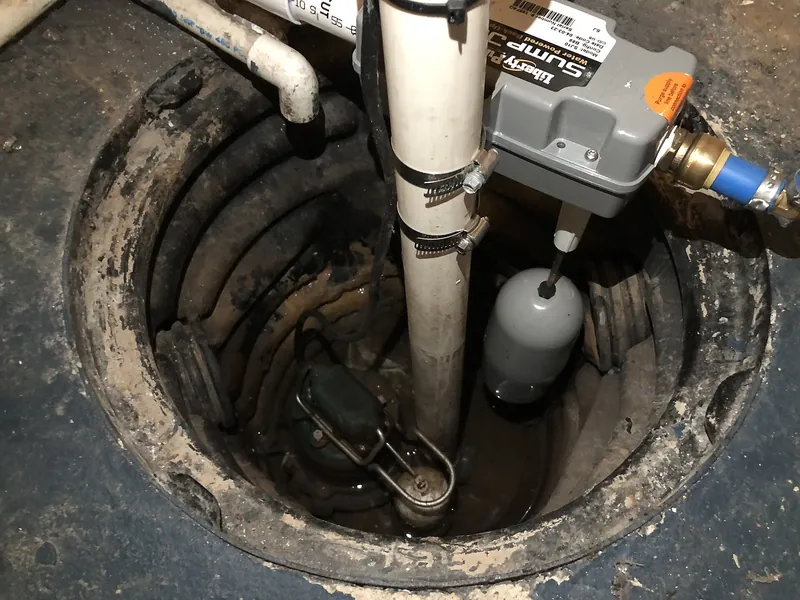
- Test the sump pump: pour a bucket of water into the pit, watch the float lift, and confirm water leaves the discharge line.
- Check the discharge outlet: clear leaves and make sure it drains away from the house, not back toward it.
- Look at a hillside basement wall: stains along the base after rain point to water collecting uphill.
- Inspect the crawl space: standing water or a torn vapor barrier needs attention before summer.
Wet lower levels are covered on the basement flooding page and the sump pump failure page.
Why does Alabama humidity matter so much after a leak?
Damp summer air slows drying, so a small spill that would dry on its own elsewhere can linger and grow mold here. EPA guidance gives soaked items 24 to 48 hours to dry and asks owners to hold indoor air below 60 percent humidity and to aim for 30 to 50 percent where they can.
Wikipedia describes Birmingham summers as hot with high humidity. Running the air conditioner helps, and a dehumidifier in a basement or below-grade room keeps the lowest level from staying damp through the warm months.
A cheap humidity gauge tells you whether the plan is working. If readings stay high, look for a hidden source before mold does the telling. If spots are already showing, turn to the mold after water damage guide.
How do you stop a sewer backup before it starts?
Keep grease, wipes and other solids out of drains, and ask a plumber whether a backwater valve fits your sewer line. In a heavy rain, the public sewer can fill and push wastewater back toward the lowest drain in the house. A backwater valve closes when flow reverses and keeps that water out.
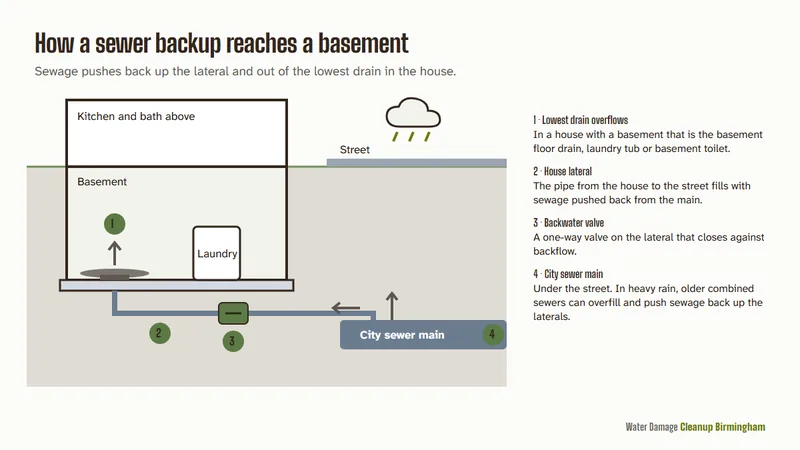
Coverage needs a separate decision. Triple-I explains that sewer backups are left out of typical homeowners policies and flood policies alike, and are added through an endorsement. The sewer backup cleanup page covers safe cleanup if it happens.
What fall chores keep gutters and roofs draining?
Clean gutters after most leaves are down, and again if the trees are heavy. Clogged gutters spill water against fascia and siding, and the overflow pools next to the foundation. Fall is a good season for this work, since Wikipedia notes October tends to bring less rain and fewer storms than spring.
Fall is also the time to schedule anything big. The Birmingham article lists November and early December as a second severe weather season, so a roof repair or tree trim done in October is in place before those storms. Rot found around trim is explained on the water damage repair page.
How do you protect pipes when Birmingham drops below freezing?
Insulate pipes in crawl spaces, garages and outside walls, and disconnect garden hoses before cold nights. Freezes are not rare: the Birmingham article counts an average of 47 days a year with a low at or below freezing. Houses built for mild weather often have exposed lines that need extra care.
Supply lines in unheated spaces freeze first, and the American Red Cross singles out attics, garages, crawl spaces, basements and the cabinets under kitchen sinks. In cold snaps it advises letting cold water drip from taps fed by exposed pipes and keeping the thermostat at one setting day and night, no lower than 55 F if you leave.
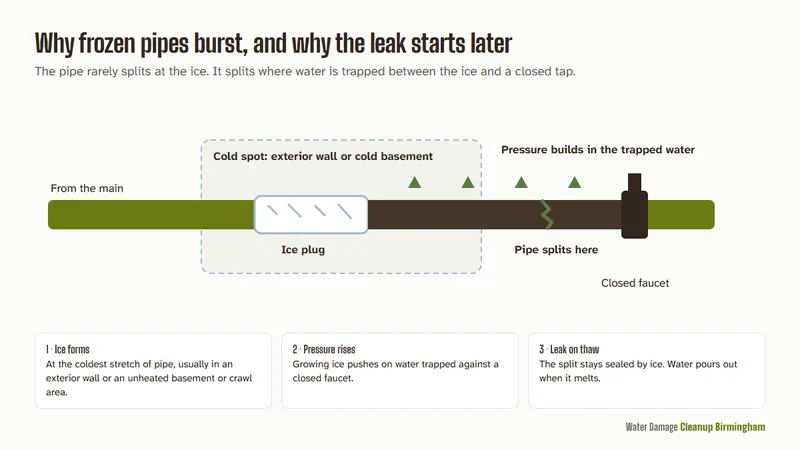
For a pipe that has iced up, the Red Cross approves gentle heat from a blow dryer, a plug-in heating pad or towels wrung out in hot water, and no torch or flame of any kind. When a line has already split, go to the burst pipe page.
Which appliance hoses and fixtures need a yearly look?
Check every water connection inside the house once a year. Washer hoses, the water heater, the dishwasher supply, the refrigerator ice maker line, toilet supply tubes and shower pans cause a large share of indoor leaks. Most failures give warning signs, such as bulges, rust or damp floors, if you look.
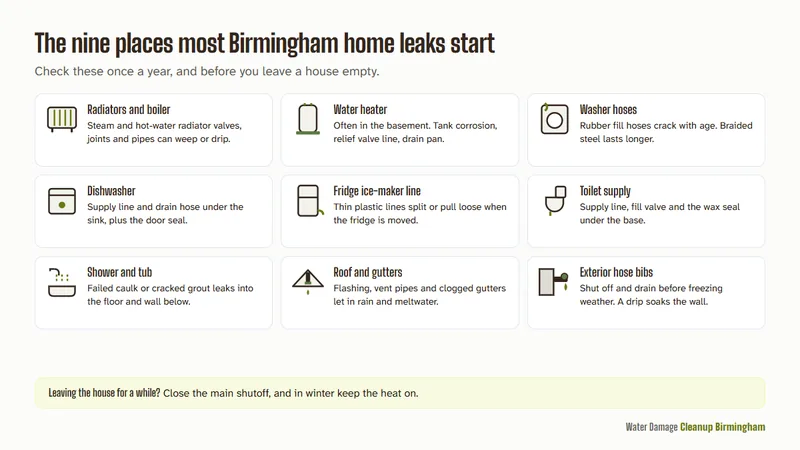
Replace cracked rubber washer hoses with braided ones, look for rust at the base of the water heater and reseal tub and shower caulk that has pulled away. A small battery leak alarm under a sink or beside the water heater gives early notice. See the appliance leak page and the water heater leak page for details.
Which jobs go on a Birmingham home calendar for each season?
Each season brings its own risk, so tie the jobs to the calendar. Spring is about roofs and sump pumps, summer is about storms and humidity, fall is about gutters and the second storm season, and winter is about pipes. The table sums it up in one place.
| Season | Jobs to do | Why it matters in central Alabama |
|---|---|---|
| Late winter and spring | Roof and flashing check, tree trimming, sump pump test, window seals | Cold fronts bring severe thunderstorms and occasional tornadoes |
| Summer | Downspout extensions, grading, dehumidifier, crawl space check | Afternoon and evening thunderstorms and high humidity |
| Fall | Gutter cleaning, roof edges, repairs scheduled before November | Leaves clog gutters; a second severe season follows in November and early December |
| Winter | Pipe insulation, hoses off, faucet drips on cold nights, heat at 55 F or higher when away | An average of 47 days a year with a low at or below freezing, per Wikipedia |
What if a leak or flood gets past your precautions?
Stop the source first by closing the nearest valve or the main, then cut power to wet rooms if you can do it safely. Take photos before moving anything, call your insurer and start drying. Every hour counts, since the EPA drying window is the first 24 to 48 hours after the water arrives.
For a large or contaminated loss, you can call to reach a local water damage restoration team for your area. Restoration teams differ in what they offer, so confirm the scope, the schedule and the price with them directly before work begins.
The emergency water damage page walks through the first hours, and the water mitigation page explains how drying is usually handled.
Sources: III facts and statistics (one in 60 insured homes, $15,400 average claim for 2019 to 2023); Triple-I, which disasters are covered (maintenance, sewer backup endorsement); Triple-I, settling claims after a disaster (temporary protection, permanent repairs after the adjuster); Wikipedia, Birmingham, Alabama (storm seasons, tornado history, summer humidity, 47 freezing days); NWS gauge SCHA1, Shades Creek near Homewood (14 ft minor stage, 2004 and 2021 crests); NWS gauge ENSA1, Village Creek at Avenue W (10 ft minor stage, 1983 crest); Ready.gov floods (moving water); FEMA, flood not covered by most homeowners policies; FEMA NFIP Flood Insurance Manual (30-day waiting period, limited exceptions); EPA mold and moisture guide (drying window, humidity targets); American Red Cross, frozen pipes (risky locations, dripping, 55 F, safe thawing).