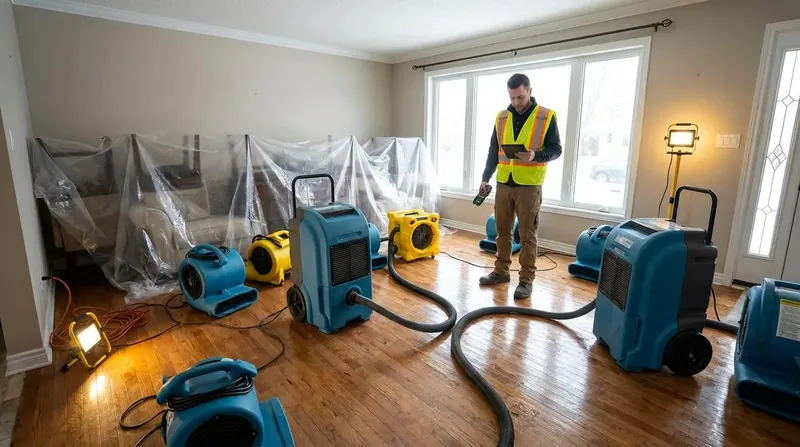
For Cullman and Cullman County
For water damage restoration in Cullman, AL, shut off the water or the well pump, avoid wet wiring and photograph every room. The EPA says to dry in 24 to 48 hours. River water needs flood insurance. ZIPs: 35019, 35033, 35053, 35055, 35056, 35057, 35058, 35070, 35077, 35083, 35087, 35098, 35179.
Which Cullman addresses do you take requests from?
Thirteen Cullman County ZIP codes are in range for water damage restoration in Cullman, AL: 35019 Baileyton, 35033 Bremen, 35053 Crane Hill, 35055 Cullman, 35056 Cullman, 35057 Good Hope, 35058 Cullman, 35070 Garden City, 35077 Hanceville, 35083 Holly Pond, 35087 Joppa, 35098 Logan and 35179 Vinemont. Of those, 35056 is a PO box code.
If your mail goes to a 35056 box, tell the restoration team the road and house number of the wet building instead. That matters out here. The Cullman County article on Wikipedia counts 75.6 percent of county residents as rural at the 2020 census, so ask any restoration team how far out it travels before you book.
East across the Mulberry Fork, the Oneonta page covers Blount County. To the southwest, the Jasper and Fayette page picks up Walker County and the far side of Smith Lake. Heading down I-65 toward Birmingham, see the Gardendale and Fultondale page.
Does Cullman flood?
The city itself rarely takes river water, because it sits high. Cullman is on top of the Brindley Mountain plateau at 814 feet, near the divide between the Tennessee and Black Warrior watersheds, per the Cullman article. River flooding hits lower ground in the county, along the Mulberry Fork.
The Mulberry Fork starts in northeastern Cullman County, south of Arab, and winds in tight bends along the line with Blount County, says the Mulberry Fork article. The National Weather Service runs a gauge on it near Garden City, though it publishes no flood stages there. Downstream, the gauge near Arkadelphia does.
| Crest date | Mulberry Fork near Arkadelphia | NWS category at that height |
|---|---|---|
| February 16, 1990 | 42.9 ft | Moderate (30 ft and up) |
| January 7, 2009 | 40.65 ft | Moderate |
| April 14, 1979 | 39.11 ft | Moderate |
| January 4, 1982 | 36.32 ft | Moderate |
| April 7, 2025 | 33.23 ft | Moderate |
On the Arkadelphia gauge page, minor flooding starts at 25 feet, moderate at 30 and major at 45. Every crest in the table landed in winter or early spring, when long rains fall on soaked ground. The 2025 crest shows the river still gets there.
Up on the plateau, the bigger risk is runoff. A heavy storm can overload ditches and culverts and send water toward a low foundation or crawl space vent. The Birmingham area flooding page explains how storm water moves across the region.
How does tornado damage turn into water damage in Cullman?
Wind opens the house, then rain finishes the job. On April 27, 2011, an EF4 tornado in the Super Outbreak tore through downtown Cullman and an east-side neighborhood, destroying many buildings, the Cullman article says. Any storm that lifts shingles, breaks windows or peels siding lets the next shower into walls and ceilings.
The city rebuilt its downtown after 2011. For a single house, the order of work matters more than the size of the storm. Once it is safe to walk around, cover the open roof or window with a tarp, photograph every opening before and after you cover it, and move what you can away from the drip.
Wet insulation in an attic can hold water against the ceiling below for days. If plaster or drywall starts to sag, keep people out of that room and cut power to its lights.
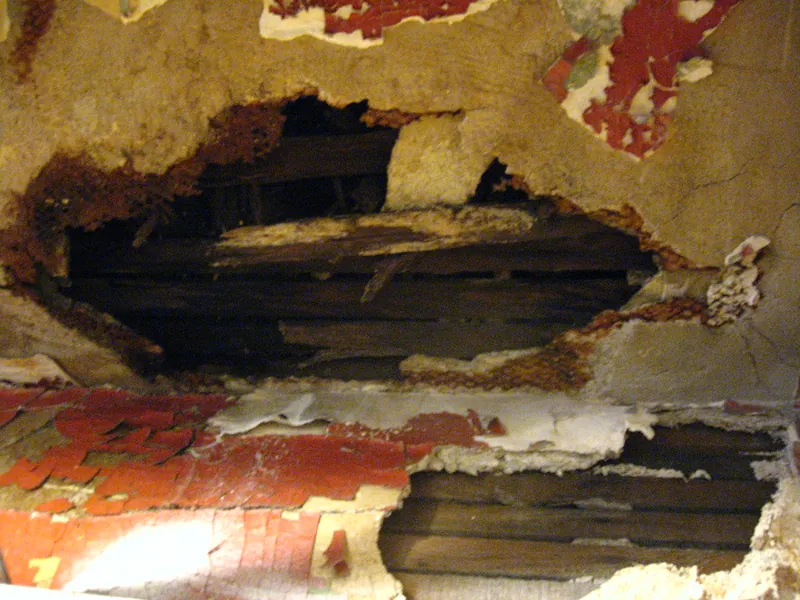
The storm roof leak page walks through tarping and claims, and the tornado history page covers the 1977, 2011 and 2021 storms around Birmingham.
Do Smith Lake houses near Bremen and Crane Hill need extra care?
Yes, especially a house that sits empty between visits. Lewis Smith Lake spreads over more than 21,000 acres across Cullman, Walker and Winston counties, and its towns include Bremen, Good Hope and Crane Hill. A small leak in a closed-up house can run for weeks before anyone opens the door.
The Smith Lake article calls it the deepest lake in Alabama, at 264 feet near the dam, with more than 500 miles of shoreline. It stayed mostly undeveloped for its first two decades after the dam opened in 1961, then saw rapid recreation growth in the 1980s and 1990s, thanks to its closeness to Birmingham and Huntsville.
On a sloped waterfront lot, the lowest level is often partly underground, so check the walk-out wall and any floor drain after a long rain. When you close up for cold weather, hold the thermostat at no less than 55 F, with no lower night setting, per the American Red Cross. Shutting the main valve as you lock up limits what a split pipe can spill.
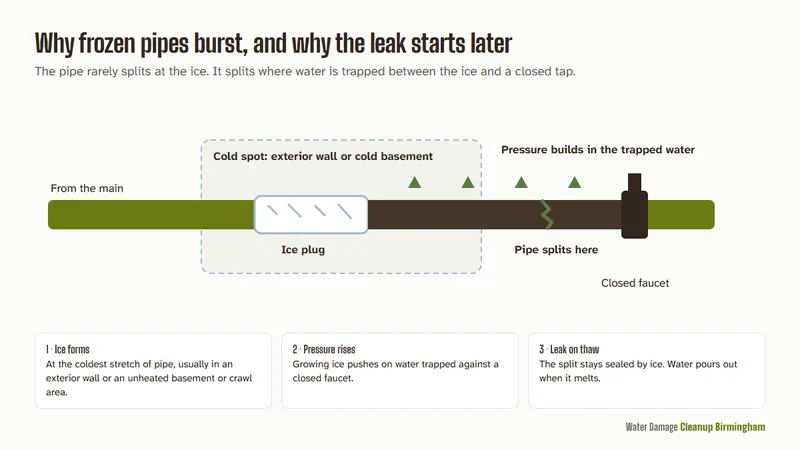
The burst pipe page explains what to do when a line gives way, and the basement flooding page covers seepage on a walk-out level.
What kinds of homes are in Cullman and Cullman County?
Mostly owner-occupied houses spread over a large rural county. At the 2020 census, Cullman County had 39,145 housing units, 74.2 percent of the occupied ones lived in by their owners, per Wikipedia. The city of Cullman counted 8,023 units, with 7.2 percent standing vacant.
The town had an unusual start: Colonel John G. Cullmann, a German immigrant, founded it in 1873 as a colony on railroad land, and he used his military engineering training to lay out the streets, the Cullman article says. It was incorporated the next year, and after 2011 an older downtown building may stand beside one rebuilt from the ground up.
In the county, a farmhouse may run on a well and a septic field. If your home does, cut the power to the well pump when a line breaks, since the pump keeps pushing water until it stops. City homes draw from Lake Catoma, a city-owned lake inside the limits.
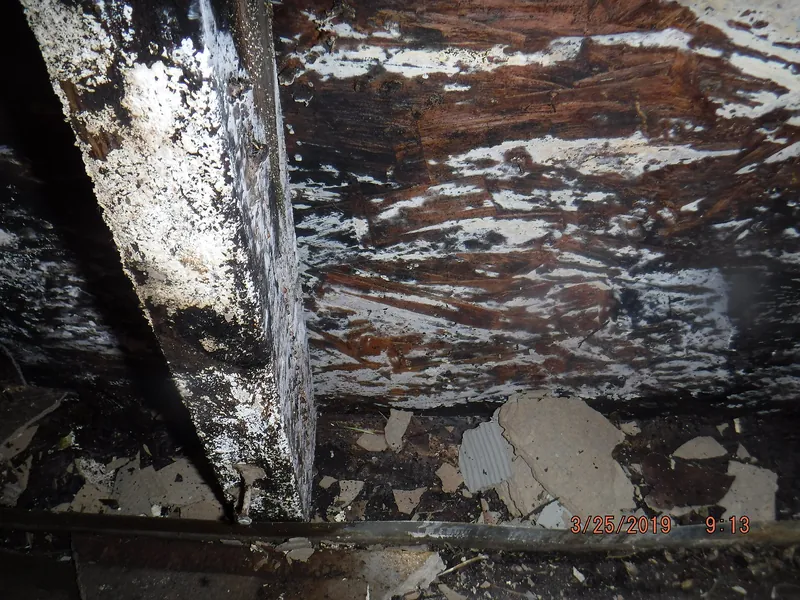

Crawl spaces hide slow leaks. A musty smell or a soft spot near a tub is a reason to look underneath. The water damaged floors page covers subfloor repair, and the signs of water damage guide covers the clues worth checking.
Does homeowners insurance cover Mulberry Fork flooding in Cullman County?
A standard home policy does not. According to the NAIC, a home policy typically pays for water from household plumbing or a roof leak and typically excludes rain runoff and ground water. River water indoors calls for flood coverage, sold through the NFIP and some private carriers.
Triple-I notes that a sewer backup falls outside both the home policy and flood coverage and is bought as an endorsement. If you live near the river, buy flood cover well before the wet months. FEMA's flood insurance manual makes a new policy wait 30 days before it starts, with limited exceptions.
Alabama's claim standards, Ala. Admin. Code r. 482-1-125, say an insurer acknowledges a first party claim within 15 days unless it pays sooner (rule .06). Within 30 days after proofs of loss, or the policy's period, it tells you whether it accepts or denies the claim, and it updates you every 45 days while the investigation stays open (rule .07).
The Alabama Department of Insurance takes complaints. Our insurance claims guide explains which papers and photos to hold onto.
What should you do first after water gets into a Cullman home?
Shut off the source, keep away from anything electrical that is wet, and photograph the damage as you found it. Then start drying. To head off mold, the EPA sets a target of dry materials 24 to 48 hours after the leak, and indoor relative humidity under 60 percent, with 30 to 50 as the goal.
- Turn off the main, or the shutoff behind the toilet, sink or appliance that leaked. On a well, flip the pump breaker off.
- Stay off a wet floor near the breaker panel; let an electrician handle it.
- If the Mulberry Fork is over the road, stay put. Per Ready.gov, moving water six inches deep can knock a person over, and one foot can float a vehicle away.
- Take pictures of every soaked room, how high the water climbed and the things it ruined.
- Call your insurer, save the receipts for any tarps, pumps or fans you buy, and get line-by-line written bids.
Under the IICRC S500 standard, river water inside a house is grossly contaminated Category 3 water, grouped with sewage. Restoration teams set their own service areas and services, so confirm with the one you reach. The water removal page and the structural drying page explain the first visit.
Sources: Wikipedia on Cullman, Alabama (founding, plateau and elevation, Lake Catoma, 2011 tornado, 2020 census), Cullman County, Alabama (rural share, housing units, owner occupancy), Lewis Smith Lake (size, depth, shoreline, towns, growth) and the Mulberry Fork (source and course); National Weather Service gauges AKLA1, Mulberry Fork near Arkadelphia (flood categories, historic crests) and MLBA1, Mulberry Fork near Garden City; American Red Cross on frozen pipes; Ready.gov on floods; IICRC S500; EPA mold and moisture guide; NAIC homeowners guide; Triple-I on covered disasters; FEMA NFIP Flood Insurance Manual, April 2024; Alabama Department of Insurance claim standards, Ala. Admin. Code r. 482-1-125 (.06, .07); Alabama Department of Insurance.