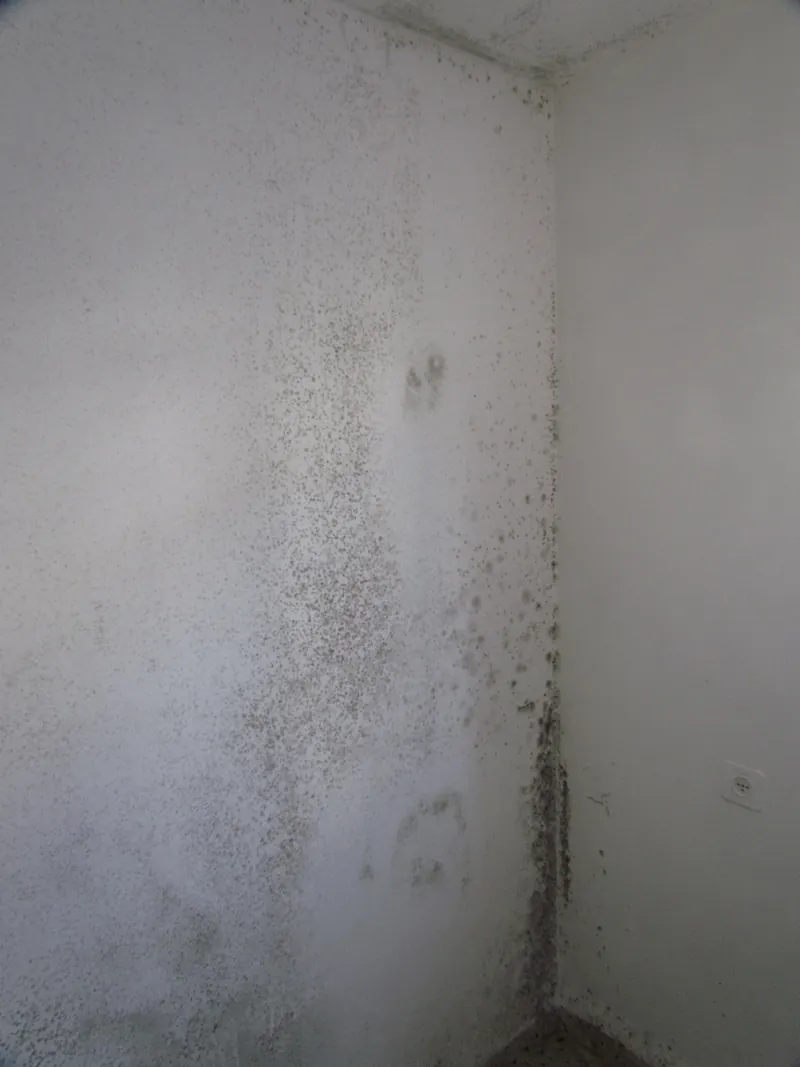
What to know first
Drying wet materials in the EPA window of 24 to 48 hours is the cheapest form of mold remediation Birmingham homeowners can get. Humid summers slow drying, so dehumidifiers and steady air matter. After a clean-water leak, a patch on a hard surface smaller than roughly 10 square feet is usually yours to scrub; larger growth, mold after sewage or creek water, and mold near the heating and cooling system call for a specialist.
How fast does mold show up after a leak in a Birmingham home?
Soon enough that drying should begin the moment the water stops. The EPA sets a 24 to 48 hour deadline for drying soaked materials and belongings if you want to head off mold. A lot of searches for mold remediation in Birmingham trace back to a leak that stayed wet past that point.
For flooded homes, the CDC repeats that deadline and wants the whole house cleaned and dried quickly. Soaked carpet or upholstery that will not dry fast enough should go out to the curb.
That window opens when the water arrived, not when someone noticed it. A pinhole drip behind a vanity or a slow seep along a basement wall can run for weeks first. Getting soaked framing and subfloor dry with air movers and dehumidifiers is the job of structural drying, and it is how a leak stays a leak instead of a mold project.
Why do Birmingham summers make mold after a leak more likely?
Hot, muggy air slows evaporation, so wet drywall, pad and framing hold their water longer. Wikipedia's Birmingham article describes a humid subtropical climate with hot summers and high humidity, a July daily mean of 81.1 F, and highs of 90 F or more on 65 days a year.
The same article says most summer rain arrives in afternoon and evening thunderstorms, and that late summer and fall can bring tropical storms up from the Gulf Coast. A roof leak or a soaked crawl space in August starts out in air that is already damp.
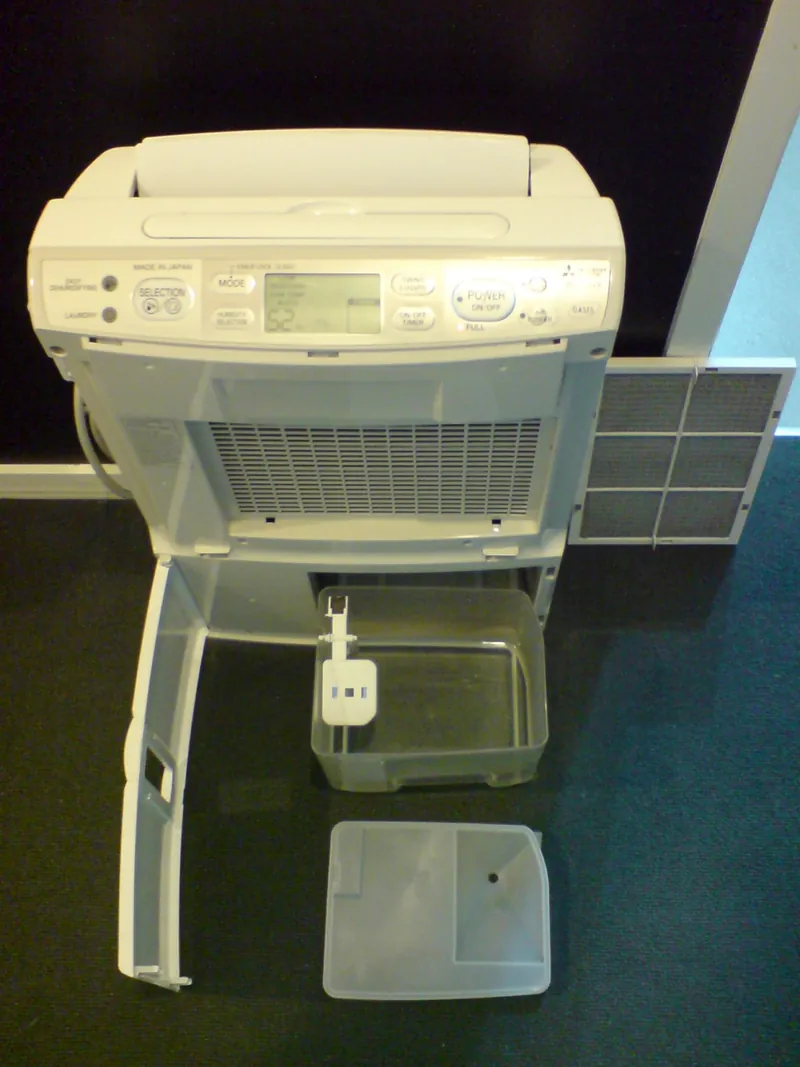
The EPA's page on moisture control groups the South with hot, wet regions and points to dehumidifiers and air conditioning for humid climates. One catch it mentions: an air conditioner that chills a room too fast may shut off before removing much moisture.
The EPA's target is indoor humidity under 60 percent, ideally between 30 and 50 percent. A cheap hygrometer tells you whether a basement or back bedroom is holding above that line while it dries.
When should you call a mold remediation specialist in Birmingham?
Call one when growth spreads past about 10 square feet, when sewage or creek water caused the damage, or when mold may be in the heating and cooling system. The EPA mold cleanup page says a patch smaller than roughly 3 feet by 3 feet is, in most cases, a job you can handle yourself.
| What you find | Who usually handles it | Why | Source |
|---|---|---|---|
| A few spots on a painted bathroom wall after a supply leak | Homeowner | Under about 10 square feet on a hard surface | EPA |
| Growth across a whole basement wall or ceiling | Mold specialist | Over 10 square feet or a lot of water damage | EPA |
| Mold after a sewer backup or creek flooding | Professional with contaminated-water experience | Sewage and outside flood water are Category 3 | EPA, IICRC S500 |
| Mold near a return vent or the air handler | Specialist; keep the system off | Running a contaminated system can spread mold through the house | EPA |
| Anyone in the home has asthma or a weak immune system | Talk to a doctor before cleanup starts | These groups can react more severely | EPA, CDC |
Before any mold work, the water source has to be fixed and the area dried, or the growth returns. That is where water mitigation and the sewer backup cleanup page come in.
How do you clean up a small patch of mold yourself?
Fix the leak, protect yourself, scrub hard surfaces with detergent and water, and dry everything completely. The EPA cleanup page keeps it that simple for small jobs on nonporous material. Porous items such as ceiling tiles and carpet that turn moldy may have to be thrown away, because mold fills their pores.
- Stop the water first. Repair the drip, the roof or the drain line, or the mold comes back.
- Gear up and air out. The CDC suggests rubber boots, gloves and goggles, with windows open.
- Scrub, do not just spray. Use detergent and water on hard surfaces, then dry them fully.
- Use bleach carefully, if at all. If you use bleach, the CDC limit is 1 cup to a gallon of water. Never mix it with ammonia or another cleaner.
- Bag and remove porous items that stay moldy, such as pad, ceiling tile and soaked drywall.
- Do not paint or caulk over it. The EPA says paint applied over mold is likely to peel; clean and dry the surface first.
If you are unsure how to clean something valuable or sentimental, the EPA suggests asking a specialist in that kind of item. The kids and pets cleanup safety page covers who should stay out of the room.
Where does mold hide after a leak in a Birmingham house?
It grows where water sat unseen: inside wall cavities, under vinyl and carpet, in crawl spaces, and in basements dug into a slope. If your house sits on a hillside lot, the uphill basement wall takes runoff first. Check the backs of baseboards, the underside of the subfloor and insulation in the attic.
A crawl space that took on water can stay damp long after the rooms above feel dry. The EPA moisture page suggests a plastic cover over a dirt crawl space floor and good crawl space ventilation. It also flags carpet laid over concrete, which can soak up moisture and grow mold.
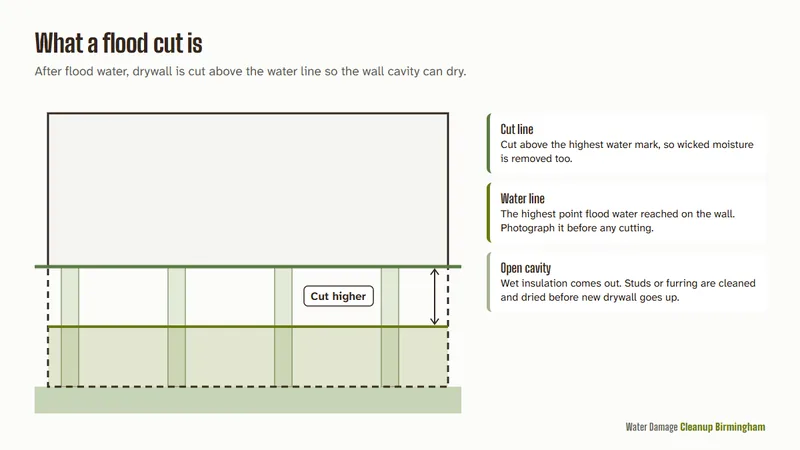
Once drywall has been soaked, removal often beats drying. The wet drywall and wet carpet pages explain when each can be saved, and water damage smell helps you track a musty odor back to its source.
What health problems can mold cause after a leak?
Mostly allergy-type and breathing complaints. Symptoms on the CDC list run from a stuffed-up nose and scratchy throat to coughing, wheezing, burning eyes and skin rash. Asthma or a mold allergy raises the odds of a severe reaction, and lung infections become a risk when the immune system is weak or the lungs are chronically ill.
Keep those household members away from the work area until cleanup is done.
The EPA advises talking to a health professional before cleanup if you have health concerns. It also says the longer mold grows, the more damage it does to what it grows on, which is a second reason not to wait.
Odor is a clue, not a diagnosis. A musty smell in a closed-up basement means something is damp enough to check, even when no spots show yet. The guide to signs of water damage lists other early warnings.
How much does mold removal cost after water damage?
National guides give wide ranges, and the size of the area and the materials involved drive the price. Removing mold runs $1,100 to $3,400 in Bob Vila's cost guide, which gives $2,200 as the average. Fixr prices mold work by area instead, from $4.75 to $5.50 a square foot.
Those numbers are national, not Birmingham quotes, and they cover the mold work only. Drying the structure, replacing drywall and flooring, and fixing the leak are separate lines on most estimates.
Ask any restoration team for a written estimate with each task on its own line, so you can see what the mold work costs apart from the water damage. The restoration cost guide lists other national ranges with their sources, at Bob Vila and Fixr.
Does homeowners insurance pay for mold remediation?
Often not, or only in part. The NAIC lists mold among common homeowners exclusions, and Triple-I names it beside pests and missed maintenance as damage left uncovered. Your own policy wording and any mold endorsement you bought decide the answer for your house.
Triple-I statistics fold covered mold into the water damage and freezing category, which averaged $15,400 per claim from 2019 through 2023. Where a policy does pay for mold, expect questions about the water that caused it and whether that loss is covered.
Fast drying helps the claim as well as the house. An adjuster reads mold after a pipe that was dried at once very differently from mold under a drip left for a year. The insurance claims guide covers Alabama's claim timelines.
How do you choose a mold remediation company, and where does this site fit?
Ask about experience with mold, check references, and ask which cleanup guideline the company follows. The EPA names its own guide for schools and commercial buildings, the ACGIH guidelines and the IICRC as references a contractor can work from. Get the plan and the price in writing before work starts.
This site handles leaks, flooding and drying. It does not list mold remediation companies. Some local restoration teams take on mold work and others do not, so put that question to the restoration team directly.
Questions that fit both kinds of work are in the guide to choosing a restoration company.
How do you keep mold from coming back once the house is dry?
Keep the moisture out and the humidity down. That means fixing the leak for good, running bath and kitchen exhaust fans to the outdoors, venting the dryer outside, and keeping gutters and grading moving water away from the house, all steps on the EPA moisture page. Hold indoor humidity under 60 percent.

The EPA also suggests moving furniture away from wall corners and opening closet doors so air reaches cool surfaces. Watch the places that got wet for a few weeks, and recheck after the next heavy rain.
For the longer list of checks, see preventing water damage, and if a basement takes on water often, the basement flooding page covers the causes.
Sources: EPA mold and moisture brief guide; EPA home mold cleanup page; EPA moisture control page; CDC, About Mold and Your Health; IICRC S500 (Category 3 water); NAIC consumer guide; Triple-I on covered perils; Triple-I claim statistics; Bob Vila, restoration and mold removal costs (2023); Fixr, restoration costs (2025); Wikipedia, Birmingham, Alabama (climate).