The short version
When bathroom leak water damage turns up in a Birmingham home, shut the fixture valve or the main, towel up the floor, clear out the sink cabinet and photograph it all. Plumbers fix leaks; restoration teams take readings and dry subfloors, wall cavities and ceilings underneath. Overflow with waste in it counts as contaminated water, and the EPA wants wet materials dry inside a 24 to 48 hour window.
Water is leaking in the bathroom. Which shutoff valve do I close?
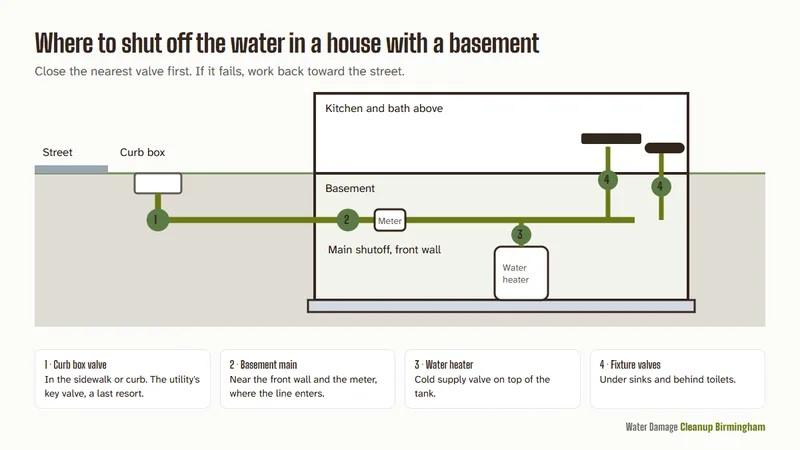
Close the small valve on the supply line feeding the fixture that leaks, turning it clockwise until it stops. Toilets and sinks have one; most tubs and showers do not. If the leak is inside a wall, under the tub or still running, close the main valve for the house, then mop up and take photos.
- Find the fixture stop. Look low on the wall behind the toilet and inside the vanity or sink cabinet for a small oval or round handle.
- Use the main when the stop fails. The house valve usually sits where the water line comes in, which may be a basement wall, a crawl space access, a garage or a closet.
- Cut power where water reached. Turn off the breakers for wet outlets, vent fans and lights, standing on a dry surface while you do it.
- Soak it up. Towels and a wet vacuum handle most spills; pull everything out of the sink cabinet so its floor can breathe.
- Check downstairs. Look at the ceiling and walls under the bathroom or kitchen for new drips, rings or a soft spot.
- Take pictures before cleanup. Photograph the fixture, the floor, inside the cabinet and any ceiling below.
A plumber fixes the leak itself. The next question is how far bathroom leak water damage spread into the subfloor, walls and ceiling, and our parent page on water damage repair in Birmingham covers rebuilding floors, walls and cabinets once everything is dry.
Is it the toilet, the tub or the shower that is leaking?
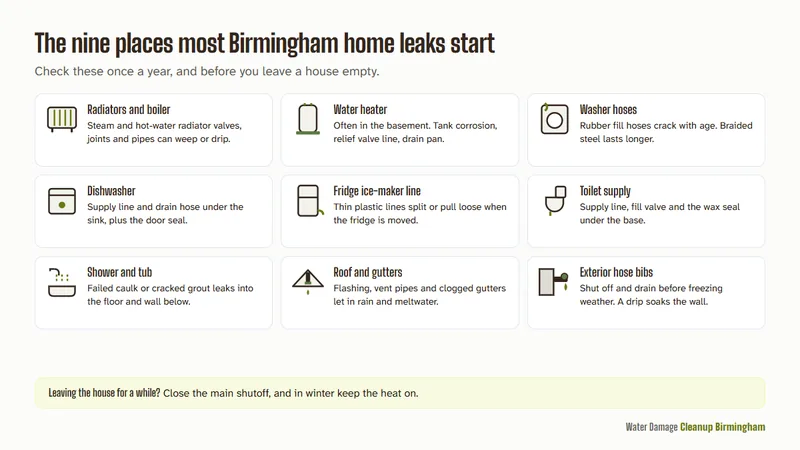
The timing of the water usually gives it away. A puddle that returns at the toilet base after flushing points to the wax ring. Water that appears only after someone bathes points to the shower pan, the valve or the grout. A drip under the vanity while nothing runs points to a supply line or its fitting.
| What you notice | Likely source | Simple test | Who repairs it |
|---|---|---|---|
| Water around the toilet base after each flush | Failed wax ring or a loose toilet | Rock the bowl gently; any movement means the seal is suspect | Plumber |
| Ceiling stain that grows after showers | Cracked shower pan, drain gasket or worn grout | Skip that shower for a few days and watch whether the stain dries | Plumber or tile setter |
| Damp wall behind the tub spout or handle | Valve body or pipe joint inside the wall | Note whether the damp spreads only while the tap is on | Plumber |
| Wet cabinet floor under a sink | Supply hose, shutoff valve or drain trap | Dry everything, lay a paper towel down and look again in an hour | Plumber |
| Swollen or soft flooring by the tub | Water escaping past the tub edge or a curtain over a long period | Press the floor and look for a gap in the caulk line | Plumber, then a flooring installer |
If the flooring is already soft or lifting, the page on water damaged floors explains what can be saved, and the wet drywall page covers walls that stay damp after the repair.
How do you find a bathroom leak hidden under tile or inside a wall?
Start with the water meter and your senses, then bring in instruments. Shut every tap, read the meter and check again after a while with nothing running. If the number moved, water is escaping somewhere under pressure. Loose tiles, cracked grout, a musty smell or paint that bubbles near the tub all help narrow the search.
A restoration team or plumber can use moisture meters and thermal cameras to trace wet areas without opening every wall. Readings that rise toward one spot usually lead back to the source.
Look from other angles too. A closet that shares a wall with the shower, the ceiling below and any access panel behind the tub can show dampness that the bathroom itself hides.
The guide to signs of water damage lists other clues, and the page on a lingering water damage smell helps when the odor is the only thing you can find.
What causes a brown ring on the ceiling below a bathroom?
Water has been escaping from the bathroom floor long enough to soak through the subfloor and reach the ceiling board below. A brown ring that grows slowly usually means a seal or drain that leaks a little with each use. A stain that appears all at once more often follows an overflow or a supply line failure.
Plumbing upstairs and a ceiling downstairs share the same joist space. Water travels along joists and pipes before it shows, so the stain is not always directly under the fixture that leaks.
Treat a ceiling that sags or feels soft as a hazard. Keep people out from under it, turn off the light fixture circuit and set a bucket under the low point.
If the leak was a single event and the plumber has fixed it, the ceiling may dry in place. When the board crumbles, sags or stays wet, it usually has to come out. The ceiling water damage page covers both outcomes in more detail.
Can I clean up toilet overflow water myself?
It comes down to whether waste was in the water. Under the IICRC S500, overflow from a toilet with no waste is Category 2 grey water, and sewage falls in Category 3, grossly contaminated. A small grey water spill on tile can often be cleaned by a careful homeowner; overflow with waste in it is a different job.
For sewage, the EPA advises calling a professional who has experience with buildings damaged by contaminated water. Carpet, pad and drywall that took on dirty water are usually removed rather than cleaned.
If you do clean a minor spill, the CDC says to wear goggles, gloves and rubber boots and to get windows open. For hard surfaces it suggests plain soap and water, an ordinary household cleaner, or a bleach mix kept to 1 cup or less in each gallon of water, and it warns against combining bleach with ammonia or any other cleaner.
When water comes up through the tub or floor drain instead of out of the toilet, the problem may be in the sewer line. The sewer backup page explains that situation, and the cleanup safety page for kids and pets covers keeping family members clear.
What damage can a kitchen sink or dishwasher leak cause?
More than most people expect, because kitchen leaks hide under cabinets and appliances. A dishwasher that weeps at its door seal or drain hose can wet the subfloor for weeks before the flooring buckles. A sink supply line that drips into the cabinet base softens particleboard and can run behind the cabinets to the wall.
Under the IICRC categories, a dishwasher leak is grey water, Category 2, while a burst supply line starts out as clean water. That difference affects what can be cleaned in place.
Look for swollen cabinet bottoms, toe kicks that feel soft, a musty smell when you open the sink door and flooring that rises along the dishwasher's edge.
Fridge water lines and ice makers cause the same kind of hidden damage. The appliance leak page covers dishwashers, washers and refrigerators in more depth.
Do Birmingham freezes burst pipes under sinks and behind tubs?
They can, even in a city known for mild winters. The Wikipedia article on Birmingham lists an average of 47 days a year with a low at or below freezing. Pipes on exterior walls, in crawl spaces and inside sink cabinets on outside walls are the ones that usually freeze first.
The American Red Cross singles out supply lines running through unheated spaces, kitchen cabinets included, as the likeliest to freeze. For a trip during cold weather, it says to leave the thermostat set to 55 degrees or higher and keep a slow cold drip going wherever a faucet is fed by pipe that is exposed to the cold.
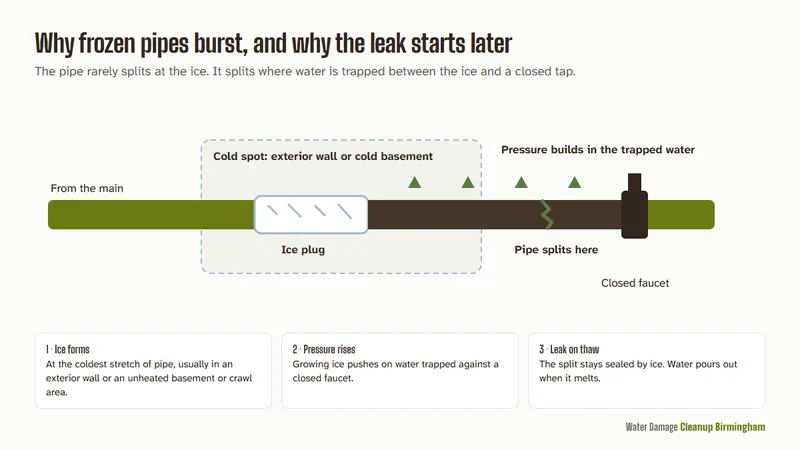
Opening the sink cabinet doors on a cold night lets warm room air reach the pipes. For a line that is already frozen, the Red Cross lists gentle heat sources such as a hair dryer, hot wet towels or an electric heating pad, and rules out torches, propane or kerosene heaters and any other open flame.
Once a frozen line has split, our burst pipe page takes over.
Who handles it when the leak comes from the unit upstairs?
Start by stopping the water, which may mean reaching the upstairs neighbor, the building manager or the association quickly. Responsibility then depends on the lease, the condo documents and each party's insurance. Those documents split shared pipes, structure and unit interiors in different ways, so read yours.
Photograph the damage in your unit before anything is cleaned, and write down when you first saw it and who you told. Ask the upstairs owner or manager for the plumber's findings once the leak is fixed.
Renters should read what their own renters policy says about belongings and ask the landlord, in writing, who arranges repairs to the unit. The guide for renters and condo owners goes through those roles in more detail.
If the ceiling between units is soaked, everyone benefits from drying starting early. Agreeing on who calls the restoration team avoids a delay while the ceiling stays wet.
Does homeowners insurance cover a bathroom leak in Alabama?
A sudden leak often is; a slow one may not be. Triple-I includes water suddenly escaping from household plumbing or an appliance in the list of perils that standard policy forms name. Neglect is another matter: Triple-I says upkeep is the owner's job, and a drip ignored for months can fall on that side of the line.
Plumbing leaks generally fall inside homeowners coverage, per the NAIC, while mold costs are frequently carved out. Read your policy and ask your agent how it treats both.
Claims like this are common. Going by Insurance Information Institute figures, roughly one insured home out of every 60 files a water damage or freezing claim in a typical year.
Under the Alabama Department of Insurance claim standards in Ala. Admin. Code r. 482-1-125, an insurer must acknowledge a first party claim in 15 days. It must tell you the status of acceptance or denial in 30 days after it receives proof of loss, or within the policy's own period. The insurance claims guide covers the whole process.
How are a wet bathroom floor, walls and ceiling dried out?
A restoration team takes moisture readings to map how far the water spread, then decides what can dry in place. Tile over a solid base often stays, while soaked vanity bottoms, baseboards and the bottom of a drywall wall are usually cut out. Dehumidifiers and air movers then run until the readings match dry parts of the house.
The EPA wants damp areas dried in the first 24 to 48 hours, and it sets indoor humidity targets of below 60 percent, with 30 to 50 percent preferred. Bathrooms make that harder because they hold steam, so run the vent fan and keep the room's door open while it dries.
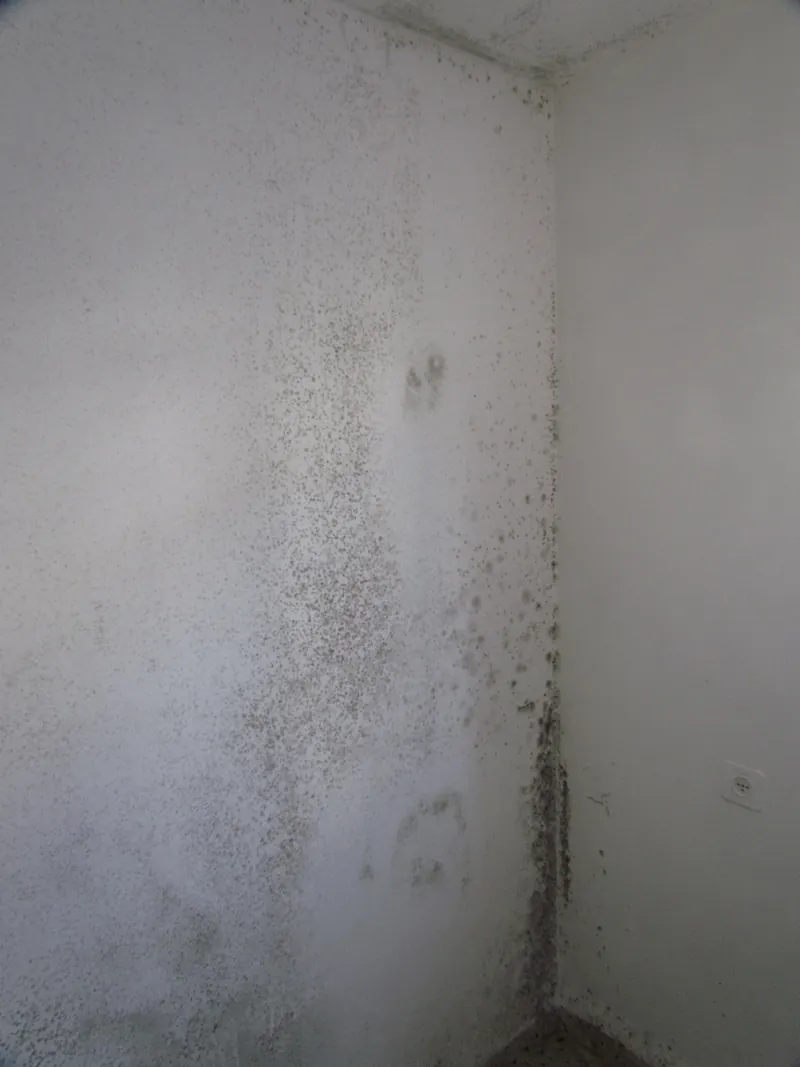

Birmingham's humid summers, which the city article describes as hot with high humidity, slow drying in rooms without good air flow. The structural drying page explains the equipment and readings, and the guide to mold after water damage covers what to do if spotting appears.
For a sense of scale, Bob Vila gives $1.50 to $3 a square foot as a drywall repair range, and $350 to $1,250 for fixing a ceiling. Restoration teams differ, so get written quotes; the restoration cost guide has more.
Sources: IICRC S500, Category 1, 2 and 3 water; EPA, mold cleanup and contaminated water; EPA brief guide to mold and moisture; CDC, protective gear and bleach mix; Birmingham, Alabama (Wikipedia), freezing days and humid summers; American Red Cross, frozen pipes; Triple-I, named perils and maintenance exclusion; NAIC, plumbing leaks and mold; Insurance Information Institute, claim frequency; Ala. Admin. Code r. 482-1-125, claim timelines; Bob Vila, drywall and ceiling repair ranges.