Quick answer
Water damage cleanup safety with kids and pets starts by moving them out of the work area before anything else. Sewage and creek water are the most contaminated category, so keep children and animals away until cleanup is finished. Wear boots, gloves and goggles, never mix bleach with ammonia, and get wet rooms dry in the first 24 to 48 hours so mold has less chance.
Why does water damage cleanup safety matter more with kids and pets at home?
Children and animals get close to the floor, put things in their mouths, and walk straight through puddles adults would step around. A wet house can hold dirty water, loose debris, live wiring, bleach fumes and early mold all at once. Water damage cleanup safety starts with keeping the smallest people and animals out of the work area.
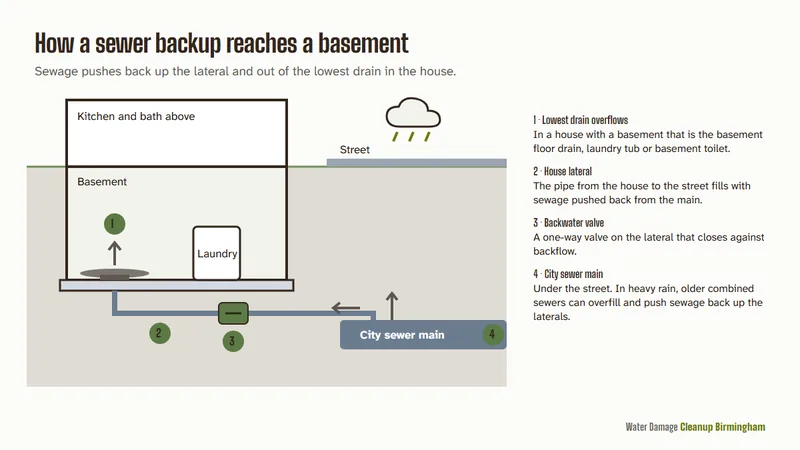
The source of the water sets the level of risk. A supply line that bursts behind a vanity releases tap water, while a backed-up floor drain or a creek in the yard brings sewage and silt into the house. The rest of this page sorts out which situations call for what.
Water Damage Cleanup Birmingham is the local water damage restoration line and information resource for the Birmingham area. It does not give medical or veterinary advice, so call a doctor or a vet about symptoms in a child or an animal.
Is the water in my house clean, gray or sewage?
Look at where it came from. The IICRC S500 standard uses three groups. Category 1 is supply-line or burst-pipe water, Category 2 is gray water from an appliance or a waste-free toilet overflow, and Category 3 takes in sewage and any flood water that rose from a creek, a river or the yard.
| IICRC category | Common sources | What it means for kids and pets |
|---|---|---|
| Category 1, clean | Burst supply pipe, water heater line, fridge line | Keep them clear of cords, wet floors and fallen ceiling material |
| Category 2, gray | Washer or dishwasher overflow, toilet overflow without waste | Keep them out of the room until floors are cleaned and dry |
| Category 3, grossly contaminated | Sewer backup, creek or river flooding, outside surface water | Keep them out of the house section entirely until cleanup is finished |
Clean water does not stay clean for long. Once it soaks into carpet pad or sits in a warm room, it picks up whatever was on the floor. Give water that has been standing a while more caution than its source alone would call for.
Birmingham's creeks bring the third kind. The NWS gauge on Village Creek at Avenue W in Ensley lists a highest crest of 14.8 feet on December 3, 1983, and creek water that reaches a living space falls in the IICRC's grossly contaminated group. The sewer backup cleanup page covers the floor-drain version of the same problem.
What safety steps come first before cleanup starts?
Make the building safe before anyone starts mopping. The Alabama Cooperative Extension System says to confirm that a flooded building is structurally sound before entering, and to ask local officials if you are unsure. Then deal with power, protective gear and fresh air, and move children and animals somewhere dry.
- Get kids and pets out first. Move them to a dry room on another floor, a relative's house or a car with an adult before work begins.
- Check the structure. Stay out of rooms with sagging ceilings, soft floors or cracked walls, as Alabama Extension advises.
- Cut the power to wet areas. If you can reach the panel without standing in water, switch off those circuits; if not, call an electrician.
- Stay out of moving water. Even six inches of flowing water can sweep an adult off their feet, per Ready.gov, and a child weighs far less.
- Gear up. Rubber boots, gloves and goggles for anyone cleaning, as the CDC recommends.
- Open windows. Fresh air helps with odors and cleaning fumes.
- Photograph everything. Pictures of the damage help a later insurance claim.
Basements deserve extra care. Alabama Extension advises pumping a flooded basement down about one third per day, because removing the water too fast can let the walls collapse. Keep children and pets well away from the basement stairs while pumping goes on, and see the basement flooding page for more.
Where should kids and pets stay while the house dries?
Somewhere with no wet materials, no drying equipment and no cleaning chemicals. For a small, clean-water leak that may be a bedroom at the far end of the house. After sewage or creek water, it usually means a relative's home or a hotel until the affected area has been cleaned, dried and checked.
Plan for animals early. Ready.gov notes that many public shelters and hotels do not allow pets inside, and suggests a buddy system with neighbors, friends or family who can look after your animals if you cannot. Call ahead before you load the car.
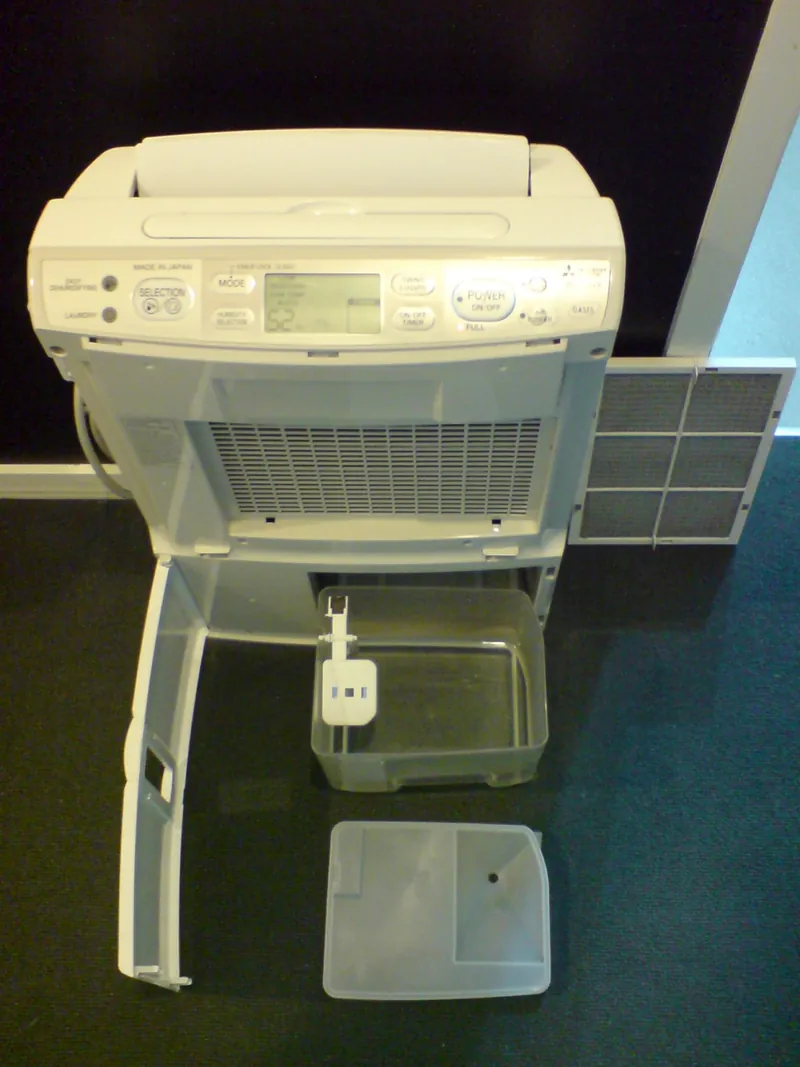
Drying equipment adds its own hazards for small children and curious dogs. Air movers are loud, with spinning blades behind a grille, while dehumidifiers fill tanks or push water through hoses and cords snake across doorways. Ask the restoration team you reach to set up where kids and animals will not reach, and look at the structural drying page for what the equipment does.

What should a pet go-bag hold if you leave the house during cleanup?
Pack as if the stay might stretch for days. Ready.gov suggests keeping two kits, a larger one for sheltering at home and a lighter one for leaving. Its list starts with food, water and medicine and works through identification, a carrier and the comfort items that keep an animal calm.
- Several days of food in an airtight, waterproof container, plus a water bowl and several days of water.
- Extra doses of any regular medicine, kept in a waterproof container, and a first aid kit your vet has helped you stock.
- A collar with an ID tag, a harness or leash, and a backup set of each.
- A crate or sturdy carrier for each animal.
- Litter, a litter box, paper towels, plastic bags and household chlorine bleach for sanitation.
- Copies of registration papers in a waterproof container, and a photo of you with your pet.
- Favorite toys, treats or bedding to lower the animal's stress.
Ready.gov also recommends microchipping and keeping the chip contact information up to date. A pet that bolts through a door propped open for fans or pumps is easier to recover with a chip and a tag.
Is bleach safe to use around children and pets?
Used correctly and stored out of reach, yes, but it should never be the first tool. For hard surfaces, the CDC's mold page lists ordinary cleaner, plain soap and water, or a bleach solution capped at 1 cup per gallon. It warns against combining bleach with ammonia or any other product.
Alabama Extension gives the same 1 cup to 1 gallon mix for sanitizing surfaces touched by gray or black water, and says the surface should stay wet for 10 to 15 minutes. That contact time is the stretch when kids and pets most need to be elsewhere.
Ventilate while you work and afterward. Keep the bucket, the jug and the rags up high, rinse surfaces a child will touch, and let floors dry before a dog walks through and licks its paws. Resist the urge to cover stains, since the EPA's cleanup advice rules out paint or caulk over mold.
When sewage is involved
For damage caused by sewage, the EPA's advice is to bring in someone who has handled contaminated-water jobs before. Alabama Extension adds that anyone who must enter should wear gloves, boots, goggles, a suitable respirator and protective clothing. That is not work for teenagers helping out.
Keep the whole family out of a basement or room that took sewage until it has been cleaned, disinfected and dried. The sewer backup cleanup page explains what that work usually involves and what to ask a restoration team before it starts.
Can mold after a leak make children or pets sick?
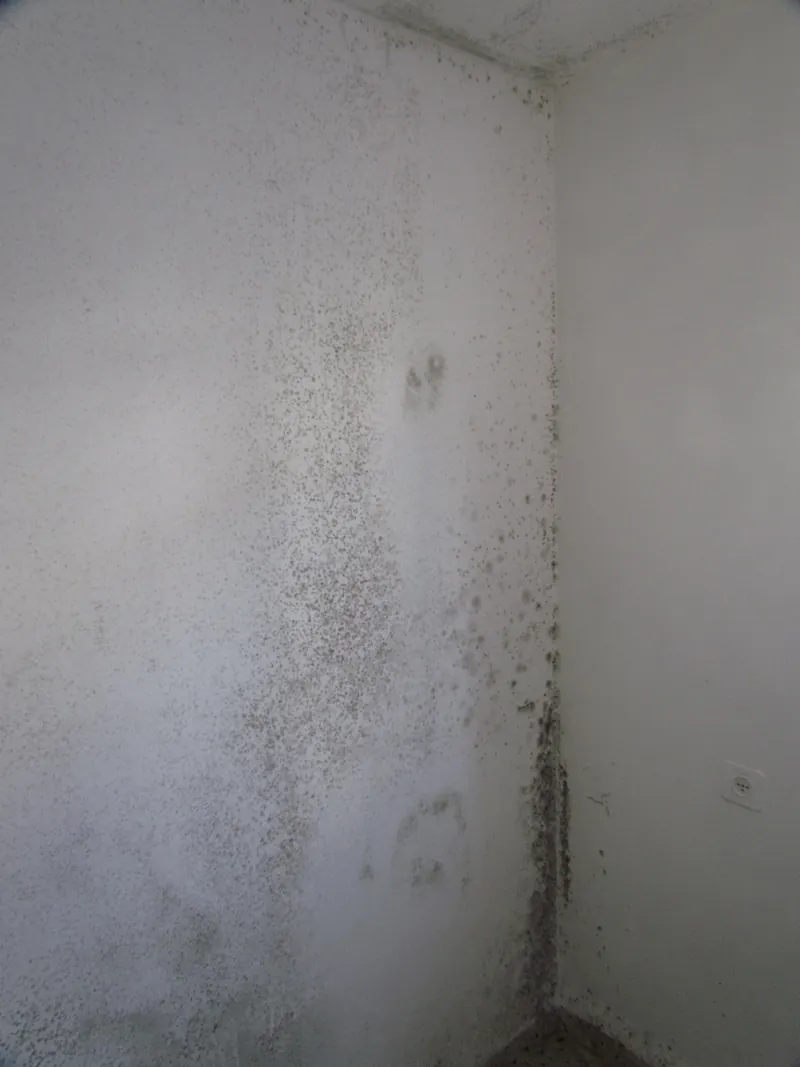
It can make some people sick, and children with asthma are among those most at risk. CDC guidance names congestion, a scratchy throat, coughs, wheezing, itchy or burning eyes and rashes. Asthma or a mold allergy can turn those into serious reactions, and lung infections are possible in people with chronic lung illness or a weakened immune system.
Speed is the main defense. The EPA's moisture guide gives a 24 to 48 hour window to get things dry and wants the house below 60 percent relative humidity, with 30 to 50 percent as the aim. By the EPA's measure, a patch under roughly 10 square feet is one most homeowners can clean themselves.
Birmingham makes that window tight. The Wikipedia article on Birmingham describes hot summers with high humidity, which slow drying and favor growth. Our Birmingham mold guide explains where a homeowner job ends and a specialist's begins.

What happens to toys, bedding and pet beds that got wet?
It depends on the water and the material. Hard plastic toys and food bowls that sat in clean water can usually be washed and dried. Soft items soaked in sewage or creek water are hard to clean all the way through, and CDC guidance is to pull out any soaked rug or upholstered piece you cannot dry promptly.
Plush toys, fabric pet beds, crib mattresses and cushions act like sponges. When the water was Category 3, or when you cannot tell, throwing them out is the safer call. Photograph each item first, because the pictures support an insurance claim.
Keep hands clean through the whole job. Alabama Extension says to wash hands with soap and safe water after cleanup work and after handling things touched by flood water or sewage, and to wash children's hands often and always before meals. The contents pack-out page explains how restoration teams can move salvageable belongings out for cleaning.
Which heaters and tools should stay out of a wet house?
Skip anything that burns fuel indoors. Alabama Extension notes that fuel-fired heaters give off large amounts of moisture unless vented outdoors, and that burning a gallon of kerosene produces about a gallon of water. They also raise fire and fume risks in a house full of children and animals.
The same goes for thawing frozen pipes. The American Red Cross rules out torches, kerosene and propane heaters, charcoal stoves and every other open flame. Its safer list is a hair dryer, an electric heating pad or hot, wet towels.
Fans help only when the air is dry or a dehumidifier is running, Alabama Extension explains. For most houses that means letting a restoration team set up drying equipment and moisture monitoring. The flood cleanup page and the water damage smell guide cover what comes after the water is out.
Sources: IICRC S500 (water categories); NWS, Village Creek at Avenue W in Ensley gauge ENSA1 (1983 crest); Alabama Cooperative Extension System, Drying Out After a Flood (structural check, basement pumping, protective gear, bleach mix and contact time, hand washing, fuel-fired heaters, fans); Ready.gov, Floods (moving water); Ready.gov, Prepare Your Pets for Disasters (shelters, buddy system, pet kit, microchips); CDC, About Mold and Your Health (symptoms, bleach mix, gear, soaked carpet); EPA, Mold Cleanup in Your Home (sewage cleanup, no painting over mold); EPA mold and moisture guide (drying window, humidity, 10 square feet); Wikipedia, Birmingham, Alabama (summer humidity); American Red Cross, frozen pipes (no open flame).