Quick answer
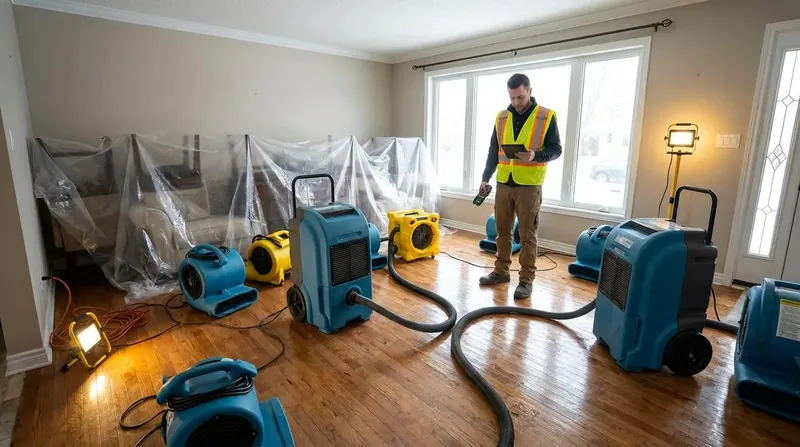
How to dry hardwood floors: stop the leak, pull up standing water and wet rugs, then dry with dehumidifiers and fans, not fuel-burning heaters. Alabama Extension says slightly warped floors should be dried completely before any repair, which can take weeks or months, while badly warped floors usually cannot be saved. Check the subfloor and crawl space too.
How do you dry hardwood floors without making the damage worse?
Get the liquid water off the surface first, then dry the wood with steady, dehumidified air instead of fuel-burning heaters. How to dry hardwood floors well comes down to patience: boards that swelled from below need to give up moisture evenly, top and bottom, before anyone sands, nails or refinishes them.
The Alabama Cooperative Extension System says mechanical removal beats evaporation, so pumps, wet vacuums and squeegees come before fans. It adds that fans only speed drying when the air they move is dry, which means pairing them with a dehumidifier or with outside air that is drier than the air indoors.
Water Damage Cleanup Birmingham covers floor and framing drying. It does not sell flooring, sand floors or install anything, and restoration teams differ in what they take on, so confirm directly.
What should you do in the first hours after water reaches a wood floor?
Stop the water, get it off the boards and start moving dry air before the wood soaks up more. Every hour standing water sits on hardwood, more of it wicks into the seams and down into the subfloor. The steps below are the ones a homeowner can usually take safely while waiting for help.
- Stop the leak. Turn the valve under the fixture, the house main, or unplug the appliance that failed.
- Make the room safe. Turn off power to outlets near the water if you can reach the panel from a dry spot.
- Pull up the standing water. Use a wet vacuum, towels or a squeegee, working toward a door or drain.
- Lift wet rugs off the wood. A soaked rug or pad holds water against the finish; see the wet carpet page.
- Move furniture. Set wood legs on foil or blocks, and take out anything that could stain or trap moisture.
- Start dehumidifying. Close the room up and run a dehumidifier, or the air conditioning in summer.
- Photograph and measure. Take pictures of the floor and note how far the water spread for the insurance claim.
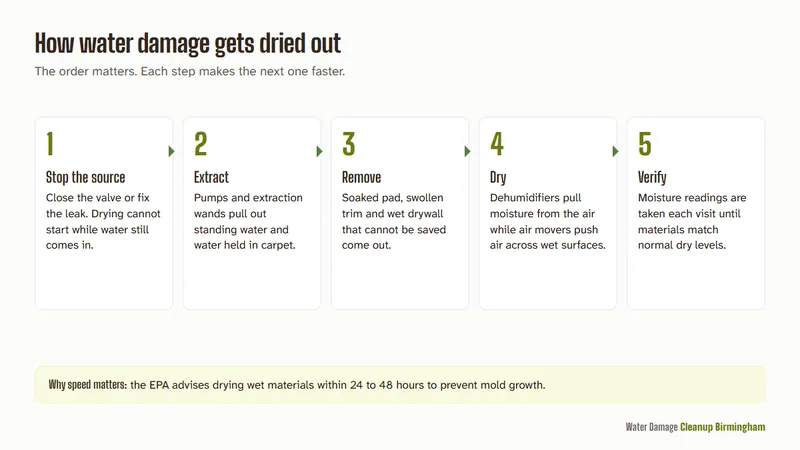
The EPA's mold and moisture guide wants wet materials dry in 24 to 48 hours if mold is to be avoided. A solid hardwood floor rarely dries completely that fast, which is why the goal early on is to stop the spread and get drying equipment going.
Can a warped hardwood floor be saved?
Often, if the warping is slight and the water was clean. Alabama Extension says badly warped hardwood floors usually cannot be repaired, and a floor that is clearly beyond repair should come up. Slightly warped floors are different: they are cleaned, dried completely and then repaired, a process the extension service says can take weeks or even months.
Different floors react differently. This summary follows the Alabama Extension floor cleanup page, which is used by permission of Mississippi State University Extension.
| Floor type | What water does to it | Extension advice |
|---|---|---|
| Solid hardwood, badly warped | Boards twist and lift beyond repair | Take it up, then let the subfloor dry for several months before a new floor |
| Solid hardwood, slightly warped | Edges rise, small humps form | Dry completely first; then plane edges, nail bulges or sand humps |
| Wide pine boards | Warp while wet | Often flatten once thoroughly dry; wait several months before repairs |
| Plywood subfloor | Layers separate (delaminate), so the covering buckles | Replace damaged sections, or the whole subfloor; dry before recovering |
Engineered and laminate floors are not on that list. Ask the flooring maker or a flooring contractor how its product handles water before you assume it can be dried in place. The water-damaged floors page covers tile, vinyl and laminate.
Why do wet floorboards cup, and why does sanding too soon backfire?
Wood swells as it takes on water, and water arriving from below, out of a crawl space or a soaked subfloor, swells the underside of each board more than its face. The edges rise and the middle sinks, which is called cupping. When the top swells more instead, the middle rises, which is called crowning.
A cupped floor can look like it needs sanding flat right away, but the cup is a sign of moisture still trapped underneath. Sand it while the bottom is wet and the board edges lose wood. Once the board dries and settles back, the middle can stand higher than the edges, leaving a crown that was cut into the wood.
That is why Alabama Extension's first repair step is to clean and dry the floor completely before attempting any repairs, and why it tells owners of pine floors not to repair anything until the wood is dry. A restoration team can compare moisture readings in wet and unaffected parts of the floor to show when it has leveled out.
Repairs once the floor is dry
If the dried floor still has raised spots, the extension page suggests removing strips beside the bulges and planing their edges to give warped boards room to settle. Some buckled boards can be nailed back down, and some humps planed or sanded away. Tongue-and-groove boards call for a carpenter.
Heavily planed or sanded boards may never look right uncovered, the extension page notes, but they can still serve as a base for carpet, tile or sheet flooring. That option can save the cost of tearing out a whole floor.
How long does a water-damaged hardwood floor take to dry in Birmingham?
Expect weeks, not days, for anything more than a surface spill. Alabama Extension says cleaning and drying a slightly warped floor before repairs may take weeks or even months, and it advises letting a subfloor dry for several months before laying a new floor over it. Thorough drying under sheet flooring can take 6 weeks or more.
Birmingham's weather works against fast drying for much of the year. The Wikipedia article on Birmingham describes a humid subtropical climate with high summer humidity and highs at or above 90 F on 65 days a year. Air that wet cannot pull much moisture out of oak.
That is why dehumidification matters more than open windows in a Birmingham summer. Alabama Extension's advice is to combine fans with some way of taking moisture out of the air, and it notes that professional equipment includes refrigerant and desiccant dryers. The structural drying page explains how restoration teams set those up.
What not to use
Skip space heaters that burn fuel. Alabama Extension points out that fuel-fired heaters add large amounts of moisture unless vented outside, with a gallon of kerosene producing about a gallon of water as it burns. Electric heat is a different matter: for pine floors, the extension page says running the furnace as much as possible speeds drying.
Keep pets and kids clear of the drying equipment, and leave the dehumidifier running overnight. Empty its tank often, or ask the restoration team whether a unit with a drain hose fits the room.
What about the subfloor, joists and crawl space under the boards?
The wood you walk on is only the top layer. Under it sits a subfloor, often plywood, and in many older houses a crawl space with joists. Alabama Extension says plywood usually delaminates when exposed to too much moisture, and that a delaminated subfloor needs replacing, either a small section or the whole floor.
Water that runs through the seams can soak the subfloor, pool on the vapor barrier and raise the humidity of the whole crawl space. Drying only the top of the floor leaves that moisture in place, and the boards can cup again weeks later.
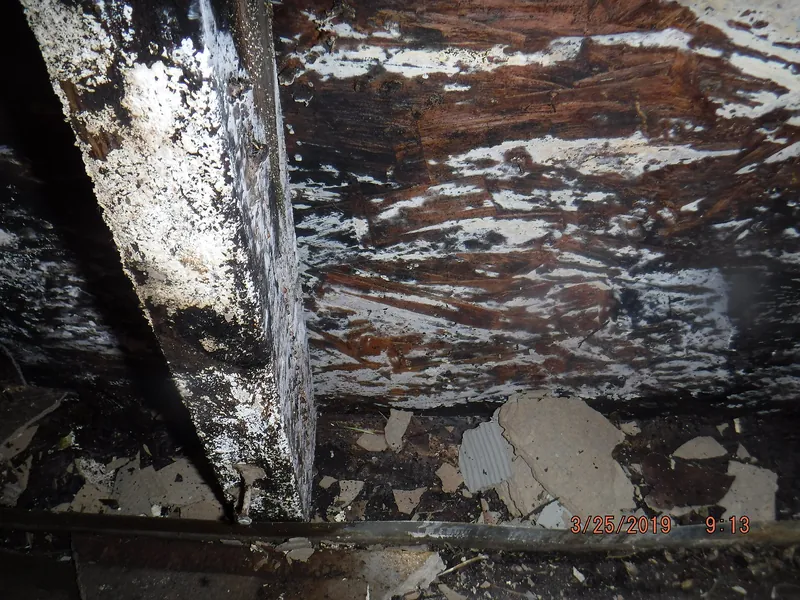

Look underneath if you can do it safely. Wet insulation, dripping seams or a damp vapor barrier mean the crawl space needs its own drying plan. The appliance leak page covers dishwashers and fridge lines, two common causes of water under kitchen hardwood.
Does flood or sewage water change what happens to a wood floor?
Yes. A floor soaked by a supply line is a drying job, while one soaked by creek water or a sewer backup is a contamination job first. The IICRC S500 standard puts sewage and water rising from rivers, streams and outside ground in Category 3, grossly contaminated, the highest of its three classes.
Sewage jobs belong with someone who has cleaned contaminated buildings before, in the EPA's view. Alabama Extension calls for scrubbing floors and woodwork with a stiff brush, plenty of water, a detergent and a disinfectant before the house dries, then a final wash with a nonsudsy cleaner.
Wood that soaked up sewage is harder to save than wood that soaked up tap water, because contamination goes into the seams and the subfloor. The flood cleanup page and the sewer backup page explain how restoration teams handle those losses.
How can you tell when a hardwood floor is dry enough to repair?
Look for readings, not looks. A floor can feel dry to bare feet while the underside of the boards and the subfloor still hold water. The usual test is to compare moisture readings from the wet area against a dry room of the same floor, and to wait until the two match and stay there.
Ask the restoration team you reach to log readings at the same spots each visit, with dates. That record shows the trend, tells a flooring contractor when work can start, and backs up an insurance claim if the adjuster asks how long drying took.
Watch the shape of the boards too. Cupping that keeps easing week by week means the floor is still giving up water, so hold off on sanding.
What does a water-damaged hardwood floor cost to repair, and who pays?
National ranges are wide, and your floor may fall outside them: Fixr puts hardwood restoration at $10 to $15 per square foot, the highest of the common materials it lists. Bob Vila lists $200 to $500 to restore floors. Get a written, itemized estimate for your own job.
Coverage turns on where the water came from. Plumbing and roof leaks are the kind policies typically pay for, the NAIC explains, but ground water and rain runoff are not. Flood is left out of standard policies entirely, per Triple-I, which also rules out damage that comes from poor upkeep.
A slow leak that cupped a floor over months may be treated as maintenance. A sudden burst under a dishwasher usually reads as a covered accident. The restoration cost guide and the insurance claims guide cover estimates and the Alabama claim rules.
Watch for mold under the boards while you wait for the claim. The mold after water damage guide covers the musty smell and dark staining that can show up at the seams.
Sources: Alabama Cooperative Extension System, Floor Cleanup and Renovation (warped hardwood, pine, plywood, drying times, repairs, cleaning); Alabama Cooperative Extension System, Drying Out After a Flood (water removal, fans and dehumidification, drying equipment, fuel-fired heaters); EPA, Brief Guide to Mold and Moisture (drying window); EPA, Mold Cleanup in Your Home (contaminated water); IICRC S500 (water categories); Wikipedia, Birmingham, Alabama (climate, days at or above 90 F); Fixr, water damage restoration cost (hardwood per square foot); Bob Vila, water damage restoration cost (floors); NAIC homeowners insurance guide (plumbing, ground water); Triple-I, disasters covered by homeowners insurance (flood, maintenance).