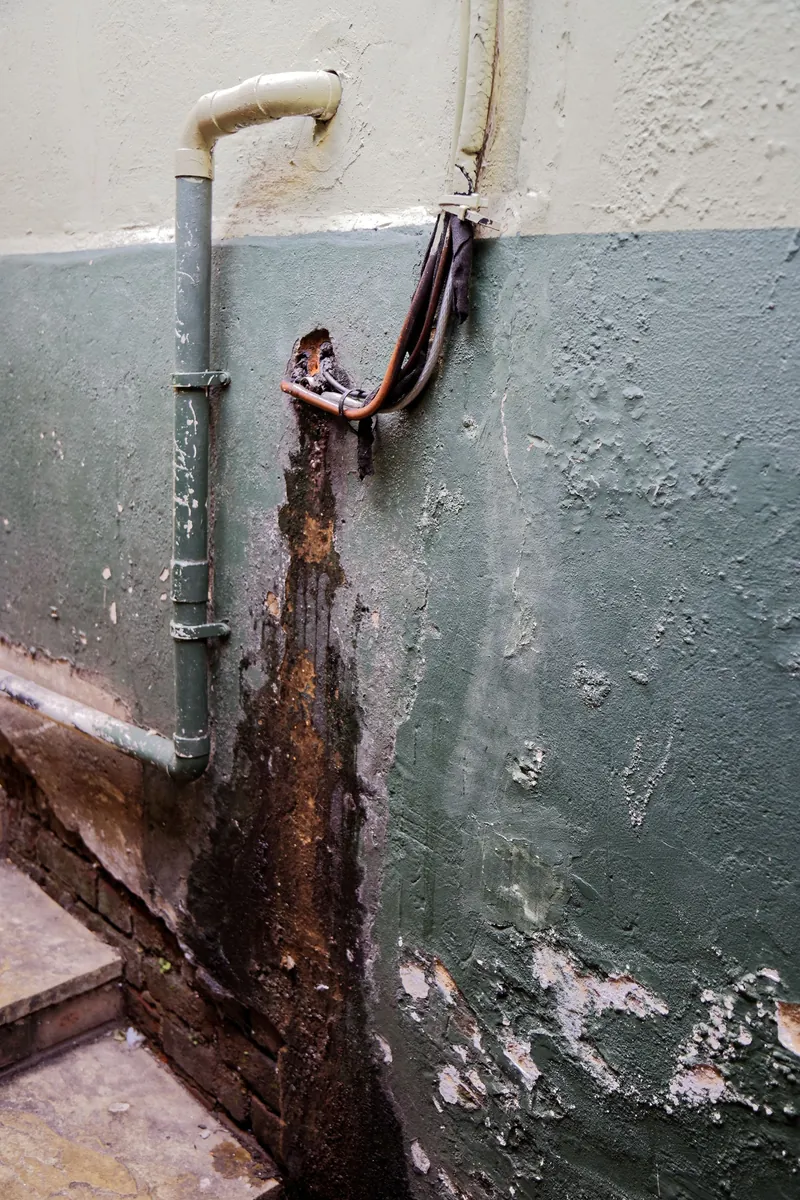
In brief
With a water damage claim denied in Alabama, the insurer must cite the specific policy provision it relies on, and you can ask for the denial in writing. Keep the house drying, read the cited clause, get a written cause finding from a plumber or roofer, and reply with evidence. Appraisal, a public adjuster, a complaint to the Alabama Department of Insurance or a lawyer are the next steps.
Why was my water damage claim denied?
Most denials rest on an exclusion in the policy. The usual ones are flood or surface water, a sewer backup with no endorsement, a slow leak the insurer calls wear or poor maintenance, and mold. The denial should name the exact provision, so start by finding that clause in your own policy and reading it.
Water and freezing losses are routine for insurers: Triple-I estimates one of every 60 insured homes has one each year, at an average cost of $15,400 for 2019 to 2023.
| Reason given | What the insurer is saying | What to check | Possible next step |
|---|---|---|---|
| Flood or surface water | Water came from outside, over the ground | Did rain enter through a roof or window opening instead? | A flood policy claim, if you have one |
| Sewer or drain backup | No backup endorsement on the policy | Endorsements page of your declarations | Show the source was a supply line, if it was |
| Wear, tear or maintenance | The leak was slow and should have been caught | A plumber's written finding on cause and timing | Dispute with evidence of a sudden failure |
| Mold | Mold damage is excluded or capped | Whether the water damage itself was covered | Ask that the water loss be paid apart from the mold |
In the NAIC's summary, leaks from household plumbing or a roof are the usual covered case; runoff and ground water fall outside, and mold costs are often carved out. Triple-I notes that flood is its own policy and that neglect is never covered.
What does Alabama require in a claim denial letter?
Alabama's rules bar an insurer from denying a claim on a specific provision, condition or exclusion unless the denial refers to it. A denial may come in writing, by phone or by email; after a phone denial you can request a written one, which must then be mailed within a reasonable time.
Those requirements sit in Ala. Admin. Code r. 482-1-125-.07, part of the Alabama Department of Insurance claim standards. The same rule sets the clock. After the insurer receives properly executed proofs of loss, it must tell you in 30 days, or the number of days the policy sets, whether the claim is accepted or denied.
An insurer that wants longer has to notify you inside that period with its reasons, then write again every 45 days for as long as the investigation is open. Separately, 482-1-125-.06 gives it 15 days to confirm it received your claim, unless payment goes out first, and 15 days to answer pertinent written questions from you.
Check the letter against the rule
Read the denial with the policy beside it and ask two things: does it cite a particular section, endorsement or exclusion, and does that clause actually describe what happened in your house? A letter that only says the loss "is not covered" gives you nothing to answer, so write back and ask which provision the insurer is relying on.
Keep every letter, email and note of each call with its date. The insurance claims guide covers the claim from the first call, and the water damage glossary explains terms such as proof of loss and endorsement.
What should you do first after a water damage claim is denied?
Keep the house drying and get the reason in writing. A denial does not stop the damage, and an insurer can point to any further harm as something you failed to prevent. Then gather the policy, the denial, your photos and any expert reports, and answer the specific clause the insurer cited, in writing.
- Keep drying going. Wet materials dried in the first 24 to 48 hours are far less likely to grow mold, per the EPA, and mold may carry its own exclusion.
- Get the denial in writing if it came by phone, with the policy section it relies on.
- Pull the full policy, including the declarations page and every endorsement, from your agent if you do not have it.
- Get a written cause finding. A plumber or roofer who saw the failure can describe what broke and how fast. A restoration team's moisture map and photos show how far the water went.
- Collect your own records: dated photos, receipts for emergency work and any earlier repair invoices that show the home was maintained.
- Write a reply that names the clause, explains why the facts fall outside it and attaches your evidence. Ask for a written response.
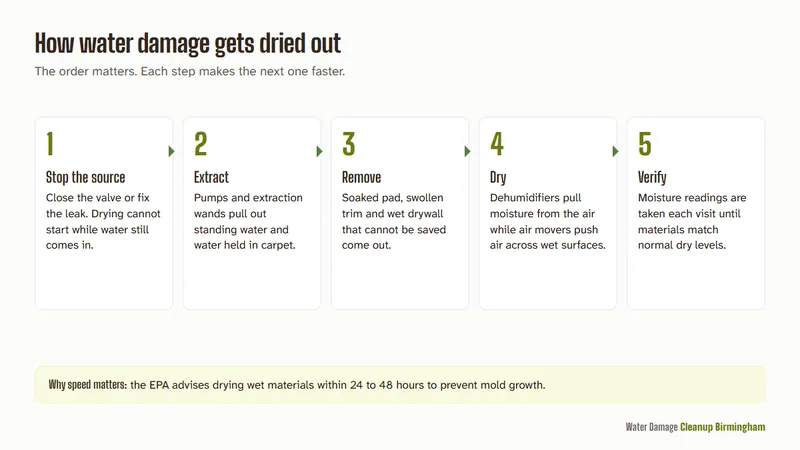
Ask the restoration team you reach to document readings at every visit, as the water mitigation page explains. Restoration teams differ on billing when a claim is in dispute, so confirm payment terms with them directly.
Can you appeal a denied water damage claim in Alabama?
There is no single appeal form, but there are several routes. You can ask the adjuster's manager or the claim department to review the decision, use the appraisal clause if the dispute is over the amount, bring in a public adjuster, complain to the Alabama Department of Insurance, or speak with a lawyer.
Triple-I's claims guide suggests starting with your agent or the claim department manager. It notes that many policies include an appraisal process in which you and the insurer each hire an appraiser, those two name an umpire, and agreement by any two of the three is binding on the amount. Read your policy's appraisal clause to see what it covers.
Public adjusters and their fees
A public adjuster represents the policyholder and takes a share of what the claim pays. Triple-I puts that share as high as 15 percent of the settlement, and suggests checking any public adjuster with the Better Business Bureau and the state insurance department before signing.
Ask how the fee is figured, whether it applies to money the insurer already offered, and how you can cancel. Get the answers in the contract, not just in conversation.
A public adjuster makes the most sense on a large, complicated loss where the dispute is about scope and price. If the insurer says the whole loss is excluded, the question is one of policy language, and a lawyer may be the better first call.
How do you file a complaint with the Alabama Department of Insurance?
The Alabama Department of Insurance takes complaints from consumers about how an insurer handled a claim. Use the consumer section of the department's website to file, and attach the denial, the policy pages it cites, your reply and a short timeline of the claim.
A complaint carries more weight when it points to something specific. Examples include a denial that names no policy provision, a missed 30-day status deadline, or no reply to your written questions. Each ties back to the claim standards in r. 482-1-125, which the department enforces.
A complaint asks the department to look at how the claim was handled. It cannot promise that the claim will be paid, and a dispute over facts or the meaning of a clause may still need appraisal or a lawyer. Keep paying premiums so the policy stays in force while the dispute runs.
When should you talk to a lawyer about a denied claim?
Talk to a lawyer when the loss is large, when the insurer denies coverage outright on a clause you think does not fit, or when months pass with no answer. A lawyer can read the policy language, judge whether the denial follows Alabama's rules, and explain the deadlines for a lawsuit under your policy.
Alabama's rule gives some protection here. Under r. 482-1-125-.07, an insurer may not knowingly drag out talks to let the limitations period run out. On an unresolved claim, it must send a claimant with no lawyer written notice of when it believes that period ends.
When the insurer says someone else should pay
Sometimes an insurer blames a plumber, a builder or a neighbor. The same rule says an insurer may not refuse to adjust a first party claim because someone else should be responsible, except where the policy, a statute or case law allows it. If you hear that, ask for the reason in writing.
The insurer may still pursue the other party itself after paying you, which is its own business. Your job is to keep your claim moving: keep the damage documented, the repair invoices dated, and every written answer from the adjuster in one folder you can hand to a lawyer or the department.
Is any part of a denied water claim still worth pursuing?
Often, yes, because a denial may address one cause while another part of the loss falls under a different clause. Rain that came through a storm-damaged roof is treated differently from runoff through a wall, and a sudden pipe burst differs from a slow drip. Ask the insurer to address each part of the damage separately.
Standard forms name sudden water from a home's systems as a covered peril. Triple-I's list includes water or steam that escapes or overflows from plumbing, heating, cooling, a sprinkler system or a household appliance, and those systems freezing. If a supply line or water heater failed suddenly, say so plainly and back it with the repair invoice.
Flood is the hard line: FEMA says most homeowners insurance does not cover flooding, and under the IICRC S500 standard rising creek or river water is Category 3. If you have a flood policy, file there as well. The flood cleanup page and the sewer backup page explain those losses.
How do you keep the damage from growing during a claim dispute?
Treat the house as if the claim will be paid tomorrow: dry it, protect it and document it. Damage that grows while you wait can be blamed on the delay, and mold that starts during a dispute may fall under a separate exclusion. Keep receipts for every fan, tarp and dehumidifier, and note the dates.
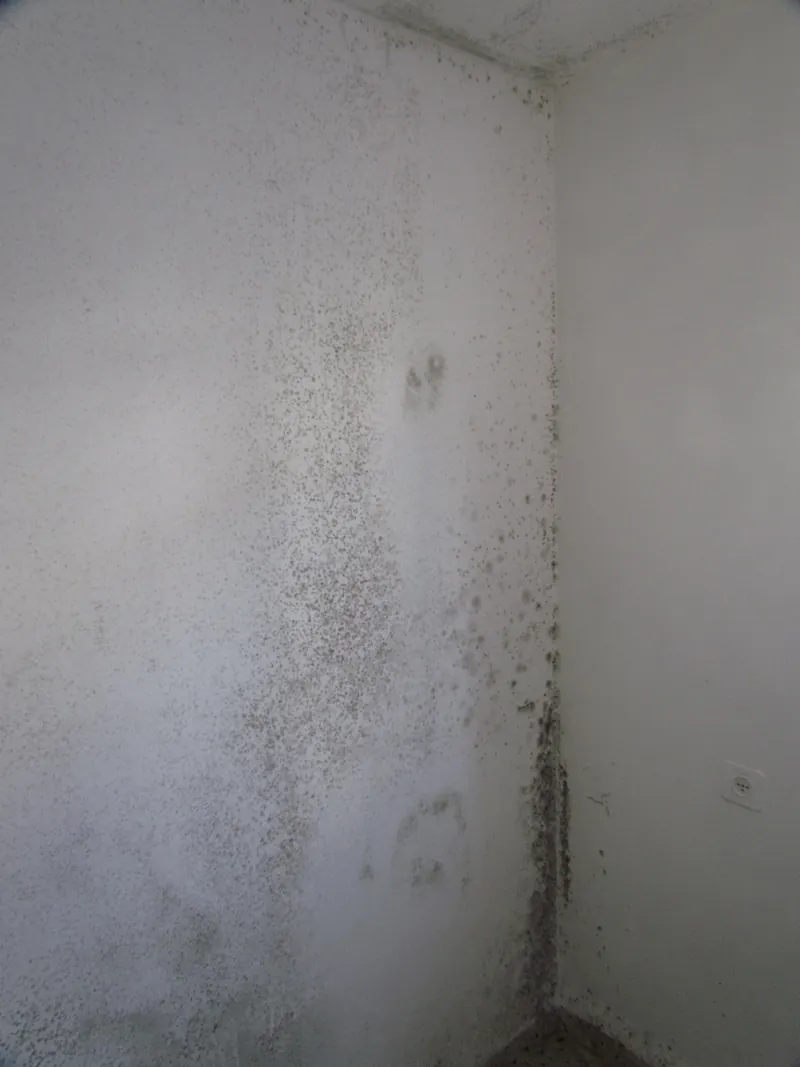

The EPA's target for a drying house is relative humidity below 60 percent, and lower still, in the 30 to 50 percent range, is better. Save a few samples of removed materials if you can, or at least photograph them with a tape measure for scale before they go out.
If you are also dealing with a lender or a sale, the buying a water damaged house guide and the restoration cost guide help with the numbers. The mold guide explains what to do if growth appears.
Sources: Ala. Admin. Code r. 482-1-125-.07 (denial must reference the provision relied on, written, verbal or email denials, written denial on request, 30-day status after proofs of loss, 45-day updates, limitations notice, no refusal because others should pay); Ala. Admin. Code r. 482-1-125-.06 (15-day acknowledgment and replies); Alabama Department of Insurance (consumer complaints); Triple-I homeowners claim facts (water and freezing claim frequency and average severity); Triple-I, which disasters are covered (flood, sewer backup, maintenance, named perils); Triple-I, settling insurance claims after a disaster (agent and claim manager, appraisal, public adjusters up to 15 percent); NAIC consumer guide to homeowners insurance (plumbing and roof leaks, runoff, mold); FEMA, flood and homeowners insurance; the IICRC S500 standard (Category 3 flood water); the EPA brief guide on mold and moisture at home (target humidity, how fast to dry).