Quick answer
Water behind siding gets in at trim, flashing, penetrations and overflowing gutters, then runs down inside the wall. Look for stains under windows, bubbling paint and soft baseboards, and check readings with a moisture meter. Slow leaks are often excluded as maintenance, while storm openings are worth reporting to your insurer with photos.
How does water get behind siding?
Water behind siding almost always enters at a joint or an edge, not through the face of the boards. The usual openings are window and door trim, missing or reversed flashing, holes cut for pipes, vents and wires, cracked or loose panels, and gutters that spill down the wall instead of into a downspout.
Once rain gets past the outer layer, it runs down the sheathing until something stops it: a window header, a sill plate or the bottom of the wall. Wood there can stay wet for weeks without any sign on the outside, which is why the damage is usually found late.
Birmingham walls get plenty of practice at this. The Wikipedia article on Birmingham describes abundant rainfall spread through the year, frequent spring and fall cold fronts with strong thunderstorms, and summer storms most afternoons and evenings. This site is the local water damage restoration line and information resource for homeowners; it does not repair siding.
What are the signs of water behind siding inside the house?
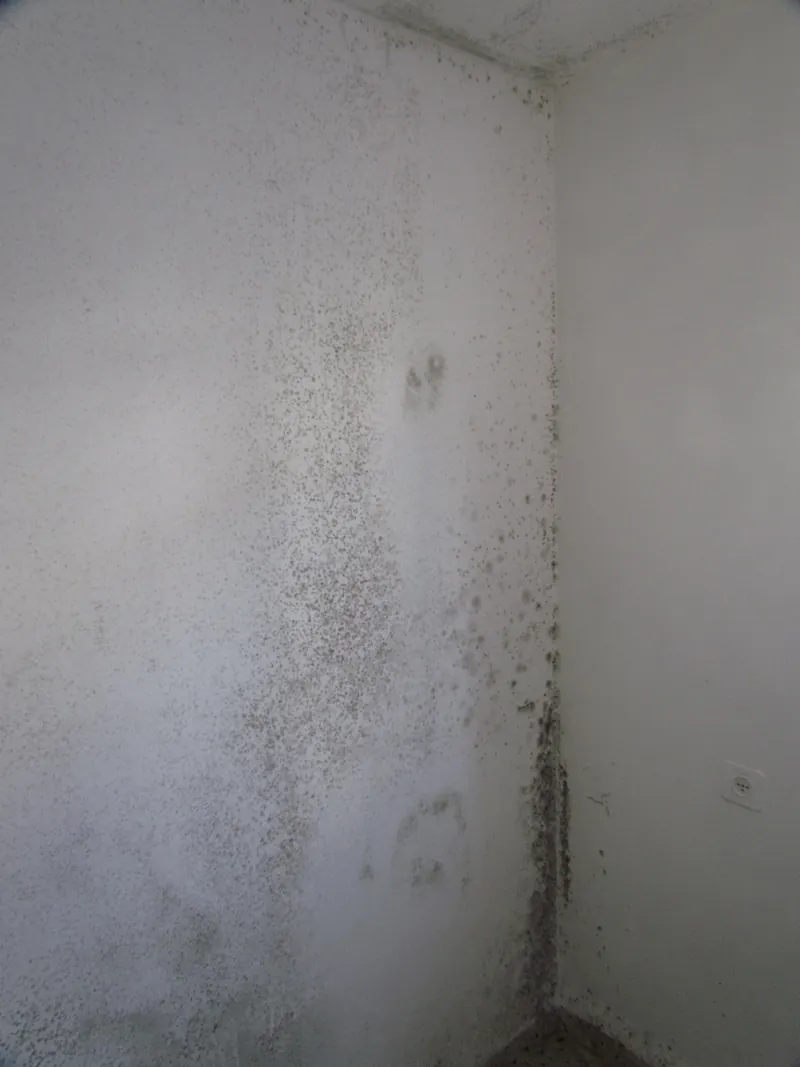
Inside, look below windows and at outside corners. Paint that bubbles or peels on an exterior wall, a stain that spreads from a window corner, swollen baseboard, a soft spot in the floor along the wall, and a musty smell in one room are the common indoor clues that water is running down inside the wall.
| Where you see it | What it looks like | Likely path of the water |
|---|---|---|
| Under a window inside | Stain fanning out from a lower corner of the frame | Flashing or trim at the window head or sill |
| Exterior wall corner | Dark spotting low on the wall, often behind furniture | Damp sheathing cooling the inner wall surface |
| Baseboard and floor edge | Swollen trim, cupped boards, soft subfloor | Water collecting at the bottom plate |
| Outside the house | Warped panels, paint failing on wood trim, stained brick below a gutter | Overflowing gutters or a gap at a penetration |
The EPA's mold course notes that growth often turns up on cold wall corners behind furniture, where condensation forms, and on the back side of drywall where nobody can see it. Our guide to signs of water damage covers the clues in other rooms.
Do vinyl, wood and brick veneer walls take on water differently?
Yes, in where the water hides and how it shows. Vinyl panels usually hide trouble until the wall behind them rots, while wood siding and trim show it sooner through paint failure and soft spots. Brick veneer can look fine while water passes through the mortar and runs down the cavity behind it.
With vinyl, the panel is only a first layer. The wrap and flashing behind it carry most of the load, so a dry-looking panel tells you little about the wood behind it. Look for panels that have pulled loose at the bottom or buckled near a window.
Fiber cement and engineered wood panels rely on sealed joints and painted cut edges. An unpainted edge close to the ground or a roof line soaks up splash water and swells, so check the lowest course and the boards just above any roof that meets a wall.
Wood clapboard and painted trim give earlier warnings. Peeling paint in one area, dark end grain and soft corners where a screwdriver sinks in easily all point to water that has been sitting there.
Brick walls need open weep holes near the base so water in the cavity can drain out. If they are packed with mortar or buried under mulch, ask a mason to check them. For brick and block lower levels, our basement flooding page covers water coming through the ground instead.
Can storms and tornadoes push water behind siding?
They can. Strong wind drives rain sideways into laps and trim joints that normally stay dry, and flying debris cracks panels or tears off flashing, so check the side of the house that faced the wind. A small split in a panel can let rain run behind the wall for months.
Central Alabama gets more than its share of these storms. The same Birmingham article places the city in Dixie Alley and names November and early December as a second severe weather season after spring.
The 2021 Fultondale tornado shows how quickly a house can open up. Wikipedia records that it damaged 265 homes over a 10 mile path, and that near its start it partly deroofed one house and stripped off its gutter. Damage like that sends water into walls with every rain until it is closed in.
If a storm opened a wall or roof, read our pages on storm roof leaks and Birmingham tornado history for the first steps. Take wide photos of each damaged wall before any tarp or patch goes on, since the adjuster will want to see the opening as the storm left it.

How do you check for water behind siding without tearing it off?
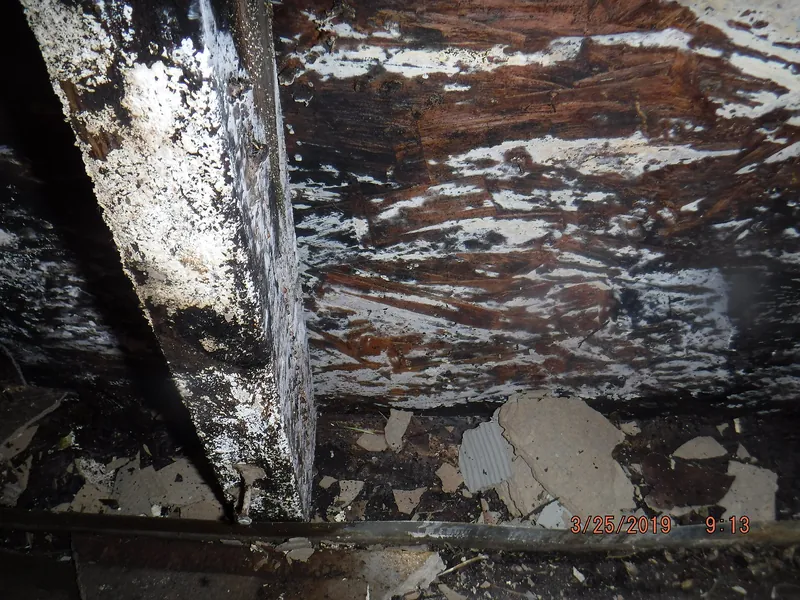
Start with what you can see and measure from both sides of the wall. Walk the outside after a hard rain, follow the water, and then use a moisture meter on the inside of the same wall. A trade professional can look further with a borescope through a small hole instead of pulling off whole courses of siding.
- Walk around the house during or right after heavy rain and watch where gutters overflow or water sheets down the wall.
- Check the top and bottom corners of every window and door for gaps, missing caulk and flashing that tips toward the wall.
- Press on trim, sills and the lowest course of siding with a screwdriver. Soft wood means water has been there a while.
- Inside, run a moisture meter along the drywall under windows and at outside corners, and compare each reading with an interior wall.
- Photograph every stain and reading with the date, which helps both a contractor and an insurer.
- Call a siding contractor or restoration team if readings stay high a few dry days after rain.
The EPA's chapter on finding mold describes both tools: a meter pressed against or into drywall, wood or brick to find wet spots, and a borescope pushed through a small drilled hole to see inside the wall. It also warns that opening a moldy area can spread spores, so cut carefully.
Who should you call first about water behind siding?
Call based on what you found. If the wall inside is dry and the problem is a loose panel or bad flashing, a siding contractor or roofer is the right first call. If drywall is wet, the floor is soft or there is a musty smell, bring in a restoration team to measure and dry the wall.
The two jobs often overlap. The outside opening has to be closed so the wall stops taking on rain, and the inside has to dry before anyone hangs new drywall. Ask each contractor what they will do and what they expect someone else to handle, so nothing falls between them.
Restoration teams differ in what they take on, so confirm directly whether a restoration team handles wall cavities, mold cleanup and rebuild, or only drying. Before you book anyone, see how to vet a restoration team in our guide to choosing a restoration company; what happens during drying is laid out on the water mitigation page. If mold is already visible, read mold after water damage before anyone opens the wall.
Is water behind siding covered by homeowners insurance?
Often not when it built up slowly. Triple-I says standard policies exclude damage from lack of maintenance and from mold, and a leak that crept in at a flashing joint for years usually lands there. A sudden opening, such as siding torn off in a storm, is a different conversation with your insurer.
The NAIC's homeowners page separates a roof leak, which is typically covered, from rain runoff, which is not. Where your loss falls depends on the cause and the policy language, so describe what happened plainly and send photos.
Triple-I's claim advice fits here: make reasonable temporary repairs to protect the house, keep receipts, and wait on lasting repairs until an adjuster has looked. A tarp or a temporary patch over a torn panel counts as protecting the property.
Alabama's claim standards, Ala. Admin. Code r. 482-1-125, have the insurer acknowledge a claim within fifteen days unless it pays in that time.
Under rule 482-1-125-.07, you should hear whether the claim is accepted or denied 30 days after proofs of loss, or within the policy's period. The Alabama Department of Insurance takes complaints, and our insurance claims guide walks through the steps.
What happens when wet wall framing is opened and dried?
The wet section of drywall and insulation comes out so air can reach the studs and sheathing. Fans and dehumidifiers then dry the framing while someone tracks meter readings. Rotted wood is replaced, the outside leak is fixed, and only then does the wall get closed up again.
Speed matters because the EPA gives wet building materials 24 to 48 hours before mold gets going. Wall cavities rarely get that chance, since the leak is found late, so expect some material to come out. The EPA also says to skip painting or caulking over moldy surfaces; fix the moisture and clean or remove the material first.
The EPA explains that a vapor barrier in the wrong place can keep damp materials from drying fast enough to prevent mold. A restoration team may need to open the wall from inside, outside or both. See wet drywall and structural drying for how that work usually goes.
How do you stop rain from getting behind siding again?
Keep water moving away from the wall and keep the joints sealed. Clean gutters, send downspouts away from the foundation, keep soil and mulch below the bottom of the siding, and look over window and door trim every year. Most repeat leaks come back at the same few joints.
The EPA's list of common moisture problems includes landscaping, gutters and downspouts that send water into or under a building. Regrading a bed that slopes toward the house is often cheaper than replacing a rotted sill.
Inside, aim for the EPA's indoor humidity limit of 60 percent, and lower still, between 30 and 50, when the weather allows. A small mold patch under about 10 square feet is usually a homeowner job by the EPA's measure, but larger areas need help. Our prevention guide has a seasonal checklist, and buyers can read home inspection water damage for wall clues to raise before closing.
Sources: EPA Mold Course, Chapter 2 (gutters and landscaping, cold corners behind furniture, back of drywall, vapor barriers that slow drying); EPA Mold Course, Chapter 3 (moisture meters, borescopes, disturbing mold); EPA home moisture guide (24 to 48 hour drying window, 60 percent and 30 to 50 percent humidity, about 10 square feet); EPA, Mold Cleanup in Your Home (do not paint or caulk moldy surfaces); Triple-I, covered disasters (maintenance and mold exclusions); Triple-I, settling claims; NAIC homeowners insurance (roof leak versus rain runoff); Ala. Admin. Code r. 482-1-125-.06 (fifteen days) and 482-1-125-.07 (30 days or the policy's period); Wikipedia, Birmingham, Alabama (rainfall, storm seasons, Dixie Alley); Wikipedia, 2021 Fultondale tornado (265 homes, 10 mile path, deroofed house and gutter).